
What Auditors Check When Reviewing AI Action Logs

Oct 3, 202614 min read
Every decision, data retrieval, and output generated by an autonomous system is captured in the AI action log to provide a forensic, chronological record. These logs are the primary evidence for regulatory compliance.

Unlike standard application telemetry, they capture the intent and the specific context that led a model to execute a command.
How AI logs record enterprise automation
The difference between system logs and action logs
Monitoring enterprise operations requires two different types of records. Standard system logs capture infrastructure health, such as a 500-error on a server or a database connection timeout, which tells a developer that a process died but not why it started.
In contrast, action logs record the specific intent of an autonomous agent, such as a request to modify a customer's discount tier.
Activepieces records every tool call and the data it manipulated alongside the reasoning steps of the agent, capturing the entire decision path in the same run as the deterministic workflow steps.
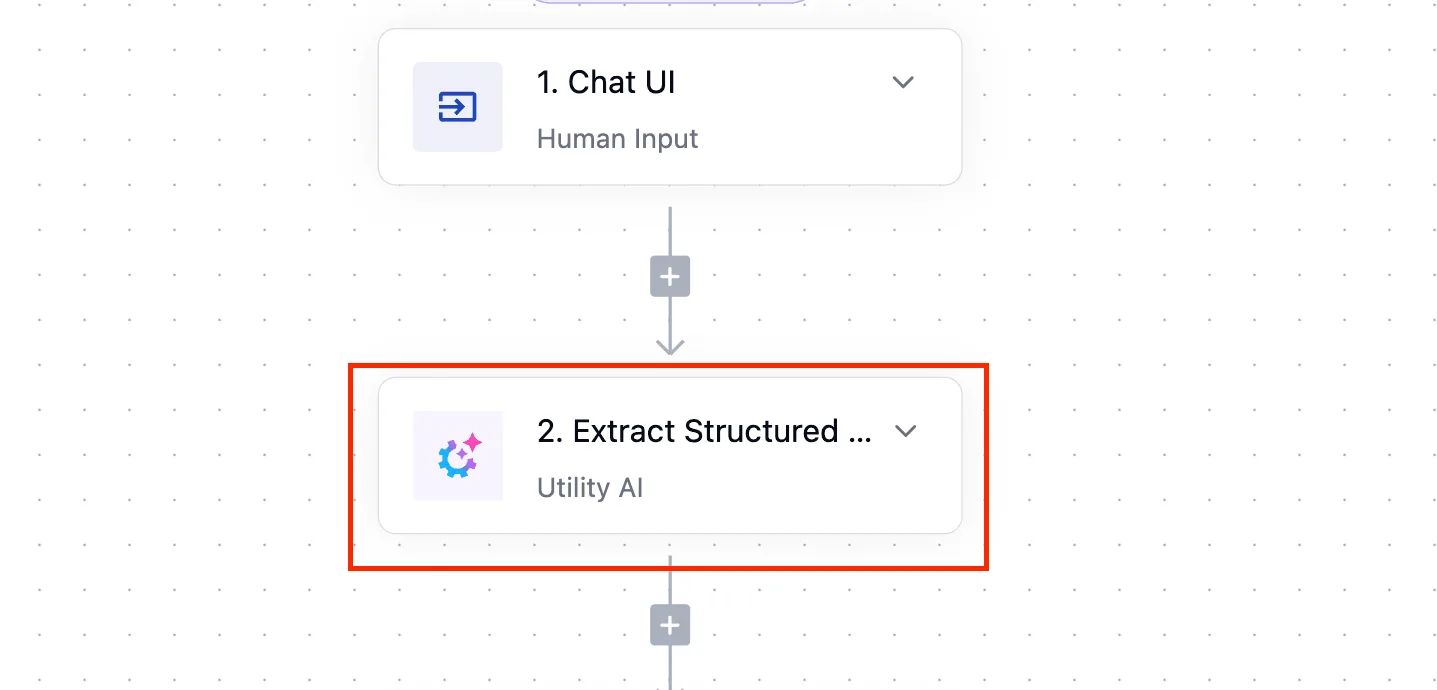
You can inspect this unified trace in the Run Details and Debugging UI, which ensures that an agent’s autonomous choices are reviewed with the same forensic rigor as a fixed code block.
By exporting these event streams into an existing SIEM, security teams can audit an agent's logic using the same monitoring infrastructure they use for standard workflows.
By maintaining this distinction, auditors can distinguish between a technical glitch and a deliberate model hallucination if an unauthorized data export occurs.
Why Reasoning traces are now mandatory for auditability
Capturing raw output alone cannot meet compliance, as it fails to explain the logic used to reach a conclusion.
Frontier models like Claude Opus 5.5 or GPT-6 Astra perform complex multi-step tasks where a single final answer might be the result of a dozen hidden sub-tasks.
Capturing raw output alone cannot meet compliance, as it fails to explain the logic used to reach a conclusion.
A reasoning trace is a step-by-step record of the model’s internal logic, often formatted as a Chain of Thought. It reveals the intermediate thoughts, self-corrections, and search strategies the AI employed before generating its final response.
This trace allows an auditor to see if the model considered forbidden data or misinterpreted a policy during its deliberation.
Without a reasoning trace, a compliance officer cannot verify if a model accessed restricted HR files to answer a general payroll query.
The three pillars of a defensible log entry
To withstand a regulatory audit, every log entry must contain specific metadata that links an autonomous action back to its origin and justification. Data provenance identifies the exact source of the information used to confirm the model did not ingest unverified third-party data.
Model versioning includes the specific identifier, such as Gemini 3.8 Flash, which accounts for behavioral differences between model iterations. Authorization context records the user identity or system role that triggered the agent, which proves the action fell within defined permission boundaries.
Everything below works on Activepieces' free plan. Start without code or a credit card.
How auditors verify data retrieval integrity
Auditors verify the integrity of the data retrieval chain to ensure that autonomous agents only access authorized records and operate within defined safety boundaries. Without a transparent audit trail, a system might inadvertently leak sensitive PII or execute destructive commands based on manipulated context.
Verifying the Least Privilege principle in RAG systems
To prevent a user from indirectly querying data they are not permitted to see, engineers must enforce role-based access control at the database level rather than the application layer.
When a model like Gemini 3.8 Flash retrieves documents to answer a query, the audit log must show the specific database credentials used during that session.
By examining the reasoning logs generated during the vector search, an engineer can confirm that the system restricted the retrieval step to the user's specific tenant ID.
Detecting prompt injection attempts in historical logs
Identifying attempts to bypass behavioral guardrails requires logging the raw input alongside the transformed system prompt.
Auditors look for patterns where a user tries to force a model, such as GPT-6 Astra, to ignore its original instructions and perform out-of-scope actions like modifying system configuration files.
Input sanitization logs show the specific strings flagged by safety models like Shieldstral 1.0 to indicate where the system neutralized an attack.
System prompt snapshots provide the version-controlled instructions active at the time of the incident, which auditors use to see if the agent's instructions were vulnerable to persuasion.
Model output variance reveals if the user's injected context hijacked the model's reasoning by comparing the expected response against the actual output.
Mapping the path from user query to API execution
Every autonomous action must be traceable from the initial natural language request through the internal reasoning steps to the final API call.
If a coding agent using Claude Opus 5.5 deletes a cloud resource, the auditor must be able to reconstruct the logic that led to that decision.
Activepieces syncs flows to git and promotes them through Release Management, ensuring that changes move from test to production as versioned code rather than accidental clicks.
This environment-based promotion, available on both cloud and self-hosted versions, allows MoneyGram and FundingSocieties to maintain the same audit standards for AI as they do for software.
By treating automation as versioned code, teams ensure that every agentic path has been formally reviewed before it ever touches production data.
The system logs the original prompt to establish the starting objective. The system records the model’s internal "thought process" to show which retrieved documents influenced the decision.
The system logs the exact parameters sent to the external API to ensure they match the model's stated intent.
Finally, the system links the success or failure code from the external system back to the original request ID for a complete closed-loop record.
How architectures ensure audit trail reliability
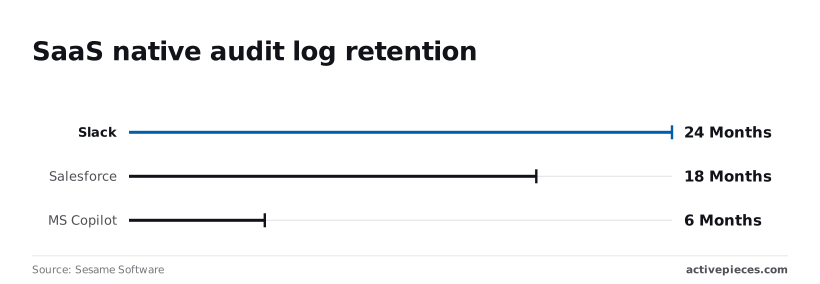
Audit trail reliability depends on whether logs are stored in fragmented vendor silos or a unified, tamper-resistant environment that meets legal discovery timelines. Relying on native provider logs introduces significant compliance gaps because their default TTLs (Time to Live) rarely align with statutory requirements.
For example, Sesame Software notes that Slack retains logs for 24 months, while Salesforce holds them for 18 months, and Microsoft Copilot limits visibility to just 6 months, leaving security teams with a significantly shorter window to investigate older incidents in the latter platform, which means forensic analysis becomes impossible for any activity occurring before that half-year mark.
How retention policies meet regulatory mandates
These technical limitations collide with regulatory mandates that demand much longer horizons. The EU AI Act requires 180 days of retention, which barely matches basic SaaS defaults, while SOC 2 requires 456 days, forcing firms to export logs or risk failing an annual audit.
The gap widens for highly regulated sectors. HIPAA mandates 2,190 days and SOX requires 2,555 days, so a firm relying on native AI logs would lose their legal defense data years before the statute of limitations expires.

| Solution Type | Retention Period | Visibility |
|---|---|---|
| Manual logging | Custom retention periods | Siloed by application |
| Native LLM logs | Typically 180 days | Provider-specific |
| Middleware solutions | Immutable or permanent | Cross-platform |
The right architecture ensures the system preserves the reasoning behind an action alongside the action itself. Without an immutable middleware layer, an auditor cannot prove if a mistake was caused by a prompt injection or a model hallucination.
Easier to see it running than to read about it: set it up free, no card.
How governance reviews human oversight decisions
Auditors verify compliance by examining cryptographically signed timestamps that prove a qualified employee reviewed and approved an agent’s proposed action before execution. This trail ensures that autonomous systems operate within delegated authority rather than functioning as unmonitored black boxes.
The Kill Switch audit: Proving manual override capability
Effective governance requires documented proof that a human operator can intercept and terminate a runaway process initiated by an autonomous agent.
When deploying a high-reasoning model like Claude Opus 5.5 for long-running agentic coding, the system must log every instance where a developer manually reverted a pull request or halted a script.
This evidence demonstrates that the kill switch is a functional architectural component rather than a theoretical policy.
Validation logs for high-risk financial or PII processing
Systems processing sensitive data must produce a validation manifest that links every autonomous decision to a specific human sign-off.
For enterprise workflows managed by Gemini 3.8 Flash, the system captures the exact state of the data at the moment of review so auditors can confirm the human saw the same information the model processed.

Without this point-in-time snapshot, a reviewer might inadvertently approve a transaction based on outdated context, leading to unauthorized data exfiltration or financial discrepancies.
How auditors detect bypassed human oversight
When a model executes a high-stakes command without triggering the required human-in-the-loop (HITL) protocol, a silent failure has occurred. Auditors search for gaps in the middleware where models, such as GPT-6 Astra, might use tool-calling capabilities to modify database permissions directly.
Auditors identify these gaps by comparing the system execution logs showing the final state change, the HITL queue records showing which actions were presented to staff, and the identity provider logs showing which credentials authorized the API call.
How Activepieces automates log centralisation for compliance
Activepieces is an MIT-licensed AI automation platform that provides a centralized, immutable record of every AI step across different LLMs and tools.
This record prevents the critical visibility gap where an agent executes a data-destructive command in one environment while the audit trail remains trapped in another.
By acting as the connective tissue between disparate services, this automation engine captures the raw input, the specific model reasoning, and the final output of every transaction.
Standardizing logs across different AI providers
Security teams can review actions without manually translating proprietary log formats because Activepieces normalizes the metadata from 738+ integrations into a single schema.
When an autonomous workflow triggers a reasoning chain in Gemini 3.8 Flash and subsequently pushes code to a repository via Antigravity Agent, the platform records these as a continuous sequence.
This unification ensures that a compliance officer sees the initial prompt and the resulting system change in one timeline, eliminating the risk of missing a lateral move between providers.
Building automated alerts for compliance violations
The platform monitors live execution data to trigger immediate notifications when an AI agent attempts an unauthorized action or accesses restricted data stores.
If a workflow using GPT-6 Astra attempts to write to a production database that lacks a specific "compliance-approved" tag, Activepieces halts the execution and alerts the platform engineer.
This proactive filtering prevents a minor logic error in an agent’s prompt from escalating into a full-scale data leak or a billing double-charge.
Exporting audit-ready reports for SOC2 and GDPR reviews
Activepieces generates structured exports of all automated runs, allowing teams like Alan to provide third-party auditors with a verifiable history of data provenance and system intent.
These reports include the specific version of the model used, such as Claude Opus 5.5, which defines the intelligence baseline for the period.
The reports also include the exact data payload passed between the LLM and internal APIs and the timestamped authorization tokens that validated the agent’s identity.
This level of detail satisfies the "continuous monitoring" requirements of SOC2 by proving that every autonomous decision was governed by defined business logic.
Audit readiness checklist for AI managers
Audit readiness depends on maintaining a continuous, verifiable trail of how autonomous agents interact with production data and external APIs. Without a structured verification process, teams risk discovering gaps in their reasoning logs only after a compliance failure or a data leak occurs.
Reviewing log retention periods against local regulations
To avoid fines for premature deletion, log retention policies must align with the specific legal jurisdictions governing the data processed.
The Monday Morning Audit Readiness Steps include:
- Verifying log retention meets the 180-day floor for the EU AI Act or the 7-year floor for SOX.
- Managers should run a PII redaction test against the 152 known entity types and sample the reasoning traces from flagship models like Gemini 3.8 Flash to ensure the prompt-to-output chain is fully preserved.
- Scrutinize the actual content of those logs for security vulnerabilities.
Conducting a Red Team spot check on last week’s logs
Regularly sampling log data allows teams to identify "hallucinations" or prompt injections that bypassed automated filters during live execution.
By reviewing a random subset of traces from Claude Opus 5.5 or GPT-6 Astra, an engineer can detect if an agent attempted to access restricted database schemas or misinterpreted a user’s intent.
Assigning ownership for log monitoring and incident response
Clear accountability for log integrity ensures that technical debt does not result in unmonitored "dark" AI processes. Responsibility should be distributed across three distinct roles to prevent a single point of failure.

The Infrastructure Lead is responsible for the uptime of the logging pipeline and the encryption of data at rest.
The Compliance Officer is responsible for verifying that log exports match the formatting requirements of external auditors.
The Security Analyst is responsible for investigating anomalies flagged by automated oversight models like Mistral Moderation 2. Assigning these roles creates a closed loop where every log entry is not just stored, but actively managed and ready for inspection.
Frequently asked questions about AI audit logs
How long should we store AI action logs for SOC2?
Audit logs must be retained for the duration of the audit period to provide evidence that controls operated effectively over time.
If a system uses Gemini 3.8 Flash to automate infrastructure changes, deleting those logs prematurely prevents an auditor from verifying that every change was authorized by a human-in-the-loop.
Most organizations align retention with their specific cyber insurance requirements. A firm with a one-year lookback policy stores logs for that full term to ensure coverage in the event of a delayed discovery of an incident.
Do AI logs need to be encrypted at rest and in transit?
Encryption is a mandatory requirement for maintaining the integrity of the audit trail and protecting sensitive prompt data from unauthorized access.
When sending reasoning traces from Claude Opus 5.5 to a centralized logging server, Transport Layer Security ensures that a man-in-the-middle attacker cannot inject false "success" signals into the stream.
Storing these logs with AES-256 encryption at rest ensures that even if a storage volume is leaked, the underlying logic of the AI’s decision-making process remains unreadable to external actors.
Can we redact PII from logs without breaking the audit trail?
Redaction is possible if the system uses one-way cryptographic hashes to replace sensitive identifiers while preserving the sequence of events.
If GPT-6 Astra processes a medical record, replacing the patient name with a unique hash allows an auditor to follow the agent's logic across multiple steps without exposing Protected Health Information.
This approach maintains the audit trail because the structural integrity of the log remains intact, so the relationship between the input data and the final action is still verifiable.
What is the difference between an audit log and a debug log?
An audit log is a permanent, immutable record of "who did what" for compliance, whereas a debug log is a transient, high-verbosity record used for troubleshooting technical failures.
Audit logs record high-level outcomes and the specific model used, such as Grok 4.7, to prove that the system followed corporate policy.
Debug logs capture raw stack traces and intermediate API latency, which are discarded after a sprint cycle to save on storage costs.