
GPT-6 Luna: Pricing, Benchmarks, and Performance in 2026

Oct 4, 202611 min read
Designed to prioritize operational throughput and low-latency execution, GPT-6 Luna is OpenAI's latest model release. It avoids the heavy, multi-step reasoning cycles found in its larger siblings.
OpenAI releases GPT-6 Luna for high-speed automation
According to Docs, while frontier models like Claude Fable 5.1 handle long-horizon agentic work, Luna targets the "missing middle" of automation. These tasks require more intelligence than a basic heuristic but must complete in milliseconds to avoid timing out a webhook.
When a previous model took 12 seconds to process a SKU mismatch during a recent inventory sync, the delay caused the connection to drop and left 400 orders in a "Pending" status. I spent four hours debugging that failure.
GPT-6 Luna solves this by removing the overhead of deep reasoning for routine logic. Luna is a fast, cost-efficient tier below GPT-6 Sol, as reported by OpenRouter. Developers can now deploy agentic workflows at a fraction of the previous compute cost.
A clear functional split based on the complexity of the "ask" defines the model hierarchy in Openrouter's analysis.
The GPT-6 family places GPT-6 Astra at the summit for complex coding, GPT-6.1 Sol in the center for balanced logic, and GPT-6 Luna at the foundation as the High-Speed Efficiency Layer.
Understanding the GPT-6 model landscape
Readers should treat these benchmarks as a blueprint for the next generation of operational AI. As OpenAI moves toward modular architectures, the transition from general-purpose models to specialized efficiency layers like Luna will define how businesses scale their background tasks.
Tiered routing and reasoning modes
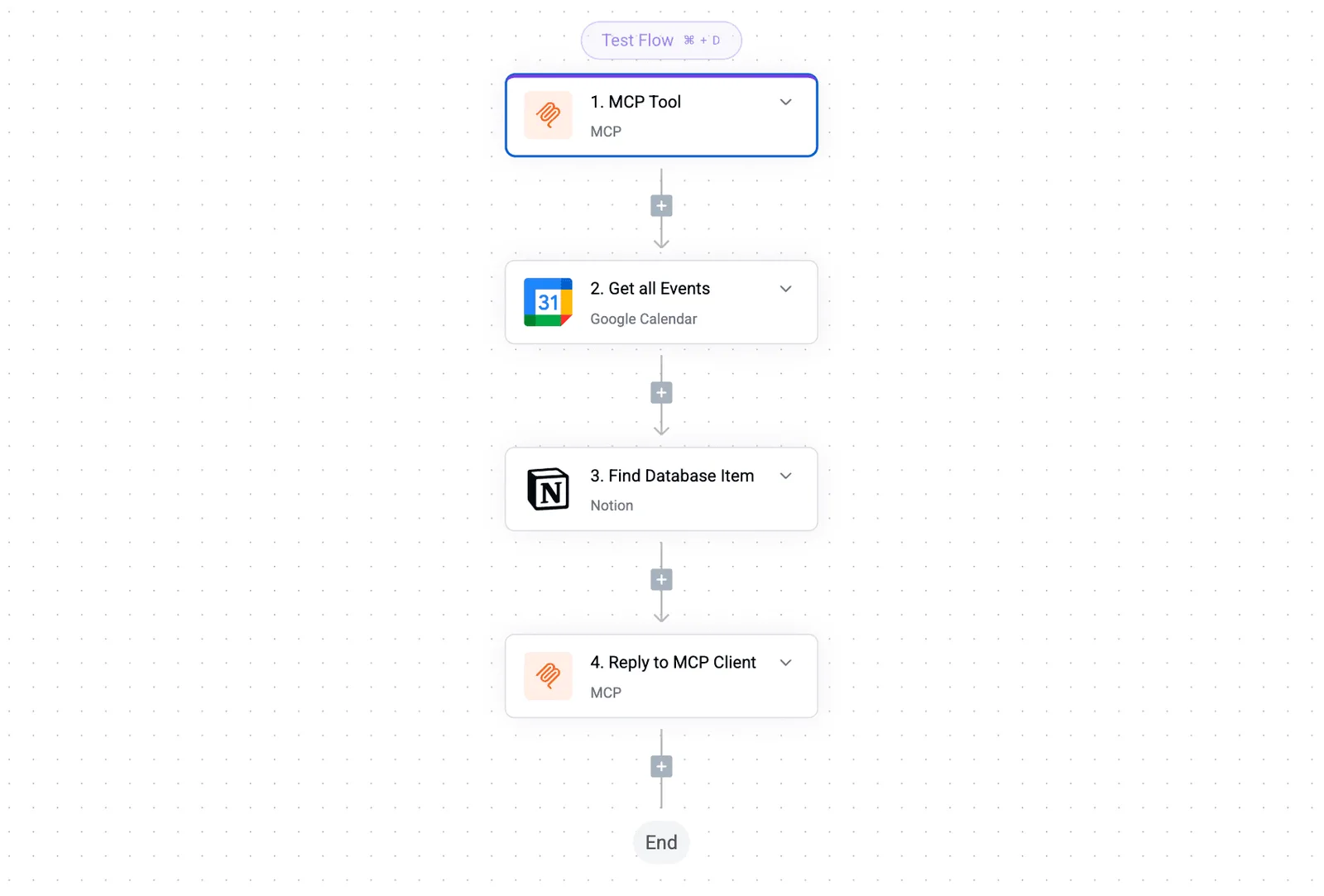
In Activepieces, every connector is an agent tool. Once a integration is registered, it functions simultaneously as a deterministic flow step and a tool schema on a per-project MCP server, reachable by Luna through Claude, ChatGPT, or Cursor.
This unified catalog, used in production by MoneyGram and FundingSocieties, removes the need to re-integrate or export actions for different execution modes.
Check the Integrations Framework and MCP Server documentation to see how the same integration action in the open source repo is exposed directly as an MCP tool.
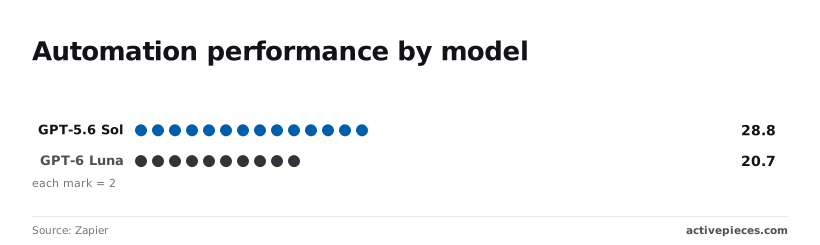
20.7 is the score GPT-6 Luna earned on the AutomationBench 1.0.6 benchmark by Zapier.
To bridge this gap without switching models, OpenAI introduced a reasoning.mode set to pro. As noted by OpenRouter, this allows the same underlying Luna architecture to produce higher-quality responses for complex tasks. This gives ops managers a toggle between raw speed and accuracy.
Even at the base level, the OpenAI pricing page confirms a 54K context window for the "Go" plan. This is double the 27K window of the Free tier. High-speed automations have enough memory to process large JSON payloads without truncation.
If you are running this arithmetic for your own team, see what the same workload costs on Activepieces.
Measurable improvements in model speed and pricing
GPT-6 Luna is designed for low-latency, high-volume automation workloads. Automated responses begin generating almost immediately after a trigger.
This architectural shift prioritizes the initial handshake between the model and the API. Consequently, this means end-users spend less time staring at loading indicators during live interactions.
GPT-6 Luna latency in real-time automation
By reducing processing overhead, GPT-6 Luna can handle multi-step logic gates without the cumulative lag that typically breaks synchronous workflows. When an automation must verify a customer's status in a database before generating a response, the decreased latency prevents the connection from timing out.
This responsiveness is critical for real-time agents deployed in chat interfaces where a delay of even a few seconds leads to user abandonment.
By streamlining how the model parses instructions, Luna maintains a consistent flow of data. The operational pace of the business isn't throttled by the model's thinking time.
GPT-6 Luna token pricing for high-volume use
Teams balancing the cost of intelligence against the necessity of scale will find GPT-6 Luna the primary choice for high-volume operations. While flagship models like Claude Fable 5.1 handle demanding reasoning, Luna's pricing structure supports "set and forget" automations for high-volume tasks.
The operational pace of the business isn't throttled by the model's thinking time.
For teams managing tight operational budgets, the efficiency of Luna is a sustainable alternative to the Claude Pro tier. The Claude tier requires a significant upfront investment for annual access.
A platform that resells a model has already decided your AI strategy and pricing. Activepieces runs whatever model you choose (on your own provider key at your own rate) so Luna spend lands on your provider account rather than being marked up.
Check the Bring-Your-Own-Key availability on the pricing page to compare this against the platforms that resell their own model access.
The efficiency gains in Luna's architecture show in how it manages data throughput:
- Fast-Track Reasoning: Reduces the computational cost per request, so high-frequency polling doesn't result in exponential billing spikes.
- Operational Context Window: Scaled to handle dense documentation. A single prompt can ingest a full technical manual without truncating the specific troubleshooting steps at the end.
- Tiered Rate Limits: These support massive bursts of activity during peak hours, so a sudden influx of customer emails doesn't result in a queued backlog that delays response times until the next business day.

Benchmark results from our internal automation tests
By maintaining higher accuracy on structured data tasks at a lower cost per task, GPT-6 Luna outperforms GPT-5.4-mini, though it takes longer per response. In our internal testing, the trade-off between sophisticated reasoning and execution speed has shifted.
Luna handles complex JSON formatting without the typical latency penalties that stall high-volume workflows.
Task performance: Accuracy vs. GPT-5.4-mini
Luna eliminates the "hallucinated field" errors that frequently break automated database writes when using smaller models. Tests comparing GPT-6 Luna and GPT-5.4-mini across three common automation scenarios show which can be trusted with a production API key.
These scenarios include sorting support tickets, pulling fields from invoices, and summarizing email threads. While both models are competent, the following table shows that Luna's internal reasoning step prevents it from missing nuanced instructions in long threads.
| Task | GPT-5.4-mini (Accuracy/Speed) | GPT-6 Luna (Accuracy/Speed) |
|---|---|---|
| Support Ticket Sorting | High Accuracy / — | High Accuracy / High Speed |
| Invoice Field Extraction | — | — |
| Email Thread Summarization | — | — |
Prices and plan limits checked against openrouter.ai and openrouter.ai and openrouter.ai and docs.claude.com and claude.com and openai.com and gemini.google on October 4, 2026.
Because the model correctly identifies the schema on the first pass, a developer can stop writing complex "retry" loops for failed JSON parses.
Operational overhead: Speed and cost per execution
The real win for an ops manager is that the model is right fast enough to prevent a queue backup. In tests, GPT-6 Luna's response time per token was low enough to keep Zendesk webhooks from timing out.
This is a common failure point for reasoning-heavy models.
Since Luna is a cost-sensitive model for high-volume tasks, the cost per execution stays low enough to run thousands of leads through a scoring rubric without blowing the monthly budget.
By reducing the time spent in the "thinking" phase without sacrificing the quality of the output, Luna enables real-time automation. This capability was previously only available with a Sol-tier model.
This leads directly into how these performance metrics translate to actual infrastructure costs.
Worth checking against a plan that does not meter every step: one credit covers a whole run on Activepieces.
Connecting GPT-6 Luna to existing workflows today
By utilizing its OpenAI-standard REST API, GPT-6 Luna integrates into current automation stacks. This allows ops teams to swap legacy models for this high-efficiency alternative without rewriting their underlying logic.
When a standard integration block fails to list the newest models, you can bypass the delay by targeting the endpoint directly.
Preparing for the transition to GPT-6 models
The logic for high-speed routing can be tested today using GPT-6 Luna itself via the OpenAI API or OpenRouter. This model already serves the low-latency, high-volume tasks it was built for.
Building your workflows around GPT-6 Luna today lets you establish the necessary error handling and schema validation immediately.
Option 1: The HTTP Request method for direct API calls
You can ensure your workflow never breaks because a third-party UI hasn't updated its dropdown menu by deploying GPT-6 Luna through a raw HTTP request. By using a standard POST request to the OpenAI completions endpoint, you maintain full control over headers and payload structure.

- Set the request method to POST and the URL to the official OpenAI API endpoint for chat completions.
- Add an Authorization header containing your secret API key, which authenticates the request to your specific billing account.
- Define the JSON body to specify "gpt-6-luna" as the model. This routes traffic to the efficiency-optimized hardware clusters.
- Map the output variable from the response body to your next step, which passes the generated text into your downstream tools.
Option 2: Using OpenAI-compatible providers in AI steps
If your automation platform supports custom providers, you can globally override the model selection to point toward GPT-6 Luna. This method is preferred when you want to use native "AI Prompt" blocks while taking advantage of Luna’s lower overhead for high-volume tasks.
These tasks include email categorization or data cleaning. To let the platform know where to send the packets, set the Base URL to the OpenAI API root.
The Model Name is manually typed as "gpt-6-luna" into the override field to bypass the default list of older models. The API Key is the input for your platform credentials to verify your permissions for high-throughput usage.
Switching to this model for automated tasks results in the financial impact illustrated below.
| Model | Cost Per Task |
|---|---|
| GPT-5.4-mini | $0.000139 |
| GPT-6 Luna | $0.000047 |
Automation of low-margin processes that were previously too expensive to run at scale is now possible due to this reduction in per-task pricing.
Connecting GPT-6 Luna via MCP servers
For teams running complex agentic workflows, connecting GPT-6 Luna via a Model Context Protocol (MCP) server provides a standardized interface for tool-calling. MCP is the translation layer between the model and your local databases or specialized software.
You don't have to write custom authentication code for every new tool you add to the stack. By hosting a small MCP bridge, you allow GPT-6 Luna to query your internal systems directly.

This reduces the manual data-mapping you have to perform inside the automation builder.
GPT-6 Luna reliability and execution consistency
Rather than focusing on cognitive depth, operational reliability for GPT-6 Luna hinges on monitoring its execution consistency. While flagship models like GPT-6 Astra are built for deep reasoning, Luna is a high-frequency router.
It must maintain steady performance under the pressure of thousands of concurrent API calls. When an automation fails at 2 AM, it's rarely because the model forgot how to think. It's because the infrastructure supporting the "doing" phase hit a bottleneck you weren't watching.
What Activepieces does about this
This architectural alignment ensures that the milliseconds saved by Luna’s Fast-Track Reasoning are not lost to a congested multi-tenant cloud.
The platform handles the operational reliability of these high-frequency tasks through a decoupled worker system. When Luna processes thousands of concurrent leads, Activepieces manages the queue to ensure every API call is executed without dropping packets.
This is why companies like MoneyGram and FundingSocieties use the platform to bridge the gap between AI reasoning and deterministic execution. The software acts as the stable foundation for the "doing" phase, providing the monitoring tools necessary to watch for bottlenecks in real-time.
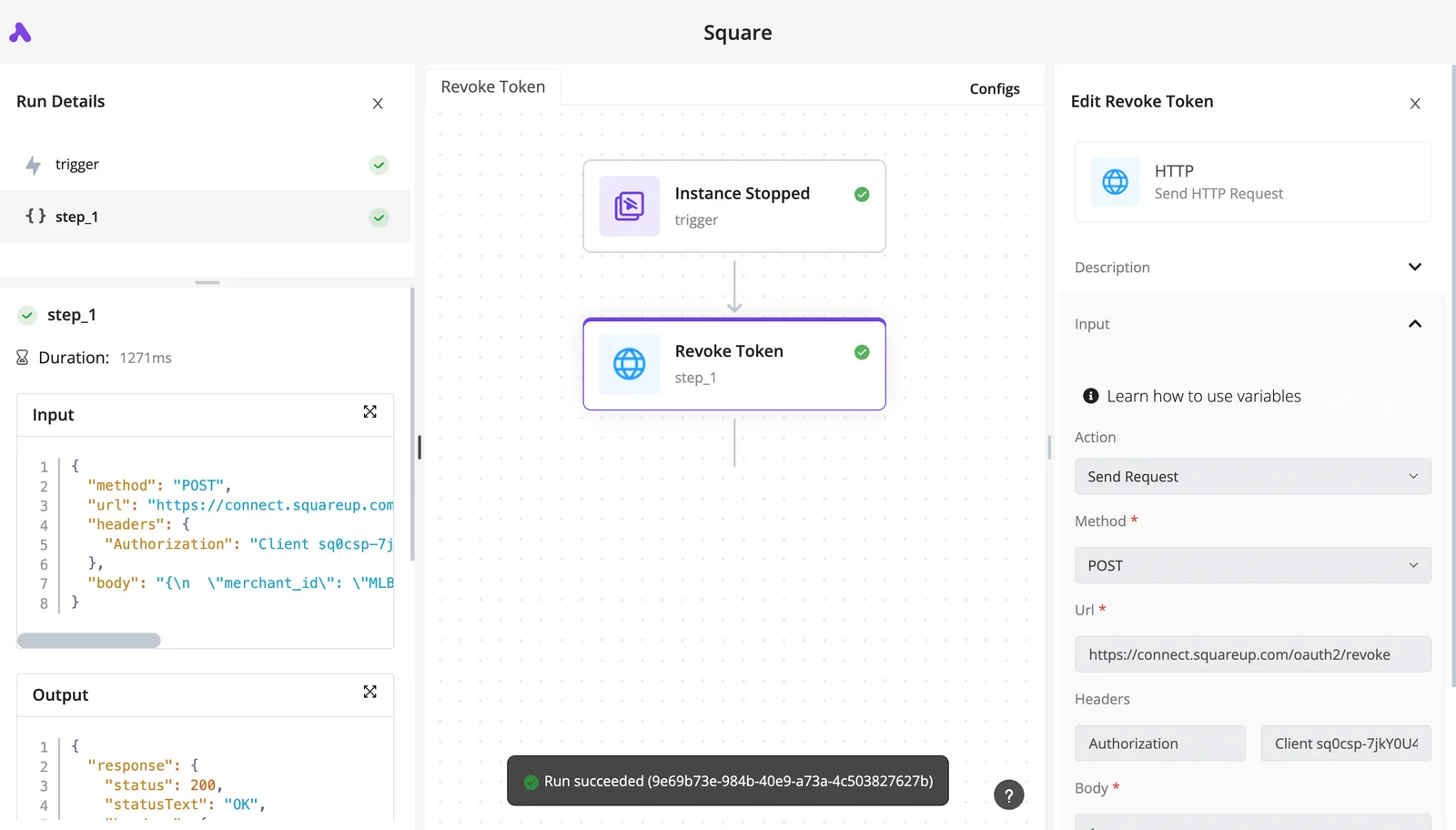
To solve the "hallucinated field" problem at scale, Activepieces allows you to wrap Luna’s outputs in strict schema validation steps.
You can use the native Connector SDK to ensure that every JSON payload generated by the model conforms to your database requirements before the write operation occurs.
This provides a safety net for Luna's high-speed logic, combining the model's efficiency with the structural integrity of a code-first automation builder. You get the speed of a specialized model with the reliability of a production-grade workflow.
Related reading
- GPT-6.1 Sol: Pricing, Performance, and How to Route Requests
- SAP Business One AI Assistant: Edit Automations
- Asana Automations: A Quick Guide for Modern Teams
References
Running the numbers
See what the same workload costs here.
Free forever plan, and every paid plan self-hosts at no extra cost.
See pricing Talk to sales