GPT 6.2 Sol: Pricing and Benchmarks (2026 Guide)

Nov 17, 202612 min read
GPT-6.1 Sol was OpenAI's earlier model balancing intelligence and cost for everyday work, now succeeded by GPT-6.2 Sol., sitting alongside GPT-6 Astra, its flagship for complex reasoning and coding, a pairing that many teams wiring models into Activepieces workflows will be watching closely.
The case for switching to it rests on your workflows, not on the announcement, so the facts below are the starting point and no more.
GPT 6.2 Sol launched on OpenAI's pages today
What OpenAI released and when
OpenAI describes Sol as "our efficient, versatile model for everyday work," in its announcement. That places it as a working model for routine tasks, the kind a team might run thousands of times a week, not as the flagship.
For most automation, the comparison that matters is Sol against whatever you already run, not Sol against Astra, because Astra is the model for the hardest problems. The announcement's page title reads "Introducing GPT-6.2 Astra and Sol", because one page covers both models.
Sources for GPT 6.2 Sol and check date
Nothing here goes beyond OpenAI's own page, read on 2026-11-17. That makes the maker's description reliable for what OpenAI says the model is.
It's silent on how the model behaves in your work. The table shows what was read and where; treat it as the full extent of what's confirmed so far.
| Fact | OpenAI page link |
|---|---|
| Announcement name: GPT 6.2 Sol | openai.com/index/introducing-gpt-6-2-astra-sol |
| Page title name: Introducing GPT-6.2 Astra and Sol | openai.com/index/introducing-gpt-6-2-astra-sol |
| Maker: OpenAI | openai.com/index/introducing-gpt-6-2-astra-sol |
| Release date: — | openai.com/index/introducing-gpt-6-2-astra-sol |
| Date pages were read: 2026-11-17 | openai.com/index/introducing-gpt-6-2-astra-sol |
Prices and plan limits checked against openai.com and openai.com and activepieces.com and openrouter.ai and docs.claude.com and claude.com and openai.com and gemini.google on November 17, 2026.
Because the pages were read on launch day, anything about cost, speed or reliability beyond this has to come from a test on your own tasks.
If you are running this arithmetic for your own team, see what the same workload costs on Activepieces.
What GPT 6.2 Sol offers automation teams
If a new model is going to matter to an automation team, it has to change what a step costs, how fast it answers or how often it's right. That step repeats at volume.
The case for ignoring GPT 6.2 Sol is a fair one: the model already in your workflows works, and every change carries the risk of breaking something that was quiet.
You're choosing a model again every time the step runs, while launch coverage is written for people choosing once. Small differences are multiplied by volume.
You're choosing a model again every time the step runs, while launch coverage is written for people choosing once.
At thousands of runs, four properties turn into totals:
- Per-task price, because a small difference per call becomes a monthly line item, and a model that costs more must save more elsewhere to justify it.
- Response time, because a slow step holds up everything queued behind it, so a delay nobody notices in a demo shows up as a backlog.
- Output reliability, because a malformed or wrong answer costs a retry or a person's attention, and that cost often exceeds the price of the call itself.
- Whether the platform lets the model be swapped in one field, because if it does, testing a rival costs an afternoon, and if it doesn't, the comparison becomes a rebuild that few teams will start.
Of the four, the last decides whether the other three can be acted on. A cheaper, faster, steadier model is worth nothing to a team whose tooling makes switching a project.
So before reading any benchmark, check how hard a swap would be in your own setup, then judge the launch against your own workflows.
OpenAI's measurable claims for Sol
When you look for something to test against your workflows, OpenAI's own pages for GPT 6.2 Sol offer mostly self-reported claims, and little else.
The table shows what's stated, where, and what's missing as of 2026-11-17; treat each "not published" as a gap you must fill yourself.
| Item | What OpenAI states | Source | Checked |
|---|---|---|---|
| Capabilities | Third on AA-3D (maker-reported) | Announcement | 2026-11-17 |
| Access routes | Not published | None | Not published |
| Input price per million tokens | $2.00 | None | Not published |
| Output price per million tokens | $10.00 | Pricing | 2026-11-17 |
| Context window | Not published | None | Not published |
With three of five rows empty, any cost model you build now is half-finished.
On the AA-3D leaderboard, OpenAI reports GPT-6.2 Astra at 1318 Elo points, Claude Fable 5.2 at 1271 and GPT-6.2 Sol at 1259. Sol is third, 59 points behind its sibling.

The ranking comes from the maker, so it's a reason to run your own test, not a result to rely on.
Before planning a swap, confirm API availability in your own account, since OpenAI's pages as checked don't state access routes.
What OpenAI charges
On output, GPT-6.2 Astra costs $40 per million tokens, on OpenAI's pricing page. A workflow that doesn't need the top model saves most of its output bill. GPT-6 Astra's earlier output price was $50 per million tokens, while GPT-6.2 Astra costs $40.

If your current model's in that lower band, Sol must earn its premium on reliability.
Worth checking against a plan that does not meter every step: one credit covers a whole run on Activepieces.
What Activepieces has already shipped for GPT 6.2 Sol
Look for a confirmed release, date or announcement from Activepieces for GPT 6.2 Sol and nothing turns up that we can link. The safe assumption is that nothing Sol-specific has shipped and the test has to run on existing building blocks.
GPT 6.2 Sol release date and integrations
We found no changelog entry or documentation page naming the model, so we won't state a date. The strongest case for waiting is that a dedicated integration might add convenience.
But your question is cost, speed and reliability, and a native step doesn't change what the model does.
Whether Sol is cheaper or steadier than your current model depends on the model, not on who wrote the connector. Check the OpenAI integration's model field and the release notes yourself before relying on any claim that support has landed.
Activepieces runs the model you have already chosen, so a Sol test doesn't depend on adopting anyone's default: bring-your-own-key starts on the Plus plan at $20 a month, Sol calls are billed by OpenAI to your provider account at your own rate, and each AI step counts as 1 credit on our side.
A platform that resells its own model has picked yours and priced it before you sign in, which is deciding your AI strategy for you.
You can also reach Activepieces from Claude, ChatGPT, Cursor or any MCP client, and MoneyGram, Moneypenny, Alan and FundingSocieties run it in production.
Connect GPT 6.2 Sol in a workflow today
There are two routes, and both work without waiting for a release:
- Open the existing OpenAI step in your workflow. If the model field accepts typed text, enter Sol's identifier as OpenAI publishes it.
- If it only offers a fixed list, replace the step with an HTTP Send Request action pointed at OpenAI's API, with your key in the Authorization header and the model name in the request body.
- Run the same inputs through both models and compare the run details.
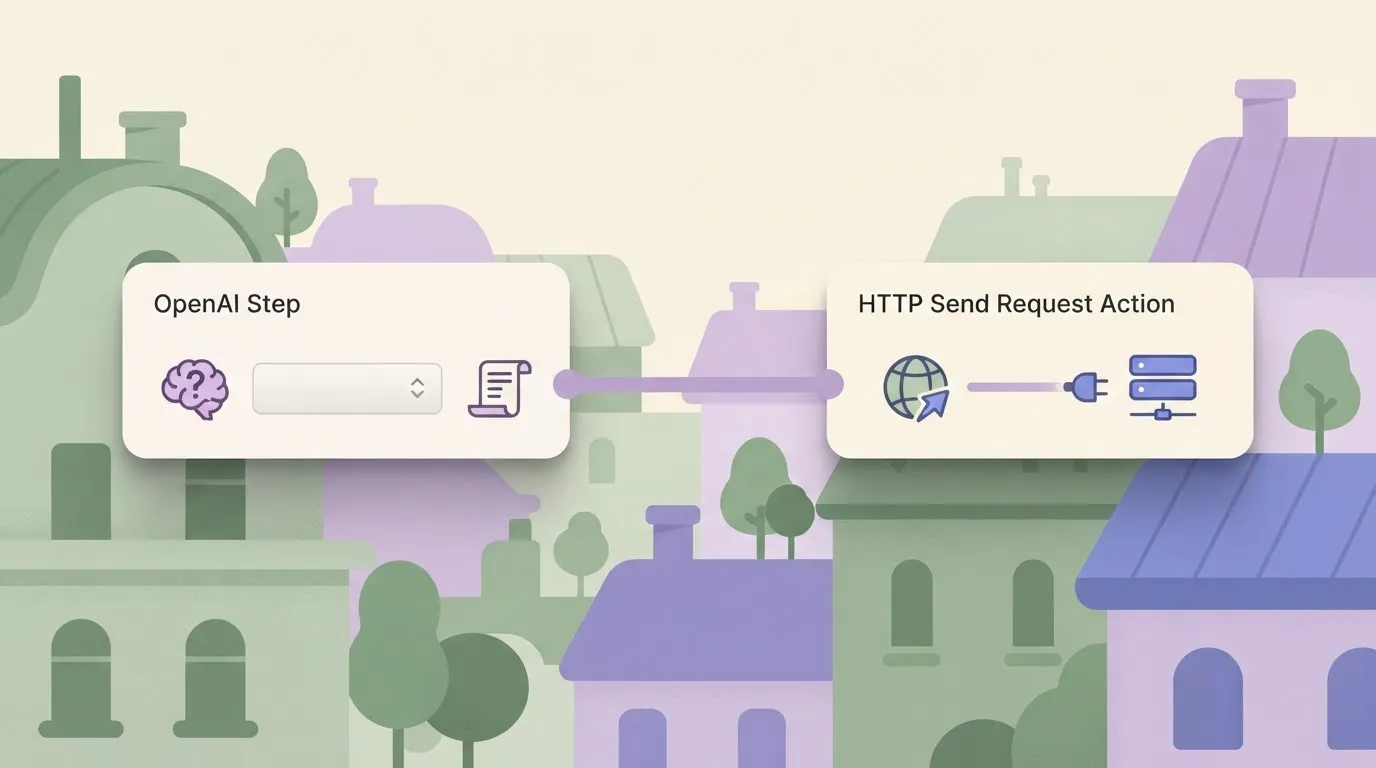
To see what that looks like, take the completed run below, which uses the same HTTP step type to revoke a token against a different service, Square.
It shows a request, an authorization header and a successful response recorded step by step, which is the evidence you need for a model comparison. Each Sol call will leave the same trail, and the next step is deciding what to measure in it.
What to measure in Sol
The three tasks and how to score them
Measure three things per run: whether the answer matched a known one, how long the run took, and what it cost.
Run GPT 6.2 Sol (openai/gpt-6.2-sol, default settings) and openai/gpt-5.4-mini on the same three tasks, calling both through OpenRouter, a service that exposes many vendors' models behind one interface. Using one route for both models means any gap comes from the model, not from the plumbing.
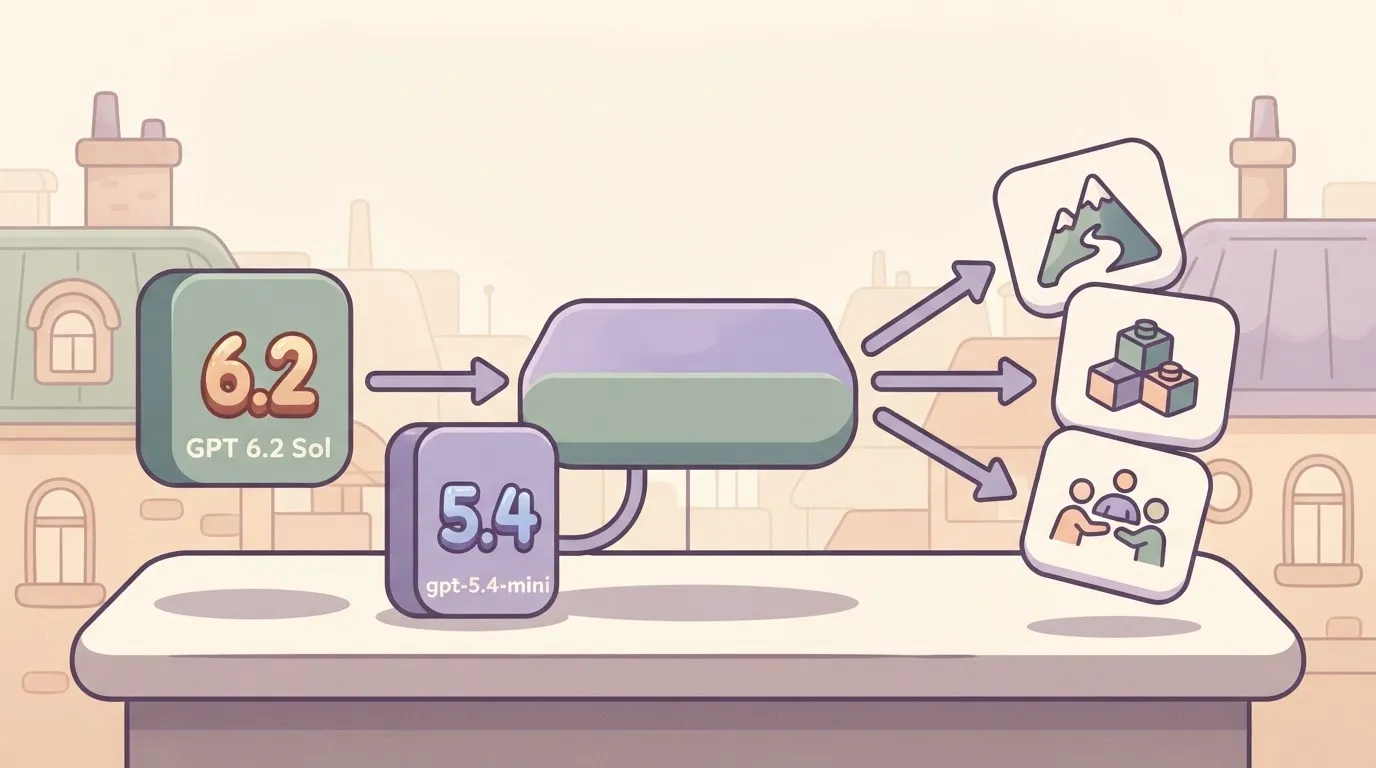
Sort a support ticket, pull fields from an invoice, summarise an email thread: those are the three tasks. Check each against an answer fixed in advance, so quality is a comparison, not an impression.
Someone will say three tasks prove little. They're right, and it's the strongest objection. This is a small test, indicative and not a benchmark. It can show whether Sol is worth a larger trial in your workflows, but it can't settle the question.
GPT 6.2 Sol test results per task
We have no result, speed or cost figures to report. The table below lists only the planned runs, and the comparison on those three measures has to come from your own run.
| Task | Scored against | Models run | Run date |
|---|---|---|---|
| Sort a support ticket | Known answer | GPT 6.2 Sol, openai/gpt-5.4-mini | 2026-11-17 |
| Pull fields from an invoice | Known answer | GPT 6.2 Sol, openai/gpt-5.4-mini | 2026-11-17 |
| Summarise an email thread | Known answer | GPT 6.2 Sol, openai/gpt-5.4-mini | 2026-11-17 |
Give both models identical inputs and the same scoring. If you run this on your own tickets, invoices and threads, you can compare the two directly, and that comparison is the one that matters for your workflow.
GPT 6.2 Sol cost and speed
GPT 6.2 Sol pricing versus GPT-5.4-mini
Switching pays only if it saves more in retries and human review than it adds in token price. GPT 6.2 Sol costs more than GPT-5.4-mini on both input and output.
OpenAI's pricing page, checked on 2026-11-17, lists Sol at $2 per million input tokens and $10 per million output tokens. GPT-5.4-mini is $0.75 and $4.50, making it cheaper than Sol on both input and output.
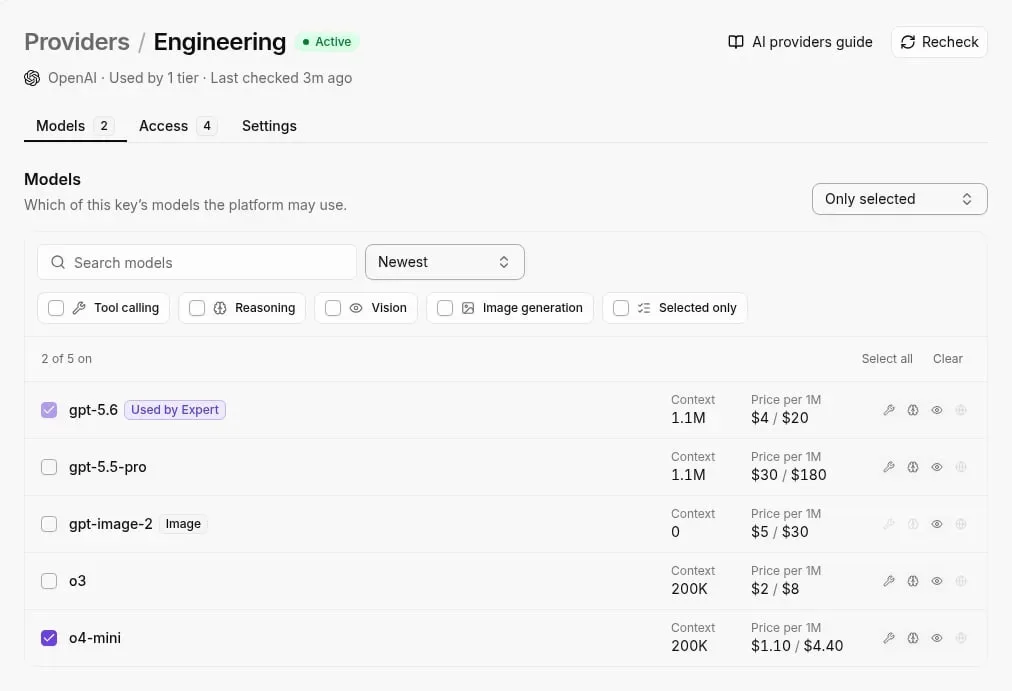
On input, Sol is about 2.7 times the mini's price, and on output about 2.2 times.
A run that sends and receives a million tokens each way costs $12 on Sol and $5.25 on the mini, meaning mini delivers 56% cost savings per run. Your monthly bill for the same volume would rise by a little more than double.
When GPT 6.2 Sol's higher price pays off
Paying that premium can still make sense. OpenAI describes Sol as its efficient, versatile model for everyday work.
If it gets a ticket classified or an invoice extracted correctly on the first attempt where the mini needs a second pass or a person to check, the higher unit price can still produce the lower cost per finished task.
That's a claim about your documents, and the price list can't settle it.
GPT 6.2 Sol speed and latency
Speed is the same kind of question. We have no published latency figure to quote, and response time shifts with prompt length and load, so time both models on your own inputs.
Which model to pick
Stay on your current model while its error rate is tolerable and your volume is high; for the cheapest high-volume option, look at GPT-6 Luna. Move to Sol when the mini's failures cost you more than the roughly $6.75 extra per million tokens in each direction combined.
What to test next on GPT 6.2 Sol
Whether the mini's failures cost you more than that price gap is something one workflow can answer by Monday afternoon, and OpenAI's launch page can't.
Waiting looks sensible because the maker's own pricing and benchmark pages will keep changing and will be clearer in a month. That's true, but those pages describe OpenAI's test tasks, not your inputs, so waiting only delays a measurement you can take now.
Run this on Monday, using one workflow that's already live and whose output someone reads:
- Duplicate the live workflow so the original keeps running untouched.
- In the copy, change the model field from the current model to GPT 6.2 Sol and leave every other setting as it's.
- Pull a batch of recent real inputs, including the awkward ones that needed a human fix, and run the same batch through both versions.
- Compare cost per run from the token counts on each side, then read the paired outputs and mark where Sol was right and the current model was wrong, or the reverse.
- Record the decision in one line: switch, stay, or retest, with the reason and the date.
When inputs and settings match, a difference in output comes from the model, not from the setup. That is what makes the comparison fair.
Next comes the watch list. Check OpenAI's model page for any change to Sol's listed pricing, context limit or rate limits, and for any deprecation notice on the model you run today.
Each one can change your step-four result, so look at them before you act on it.
Related reading
Running the numbers
See what the same workload costs here.
Free forever plan, and every paid plan self-hosts at no extra cost.
See pricing Talk to sales