
Insurance Legacy System Modernization: AI Safety Guide 2026

Oct 4, 202613 min read
At 09:14 AM on a Tuesday morning, a baseline CPU usage of 97.8% on the IBM AS/400 spiked to a non-responsive "+++++", which occurred just as the team was testing a new workflow through Activepieces to sync legacy records, effectively locking all users out of the system.
The insurance core stopped breathing.
Legacy system abstraction is the practice of mediating AI interactions with aging core infrastructure through a layer of standardized tools that translate autonomous intent into safe, throttled commands.
An autonomous agent tasked with identifying "high-churn risk profiles" had bypassed the standard API to issue a raw SQL command. This triggered a recursive query that the legacy hardware was physically incapable of resolving.
This direct database access resulted in a total system seizure when the model misinterpreted the complex relational schema as a flat list.
The Tuesday morning the insurance core stopped breathing
How a recursive SQL query caused the outage
The outage began when an AI agent bypassed the standard API. Tasked with identifying "high-churn risk profiles," it issued a raw SQL command to the IBM AS/400, a mid-range server platform that handles the core policy ledger.
Because the agent lacked a semantic understanding of the database's circular references, it initiated a recursive query that attempted to cross-reference every policyholder against every historical transaction simultaneously.
Mcpressonline reports that a baseline CPU usage of 97.8% spiked to a non-responsive "+++++" (100%+) at 09:14 AM.
This means the processor had no cycles left to manage basic input/output operations. The machine couldn't interrupt the agent’s request to process legitimate traffic.
Why the failover cluster couldn't stop the outage
The secondary node failed to restore service because it interpreted the massive, unoptimized query load as a legitimate, high-priority synchronization task. In a legacy environment, you design failover for hardware death, not logic loops that are technically "valid" syntax.
Automation workflows that lack an abstraction layer provide no circuit breaker to stop a runaway agent before it hits the metal. Without a translation layer to sanitize these intents, the failover cluster simply replicated the crash state.
In a legacy environment, you design failover for hardware death, not logic loops that are technically "valid" syntax.
Neither the primary nor the backup could serve a single customer request for over an hour.
The financial cost of the system blackout
By the time the system was manually hard-rebooted, the operational damage totaled $85,000 in lost premiums and labor. According to Software Modernization Intelligence, the success rate for these digital transitions is precarious.
| Outcome | Percentage | Impact |
|---|---|---|
| Exceed original budget | 39% | Creates a persistent deficit for the IT department. |
| Abandoned entirely | 19% | The legacy risk remains despite the capital spent. |
| Fail to meet goals | 9% | Results in a system that is newer but no safer. |
| Successful | 33% | Represents the minority of firms that prioritize controlled abstraction. |
This incident proves that direct access isn't an efficiency gain. It's a liability that converts a minor coding error into a company-wide blackout.
This takes minutes, not a project: automate it in Activepieces free.
Legacy insurance core systems define the technical debt ceiling
Legacy insurance core systems act as the primary constraint on operational agility. They house the "Golden Record" within monolithic architectures that were never designed for the high-frequency, non-deterministic queries generated by AI agents.
Problems with SOAP interfaces and mainframe wrappers
Directly connecting an AI agent to a legacy core typically requires routing requests through Simple Object Access Protocol (SOAP) interfaces or terminal emulators. These lack the error-handling capabilities to manage the unpredictable nature of natural language processing.
Because these wrappers often lack modern rate-limiting, a single recursive loop from an AI agent can saturate the mainframe's processing threads. This results in a total freeze of the user interface for every human adjuster in your firm.

Data silos that lack modern API documentation
Legacy databases frequently rely on proprietary schemas and undocumented business logic. Without a standardized translation layer, an agent might pull a "current" premium from a table that hasn't been updated since the last fiscal audit.
The absence of Swagger or OpenAPI documentation means you must manually hard-code every interaction. This increases the likelihood of a security oversight during the integration process.
The high failure rate of core modernization projects
The "74/28 Gap" highlights the difficulty of updating these systems, showing the disconnect between strategic intent and operational reality in the insurance sector.
74% of insurers acknowledge that legacy systems are the primary blockage to their growth. Only 28% of these firms have a formal modernization plan in place, leaving the vast majority without a structured path toward digital transformation.
67% of modernization projects fail to meet their original objectives, resulting in significant wasted investment and operational disruption, which leaves organizations struggling to justify the initial capital expenditure.
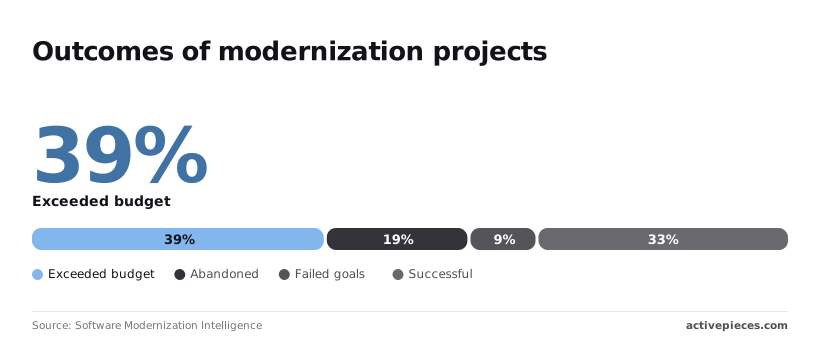
This signifies that two-thirds of the capital invested in fixing these cores results in a system that is still functionally insufficient for modern AI needs.
These statistics demonstrate that the "rip and replace" strategy is statistically unlikely to succeed before you need to deploy AI capabilities. Consequently, the only viable path forward is to treat the legacy core as a static, high-risk asset shielded by an abstraction layer.
Risks of giving AI agents direct database access
Granting an LLM direct database access creates a false sense of security through "read-only" permissions that fail to protect the system against resource exhaustion.
LLMs don't understand legacy table relationships
Large Language Models interpret database schemas through semantic proximity rather than relational logic. This leads them to construct queries that ignore the physical realities of legacy indexing.
Large Language Models interpret database schemas through semantic proximity rather than relational logic.
When an agent attempts to reconcile a policyholder's history, it may generate a query using multiple JOIN statements across unindexed columns, forcing a full table scan.
Because these agents prioritize fulfilling the user's prompt over system stability, they'll repeatedly attempt these expensive joins until the database becomes unresponsive.
The 'Thundering Herd' problem in automated claims processing
Automated agents lack the operational context to stagger their workloads. An agentic workflow can trigger hundreds of concurrent requests the moment a batch of claims is ingested, risking an immediate system overload that could crash the entire processing queue.
- Connection exhaustion occurs when the database reaches its maximum limit of open sessions.
- CPU saturation happens when the legacy processor spends all cycles managing lock contention.
- Buffer cache thrashing forces the system to pull massive amounts of cold data into memory, displacing the hot data needed for daily operations.
Why SQL injection defenses miss semantic query errors
Standard security protocols like parameterized queries are powerless against "semantic errors" where the agent asks for a valid but destructive volume of information.
A traditional Web Application Firewall (WAF) looks for forbidden characters, whereas an agent might simply ask for every record in a table to perform a "summary." This request is syntactically perfect and authorized, yet it consumes the entire I/O bandwidth.
You can follow the rest of this with the builder open. Start free, no card.
Activepieces builds a safety airlock for legacy integrations
Using middleware to separate AI from mainframe systems
Activepieces is an MIT-licensed AI automation platform that isolates the Large Language Model (LLM) from the core insurance database. This prevents an AI agent from holding a direct connection string to sensitive policy tables.
By placing this open-source integration tool between the agent and the legacy system, you create a "buffer zone" where every AI request is translated into a pre-defined, hardened API call.
Activepieces provides 733+ integrations where every connected integration is immediately available as an agent tool.
Once a connector is registered, it serves as both a deterministic flow step and a tool schema on a per-project MCP server, accessible by external agents or internal models without a second integration step.
Check the Integrations Framework and MCP Server documentation to see how the same integration action exposed in the open source repo is surfaced directly to the model.
This sequence ensures that the AI only interacts with a temporary data object rather than the underlying storage layer. Once the middleware structures the data, it can be safely passed to the next stage.
Rate-limiting AI requests to match legacy processing speeds
Activepieces allows you to throttle the velocity of outgoing requests to legacy cores. This prevents the high-speed execution of an AI agent from unintentionally launching a Denial of Service (DoS) attack.

Every agent decision and tool call is traced step-by-step alongside the fixed workflow logic, providing a unified audit log that can be streamed into a SIEM.
Companies like MoneyGram and FundingSocieties run this in production to ensure that an agent's choices are reviewed with the same rigor as a standard workflow. Check the Run Details and Event Streaming features to see how these traces export for security monitoring.
By configuring queueing within the Activepieces flow, your operations team ensures the legacy system only receives traffic at a cadence it can handle.
Roughly 60% of integrations are community-contributed, providing a broad library of pre-built logic to manage these concurrency burdens at the middleware layer, so developers do not have to build custom throttles from scratch.
Human approval gates for high-value policy changes
The "Wait for Response" feature in the Activepieces Web Form trigger establishes a mandatory checkpoint. It requires a human auditor to approve an AI's output before any permanent record update occurs.
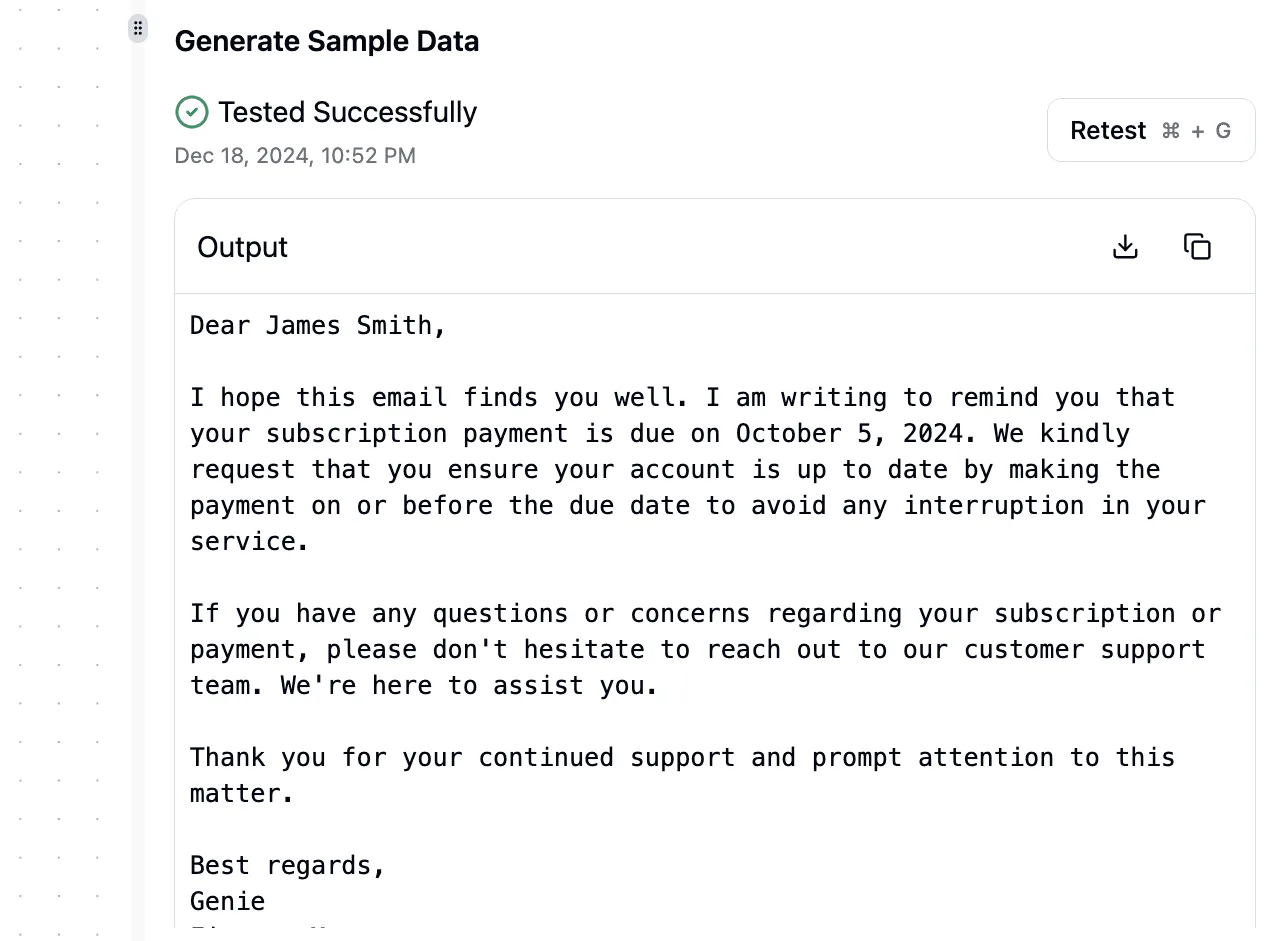
Implementing this gate for high-value transactions, such as premium adjustments, removes the risk of autonomous errors. The AI acts only as a drafter, not an executor.
You maintain a clear audit trail where every automated change is tethered to a specific human approval, a capability utilized by firms like Moneypenny to maintain oversight.
The three-layer architecture that prevents the next outage
A mediated, event-driven model creates a physical separation between the AI’s reasoning engine and the core database. This ensures that an agent’s logical errors can't corrupt the system of record.
Step 1: Implementing a read-only data warehouse mirror
You now direct all AI retrieval tasks to a Snowflake data warehouse. This is a cloud-based repository that mirrors production data without write access.
Even a "hallucinated" query can never accidentally delete a policyholder’s history. This architectural choice forces a delay between data entry and AI analysis, meaning the agent operates on a stable snapshot.

By restricting the AI to this mirror, a runaway analytical script can't slow down the primary portal used by human adjusters.
Validating AI outputs with a business rule engine
Every instruction generated by an agent must pass through a Drools business rule engine before it is translated into a legacy command.
This validation layer acts as a semantic firewall. If an AI agent attempts to issue a payout that exceeds a specific coverage limit, the rule engine rejects the transaction regardless of the AI’s prompt.
Because these rules are managed by human compliance officers, you maintain a hard boundary where automation is subordinate to documented insurance law.
Step 3: The new 'kill switch' protocol for automated agents
The final layer is a circuit-breaker mechanism that monitors the velocity and volume of API calls. It automatically severs the connection if the agent’s behavior deviates from established baselines.
If an agent attempts to update more records per second than a human could feasibly review, the system revokes its credentials. Should the translation layer return a high frequency of "Invalid Command" responses, the kill switch triggers an immediate freeze.
A physical dashboard allows the IT Operations lead to disable specific agent identities without taking the entire integration platform offline.
Frequently asked questions about AI and legacy insurance systems
Does an abstraction layer add too much latency for real-time quotes?
Standardized abstraction layers introduce a marginal processing delay that is outweighed by the reduction in manual underwriting bottlenecks.
While direct database calls are technically faster, an abstraction layer acts as a traffic controller that validates the agent’s request against current rate filings before the legacy core even sees the query.
This prevents the "noisy neighbor" effect where an unoptimized AI agent floods the mainframe with redundant requests, which would otherwise crash the session for every human broker on the system.
By centralizing these calls, you trade milliseconds of compute time for the stability of the entire quoting environment.
Can we use AI with systems that don't have an API at all?
Legacy systems lacking modern interfaces require Robotic Process Automation (RPA) tools to act as the mechanical hands for the AI’s intent. In this configuration, the abstraction layer doesn't send a REST command.
Instead, it triggers a headless bot to navigate the terminal screens of the green-screen mainframe. The AI agent sends a structured JSON request to the abstraction layer. The layer translates this into a specific script for the RPA bot.
The bot enters the data into the legacy UI and scrapes the result.
The abstraction layer validates the scraped text for errors before returning it to the AI. This sequence ensures that the AI never interacts with the fragile UI directly, preventing the agent from clicking buttons that could trigger irreversible batch processes or data corruption.
How do we handle PII compliance when sending data to an LLM?
Securing Personally Identifiable Information (PII) requires a mandatory redaction service within the abstraction layer that strips sensitive fields before the data leaves the corporate network.
Because LLMs (large language models like OpenAI’s GPT-6 Astra or Anthropic’s Claude Sonnet 5.5) retain and learn from the data they process unless specifically configured otherwise, sending raw policyholder names or social security numbers creates an immediate regulatory breach.
The abstraction layer replaces these identifiers with synthetic tokens.
This process ensures the AI can perform logical reasoning on the policy structure without ever possessing the actual identity of the insured. This shifts the liability of a data leak from the external AI provider back to your internal, controlled environment.
Related reading
References
Build it
Set this up in minutes.
No code required. Connect your accounts, and Activepieces runs it from there.
Start free Talk to sales