Manifold MCP: Build a Prediction Market Agent (2026)

Oct 13, 202612 min read
When the Manifold MCP server launched on October 13, 2026, it transformed Claude into a live participant in global forecasting.
By connecting Anthropic's models to real-time crowd-sourced data, which can be further orchestrated through Activepieces for broader workflows, you'll automate risk assessment based on market sentiment.
Prediction market data integration refers to the practice of connecting AI agents to real-time, crowd-sourced probability feeds to enable automated decision-making based on dynamic market sentiment and risk assessment.
Instant access to market probabilities
To bridge the gap between historical training sets and current volatility, the Manifold MCP server gives AI agents live marketing data. While individual forecasters like Tom Yglesias maintain a 0.215 error score, automated agents can now aggregate more accurate sources.

| Source | Error Score | Reliability Comparison |
|---|---|---|
| Tom Yglesias | 0.215 | Individual pundit baseline |
| Manifold (Weighted) | 0.0598 | Nearly four times more reliable than top individuals |
| Kalshi | 0.0219 | Most accurate probability baseline in public domain |
Prices and plan limits checked against mcp.so and manifoldmcp.com and docs.claude.com and openai.com and gemini.google on October 13, 2026.
This score indicates a gap between predicted outcomes and reality.
Manifold (Weighted) posts a 0.0598 score, meaning its collective intelligence is nearly four times more reliable than top individual pundits. Kalshi achieves a 0.0219 score, providing developers with the most accurate probability baseline available in the public domain.
Direct integration via the MCP protocol
Founded by Jesse Sibley in London in September 2026, this hosted Manifold server uses the Model Context Protocol. It gives agents native tools for SEO, AEO, socials and ads data.
Demanding reasoning tasks are well within the reach of Claude Fable 5.1. It can adjust a multi-million dollar ad spend based on the shifting probability of a regulatory change.
Claude Haiku 5.5 can ingest these live signals for high-volume routing to categorize incoming leads by their projected market value in milliseconds.
Activepieces bridges this gap by ensuring that any connector registered in the platform is immediately available as an agent tool.
Because the same logic in the packages/pieces directory of the open source repo powers both standard flows and the per-project MCP server, an agent can query Manifold probabilities and trigger downstream actions without a second integration step.
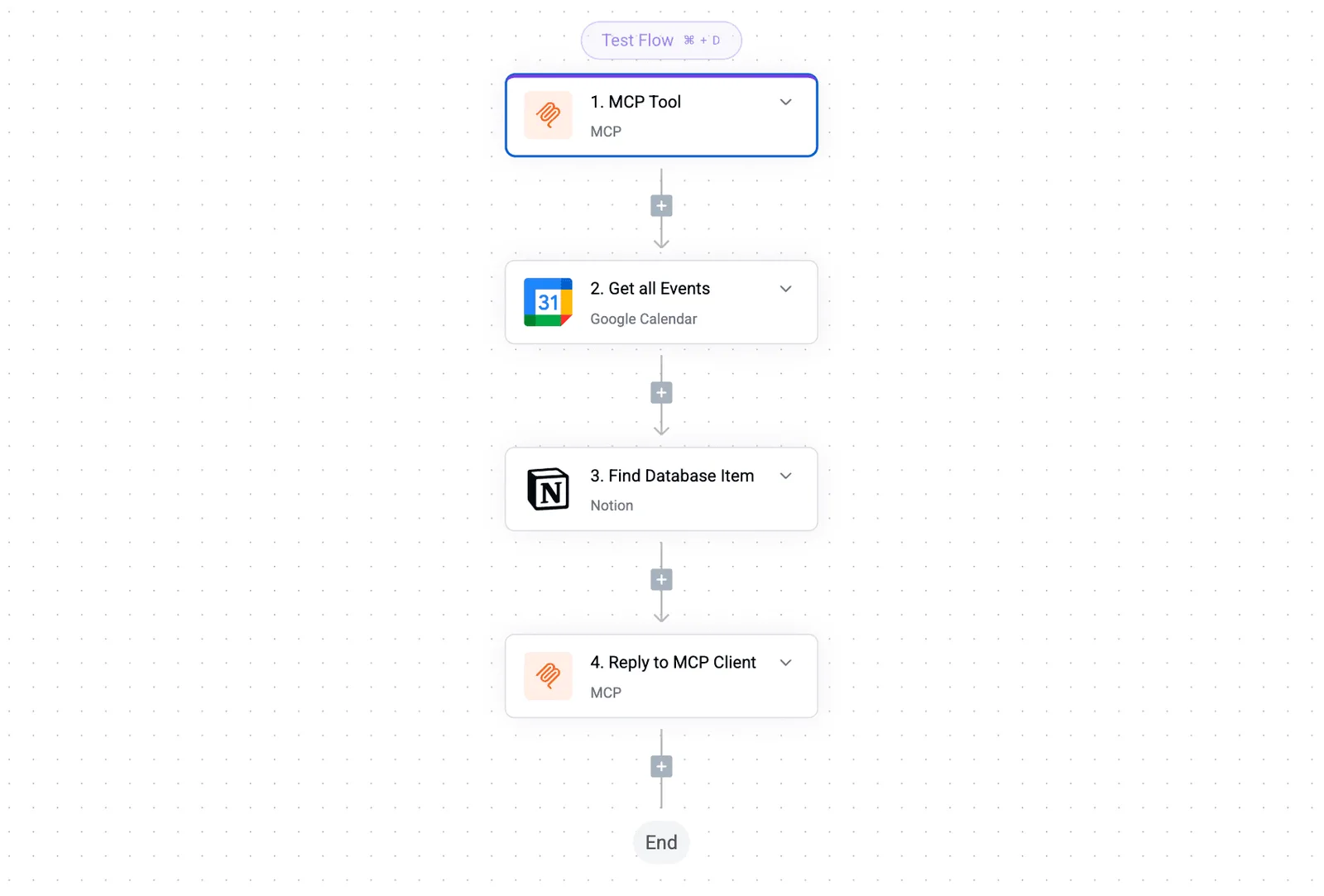
This unified architecture means that once a integration is added to the 739 integrations available, it is natively reachable by Claude or any custom agent as a standardized tool schema.
This connectivity ensures that when a market probability crosses a specific threshold, the agent can immediately trigger downstream actions across the entire enterprise stack.
Why Manifold's crowd forecasts outperform single analysts
Because they aggregate diverse perspectives into a single, quantifiable probability, crowd-sourced markets provide a statistically superior signal for AI agents.
While a single human analyst might be blinded by personal bias or outdated internal data, a prediction market forces participants to back their claims with capital.
Noise is filtered out and accuracy is rewarded over time. Participants who consistently predict outcomes correctly gain influence and capital, while those who fail lose the ability to impact the market price.
Understanding brier scores in market data
The Brier score is the primary metric for calibrating how well a market's predicted probability aligns with the eventual reality. Because this score measures the mean squared difference between a forecast and the actual outcome, a lower score indicates a more reliable prediction engine.
For an autonomous agent running on Claude Fable 5.1, these scores provide a mathematical basis for trust.
The agent can weigh its confidence in a specific action based on the historical calibration of the market it's querying. This prevents the "hallucination of certainty" where an AI might otherwise treat a speculative guess as a hard fact.
How manifold compares to institutional forecasters
By leveraging the "wisdom of the crowd," Manifold outperforms traditional institutional forecasters who often suffer from bureaucratic lag and narrow expertise.
Unlike a think tank that may only update its outlook quarterly, Manifold updates in real-time as new information breaks. This gives an agent using Gemini 3.8 Flash the most current data possible for high-frequency decision-making.

Institutional forecasters rely on credentialed experts and historical modeling, which can lead to "groupthink" and slow responses to black swan events.
Manifold Markets utilize open participation and play-money or real-money incentives. This captures information from niche experts that institutions typically overlook. AI agents act as the bridge by consuming these market signals to adjust operational risk parameters without waiting for a human manager’s sign-off.
Everything below works on Activepieces' free plan. Start without code or a credit card.
Measurable capabilities of the new Manifold MCP integration
The Manifold MCP integration provides the direct programmatic hooks required for an agent to move from reading a news feed to quantifying the financial risk of those headlines.
By exposing the prediction market's internal mechanics as standardized tools, the server allows models like Claude Sonnet 5.5 to treat crowd-sourced probabilities as a live variable.
Market search and filtering functionality
By using the GET /v0/markets endpoint, agents can ingest bulk data and filter through thousands of active predictions to find relevant hedges. This bulk retrieval ensures an agent can scan the entire landscape of political, economic, or technological outcomes in a single pass.
This means it can identify correlations between disparate markets that a human analyst would likely overlook.
By narrowing results based on liquidity or closing date, a model like Gemini 3.8 Flash can ignore "zombie" markets with no active traders. This ensures its downstream actions are based only on high-confidence, active consensus.
Automated market creation for AI agents
The moment they identify a gap in available data, agents can now use the POST /v0/market tool to spin up new prediction markets. This capability transforms an agent from a passive consumer into an active solicitor of intelligence.

If an agent cannot find a probability for a specific supply chain disruption, it can create the market itself to "buy" that information from the crowd.
For a developer managing a fleet of autonomous researchers, this means the AI can effectively set its own benchmarks for uncertainty. It pays a small bounty in play money to force a human consensus on a niche topic.
Real-time probability and volume tracking
The server monitors probability shifts and trading volume to alert agents when the "vibe" of a market changes before the news officially breaks. Because the MCP exposes these metrics, an agent can trigger a defensive play the millisecond a probability crosses a specific threshold.
This creates a closed loop where the actual movement of capital tethers the agent's reasoning. It provides a level of risk awareness that purely text-based models can't replicate.
Why prediction market data changes AI automation workflows
By replacing historical logs with real-time, financialized expectations, prediction markets transform AI from a reactive archivist into a proactive strategist. This shift moves the needle for automation teams from "what happened" to "what is likely to happen," allowing agents to hedge against future volatility.
By replacing historical logs with real-time, financialized expectations, prediction markets transform AI from a reactive archivist into a proactive strategist.
Replacing static data with crowd-sourced probabilities
Integrating Manifold data allows an agent to weigh its confidence against the collective intelligence of thousands of motivated traders. Traditional RAG (Retrieval-Augmented Generation) systems rely on internal documents that are often outdated the moment they're saved.

Hallucinations based on stale context are the result.
A model like Claude Sonnet 5.5 can query a prediction market to verify if a project deadline is actually feasible based on market sentiment. This provides a reality check that internal Jira tickets might obscure.
Furthermore, this turns the AI into a risk-mitigation layer that can flag a "low-risk" internal status as a "high-probability failure" based on external capital flows.
Triggering actions based on shifting market odds
To prevent the wasted resources of blanket automation, developers can now design workflows to execute only when specific probability thresholds are met. Instead of running a marketing campaign on a fixed schedule, a developer can use Gemini 3.8 Flash to monitor a specific market.
The developer can trigger the deployment once the probability of a competitor's product launch exceeds a certain percentage. This creates a dynamic logic gate where live odds power the "if/then" statement rather than a binary database entry.
- The agent polls the Manifold MCP server for the latest odds on a specific event.
- A reasoning model like GPT-6 Astra compares the current probability against the business’s risk tolerance.
- The system triggers downstream actions only when the market confirms a shift in reality.
Connect Manifold prediction data to your existing workflows
Manifold allows you to replace rigid conditional logic with fluid, market-derived probabilities that reflect real-world expectations.
Your automation can query a live market to determine if a specific outcome is still on track according to the crowd. This is more effective than hard-coding a threshold that becomes obsolete the moment a project scope changes.
You can bridge the gap between speculative market data and your internal task management by pulling Manifold’s JSON-based probability scores into your automation stack.
Because Manifold operates as a public prediction market, its API delivers a transparent stream of "Yes" and "No" odds that act as a high-fidelity signal for risk assessment.
When the market's confidence in a milestone drops, your team is alerted by mapping these percentages to your internal workflows. This prevents the common "watermelon" status report where everything looks green on the outside until it suddenly turns red.
The Model Context Protocol (MCP) is the translation layer that allows high-reasoning models like Claude Fable 5.1 or GPT-6 Astra to interpret Manifold’s market fluctuations as actionable triggers.
This standardized connection means an AI agent can autonomously check the probability of a competitor's product launch and preemptively adjust your marketing budget or social media queue based on that risk.

Run this in Activepieces
MoneyGram and FundingSocieties run Activepieces in production to manage complex automation environments where every tool call an agent makes must appear in a verifiable run trace.
The MIT-licensed core ensures that the logic running your risk-aware agents is public code, allowing you to build these market-driven flows for free with unlimited flows on every plan.
- Generate a Manifold API key in your user settings to authenticate your requests.
- Create an HTTP Request step in Activepieces using the
/v0/market/{id}endpoint to pull the latest data for a specific prediction. - Map the 'probability' JSON value to your next action, such as a Slack notification or a Jira update.
The MIT-licensed core ensures that every tool call an agent makes is visible in the run trace, providing the same level of transparency that MoneyGram and FundingSocieties rely on for their production automations.
You can build this automated risk-tracking flow for free in Activepieces, where the engine running the logic is public code rather than a closed configuration panel.
Frequently asked questions
Does the Manifold MCP server require a paid subscription?
Access to the Manifold MCP server is free to start, with every new workspace getting 250 free credits, after which a Pro plan starts at $20 a month for 2,500 credits.
This means a developer can deploy a risk-aware agent using the free starting credits before any recurring cost applies, though continued heavy use requires a paid Pro or Max plan.
While Manifold's free credits let you start without a subscription fee, you're still responsible for Manifold's per-credit costs beyond the free tier and the per-token costs of the LLM provider you choose to host the agent.
Can I use Manifold MCP with models other than Claude?
You can use the Manifold MCP server with any model that supports the Model Context Protocol. This includes Gemini 3.8 Flash or GPT-6 Astra, so long as your orchestration environment can host an MCP client.
This flexibility ensures you aren't locked into a single vendor's pricing or performance tiers when building a forecasting bot.
Because MCP is an open standard, you can swap a reasoning-heavy model like Claude Fable 5.1 for a faster, cost-efficient one. A model like Gemini 3.5 Flash-Lite works if your specific workflow prioritizes execution speed over deep market analysis.
What are the rate limits for the Manifold API?
The Manifold API enforces rate limits to ensure platform stability, which means your agent must be designed to handle occasional "too many requests" errors during high-frequency trading simulations. If your agent exceeds these thresholds, the API will temporarily reject new calls.
You should implement exponential backoff in your code to prevent the automation from crashing. For most standard research and notification use cases, these limits are generous enough that a single agent will rarely encounter a bottleneck.