n8n Review 2026: Is It Worth It? Pricing and Limits

Oct 21, 202615 min read
If your team writes code and will run the tool itself, either self-hosted or paid by execution, n8n is worth it in 2026.
It's the wrong pick for non-technical teams, strict open-source mandates (where a fully MIT-licensed option like Activepieces fits better), and budgets that can't absorb caps and upkeep.
Choose n8n for technical teams only
What n8n is
n8n is a workflow automation platform: you connect apps and services on a visual canvas. You can drop into JavaScript or Python when a node doesn't do what you need. You can host it on your own server or pay for the vendor's cloud.
According to ARR Club, annual recurring revenue was $7.2 million in December 2024, $40 million in July 2025, and $100 million in May 2026.

That's roughly a fourteenfold rise in seventeen months, so this isn't a hobby project that may vanish, and the vendor has the funds to keep shipping.
Because growth is this fast, pricing and licensing terms are still being tuned, so check them before you commit.
Pick n8n if you have at least one person who's comfortable debugging a failed workflow and who owns the tool day to day. The ceiling is high and the cost per execution is low. The price is that someone has to maintain it.
You can check the fit against your own team with three conditions.
- A technical team that's happy to write code inside workflows
- A plan to self-host, or to pay per execution on the cloud
- Room in the budget and calendar for execution caps and ongoing upkeep
Any one of the following should stop you.
- A non-technical team, such as a five-person operations group with no developer, will stall the first time a workflow breaks
- A strict open-source rule, because n8n is source-available under its own license rather than a standard open-source one
- A tight budget, since caps and server maintenance both cost money
To test those conditions against real work, the next section covers what n8n is like to build with.
If you are running this arithmetic for your own team, see what the same workload costs on Activepieces.
What n8n does with workflows
On n8n's canvas, a trigger starts a workflow and a chain of nodes each does one job: fetch, transform, branch or call a model. The behavior below is documented at docs.n8n.io.
Before anything else, every workflow starts with a trigger node, such as a schedule, a webhook or an app event, and you wire nodes after it. Each node passes items to the next, and you can open any node to see the data it received.
When a new teammate debugs by reading real data instead of guessing, the first month gets shorter.
When an integration is missing, it costs an afternoon, not a project: the Code node runs JavaScript or Python inside the flow, and the HTTP Request node calls any API that has no dedicated node.
The catch is that someone on the team has to be comfortable maintaining that code, which is why this tool suits technical teams.
Building AI agent workflows in n8n
With agent nodes, a model can use tools and draw on data from earlier steps. The flow below, "Test Flow", shows the usual shape.
It has a daily schedule trigger, a Code step that picks a topic, an HTTP request pulling keyword data, then a selected agent writing a 2,000-word post from a prompt full of references to those earlier steps.
Put the effort into the prompt: the variable references keep it tied to live data.
How much real work looks like that is the next thing to check. Retailbox Automation found AI nodes in 42% of top templates, 25% of user workflows and 6% of new workflows, suggesting that AI adoption plummets in newly created workflows.
Showcase templates therefore overstate AI by a wide margin. Judge n8n first on the plain trigger-to-API plumbing that most new builds are made of, and treat agents as a bonus.
If you pick cloud, it's hosted for you and billed by execution. Self-hosted runs on your own server, and you own the uptime, backups and upgrades. The release notes show frequent versions, so self-hosting means budgeting recurring upgrade time, not a one-off install.
Compare n8n's plans and their caps
Self-hosting trades a monthly bill for upgrade hours. n8n's cloud plans run from $20 on Starter to $800 on Business, billed annually, with caps on executions and shared projects. The upkeep cost makes the cloud price worth comparing before you commit.
n8n cloud plans and pricing compared
Match the table to your team's size rather than the headline price; the figures come from n8n's pricing page, and they show how fast the ceiling moves between tiers.
| Plan | Price per month, billed annually | Included executions | Shared projects | Gated features |
|---|---|---|---|---|
| Starter | $20 | 2.5K | 1 | Single shared project |
| Pro | 50 € | 10K | More than Starter | Shared projects beyond one |
| Business | $800 | Above Pro | More than Pro | Team governance such as SSO |
| Enterprise cloud | Quoted by sales | Negotiated | Negotiated | Highest-tier controls |
| Community, self-hosted | Free licence | Limited by your server | Not a plan feature | Paid-tier features stay locked |
Prices and plan limits checked against n8n.io on October 21, 2026.
If you're a solo builder or a team of two running a handful of automations, Starter's 2.5K executions suit you. A single shared project means a third person is already working around the limit.

Starter costs $20 a month billed annually. or 24 € month to month. Pro goes from 60 € monthly to 50 € annually, a 10 € difference.
Business costs $800 a month when billed annually.
Commit to annual only once a pilot has run a full quarter and people are using the workflows daily.
Free to install, Community still costs you a server and your hours. Gated features stay behind paid licences, so a team that needs SSO should price that licence before assuming self-hosting is the cheap route.
Count runs, not nodes: one execution is one complete run of a workflow, however many steps it contains.
Starter's 2.5K therefore counts runs, not nodes. A workflow triggered every five minutes uses roughly 8,600 runs a month and blows through Starter alone, so schedule-heavy automations belong on a higher tier or on your own server.

Where n8n excels and falls short
For technical teams that want code-level control and predictable billing, n8n is strong; its limits are a source-available license, cloud run caps, and the upkeep of running it yourself.
n8n's main strengths for technical teams
You can drop into JavaScript or Python in a Code node, call any API through the HTTP Request node, and branch, loop and merge without fighting the canvas.
Billing counts one execution per workflow run, not per step, so a long workflow costs the same as a short one.
With the AI nodes, built on LangChain, you can wire agents, memory and tools into the same canvas. That means your automations and your AI experiments live in one place, which saves a team from maintaining two systems.
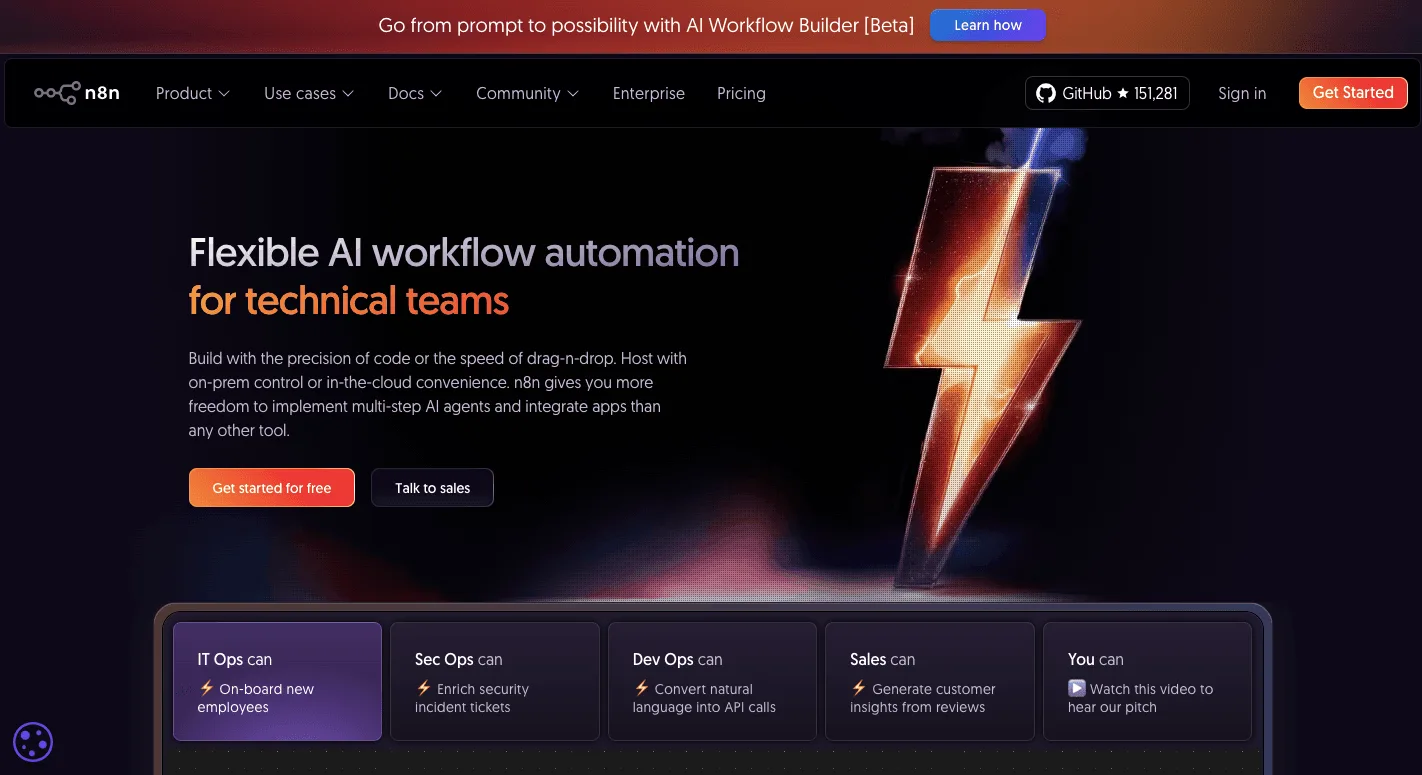
Is n8n open source? The Sustainable Use License
Strictly speaking, n8n is source-available, not open source in the OSI sense. The Sustainable Use License lets you run and modify it for your own business, but it restricts reselling it or hosting it as a service for others.
For an internal operations team this rarely matters.
For an agency embedding n8n in a client product, or for a company whose policy requires an OSI-approved license, it's a stop sign. Read the current license text before you commit, because that's a legal question and not a technical one.
Execution caps and cloud cost
Quietly, polling or scheduled workflows consume the monthly execution caps that cloud plans carry.
Read it for where the gaps open as volume grows, not for the low end, where every option looks cheap.
Left out of that server line is the labor of keeping that server alive, which is the next cost.
Self-hosting upkeep
Once you self-host, the cap goes away, but someone now owns upgrades, backups and the 2 a.m. page when a queue stalls. On a small team that someone's usually one person, and the workflows then depend on that person's calendar.

Budget for the habit change too: people must learn to report failed runs to an owner instead of assuming the automation fixed itself.
The strongest case against n8n
Against n8n, the best argument is that it asks for engineering discipline most teams lack. The canvas looks friendly, but expressions, error handling and data shapes punish people who don't think like developers.
Add the license limits and a cap that bites as volume grows, and a simpler hosted tool can be the better buy.
For non-technical teams, strict open-source shops and tight budgets, that argument is correct, and the verdict already excludes them. For a team with a developer who will own it, those costs are known and plannable.
A five-person operations group with no developer doesn't have to hire one: in Activepieces they describe the process in the built-in chat, and it publishes a live flow, the same artifact a builder would have assembled node by node.
That flow sits under the platform's usual RBAC, audit logs and run traces like any human-built one, so every run leaves a record anyone on the team can open and read without a certification. MoneyGram, Moneypenny, Alan and FundingSocieties run Activepieces in production.
Worth checking against a plan that does not meter every step: one credit covers a whole run on Activepieces.
Who should pick something other than n8n
Pick something else when nobody on the team will own the tool, because the costs above are only plannable if a person is responsible for them.
Non-technical teams
Picture a ten-person operations team where nobody writes code. n8n expects you to read JSON, handle errors in a node's output, and sometimes drop into JavaScript.
In the signup-to-paying funnel, most signups never build a workflow, and the likely reason is that the first real task takes more effort than they expected.
If people want to click through a trigger and an action, Zapier and Make are built for them. If your habit change is "everyone builds their own automations," pick the tool people will actually open.
Skip n8n for license-sensitive or embedded use
Under the Sustainable Use License, n8n ships source-available but not open source in the strict sense. It limits how you can resell or embed it in a product you sell.
If your legal team requires an MIT- or Apache-style license, or you plan to put workflows inside a customer-facing product, n8n is the wrong base. Choose a permissively licensed tool and settle the question before anyone builds on it.
Teams without anyone to run servers
Self-hosting means someone patches and restarts it. If that someone is "whoever has time," the saving on execution fees disappears into outages. A hosted service from Zapier or Make removes that duty, and you pay for it in subscription fees instead.
To match each situation to a better pick, use the table below, which also shows the integration counts that bear on it. Zapier's 9,000+ is nearly four times n8n's 2,367, so a missing connector is a real risk if your stack is unusual.
| Situation | Better pick | Integration counts |
|---|---|---|
| Non-technical team | Zapier or Make | Zapier 9,000+, Make 3,500+, n8n 2,367 |
| Permissive open-source need | A tool under an MIT- or Apache-style license | Check license before count |
| No one to run servers | Hosted Zapier or Make | Make 3,500+, Zapier 9,000+ |
| Missing integrations | Zapier first, then Make | Zapier 9,000+, Make 3,500+, n8n 2,367 |
| Activepieces | Teams that want an open-source, self-hostable platform (MIT-licensed core) with unlimited flows on every plan | Activepieces 743 |
Name that person before you compare features, because the choice depends on who maintains the workflow after launch.
Run the same jobs in Activepieces if n8n's friction is the problem
When the license, the execution caps, the upkeep or the AI-agent setup is what is slowing your team down, Activepieces answers each with something you can check: its core is MIT-licensed, the free cloud plan needs no card and includes unlimited flows, and you can self-host it across 743 integrations.
Name that person before you compare features, because the choice depends on who maintains the workflow after launch.
That matters because the person you named a moment ago may not be the person who inherits the server. An MIT core means legal review is a short conversation, not a reading of custom license terms.
What the same workflow looks like
Take a job a small ops team runs constantly: every hour, pull new rows from a spreadsheet, have a language model summarize or classify them, and pass the result on. In Activepieces that's a trigger, an action and an end node on one canvas.
Below, the builder shows the shape of it: an Every Hour trigger, an Ask ChatGPT step, and the End node, with the step selector open on the right.
Finding spreadsheet nodes in the n8n editor
Search for "sheet" and the list returns Microsoft Excel 365, Google Sheets, AITable and Kimai, each with its description and actions. The person adding the spreadsheet step therefore picks it from a list instead of hunting for an HTTP endpoint.
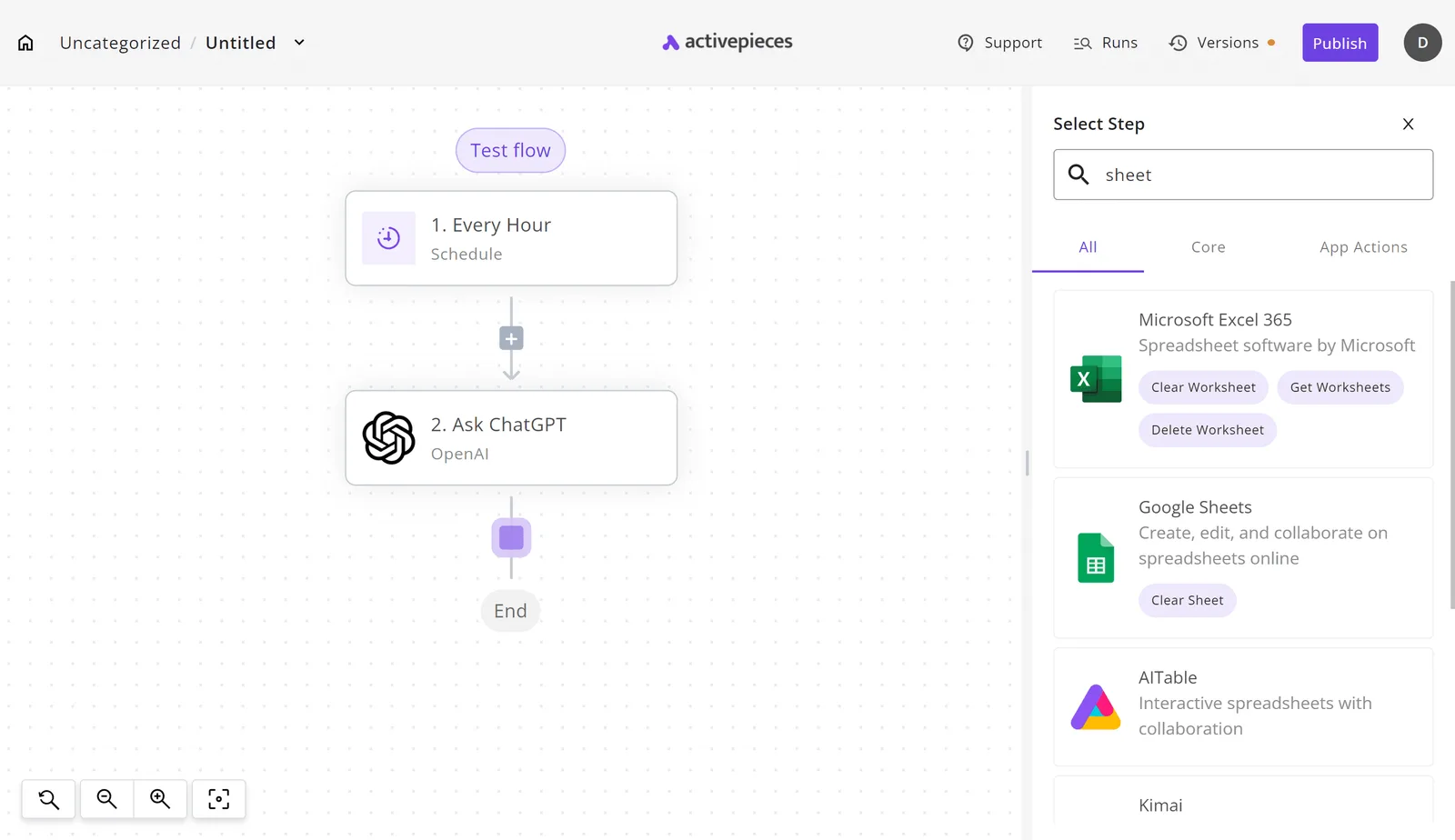
Notice the tabs for All, Core and App Actions; they let a newcomer separate built-in logic from app connections without reading documentation first.
In Activepieces each app is an "integration," and the catalog is browsable at activepieces.com/integrations. Check there that the apps you depend on exist before you commit.
Moving over from n8n
Rebuild your workflows by hand, because Activepieces doesn't import or convert n8n workflows. For a handful of jobs that's an afternoon. For a large estate, treat it as a migration project with an owner and a schedule.
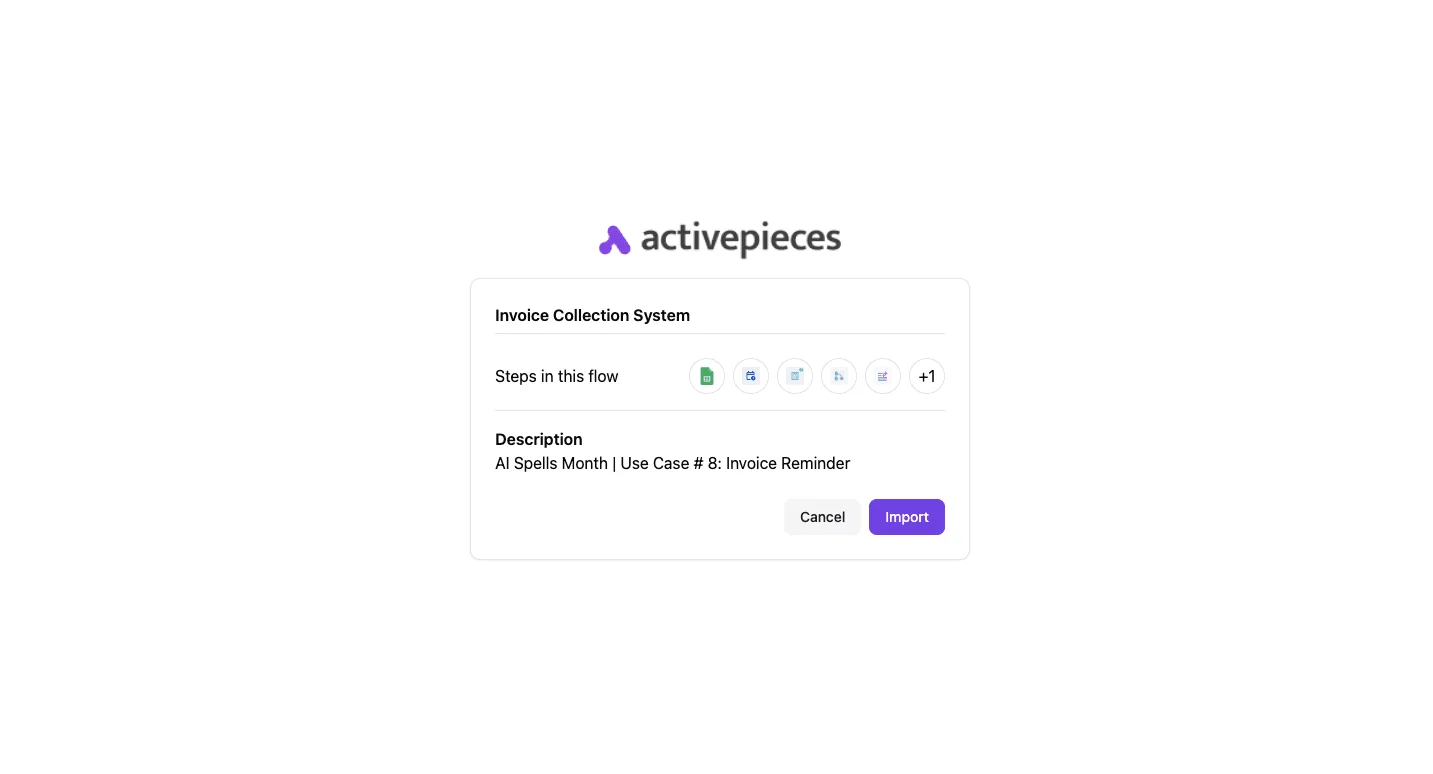
After the build step comes the habit change: whoever maintains the flow has to learn a new canvas, and that's the real cost of switching.
Where it differs from n8n
What separates the two is who can live with the tool. The MIT core answers the strict open-source objection that n8n's Sustainable Use License raises.
The free cloud plan lets you test a real workflow before anyone files a purchase request. Self-hosting is available, but it brings the same upkeep as any server you run: updates, backups and someone on call.
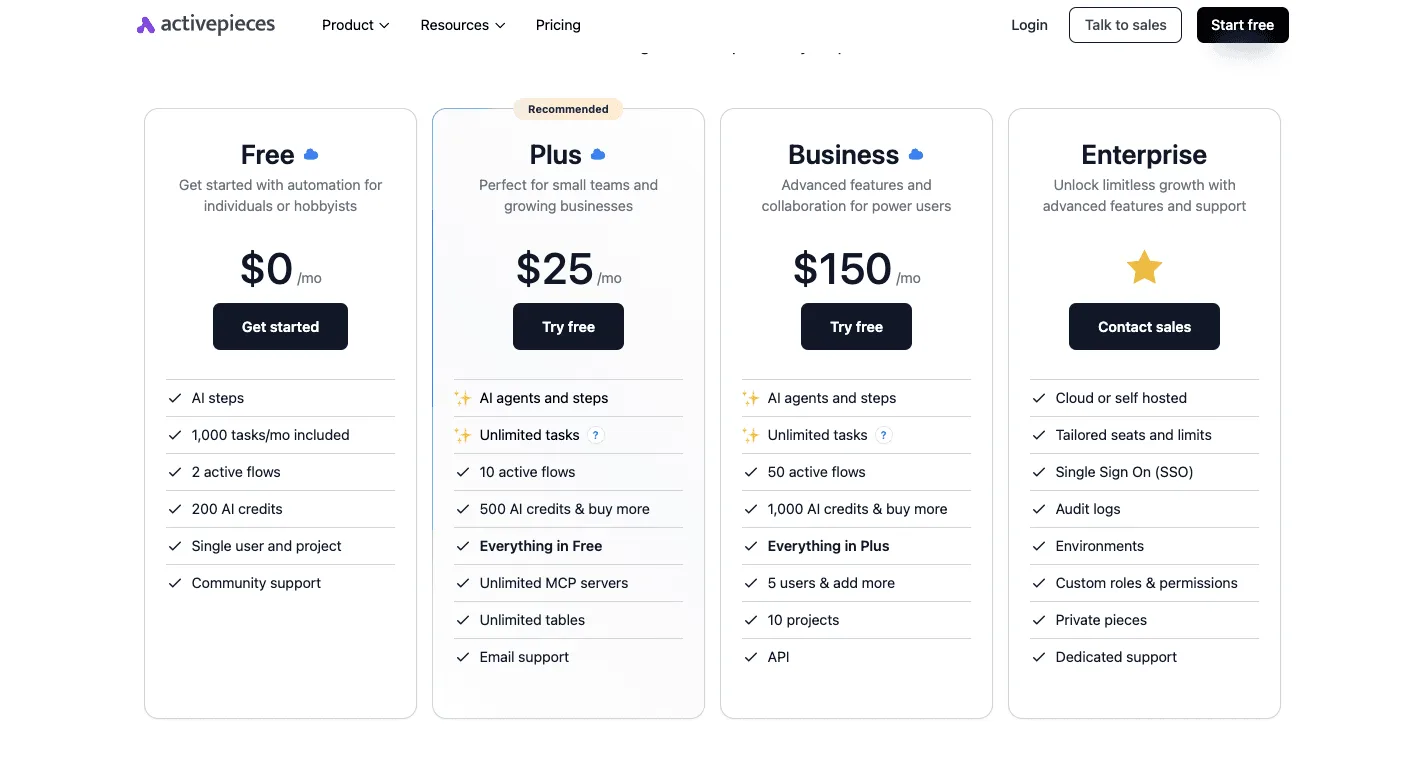
If you want to rebuild one of your n8n jobs and see how it feels, sign up for Activepieces.
Frequently asked questions
Most of what teams ask before committing to n8n, or before walking away from it, comes down to a few short questions.
Only the self-hosted Community Edition is free to run, and you still pay for the server and whoever keeps it patched. The cloud product is paid and priced by execution.
So "free" means no license fee, not no cost. Budget the hours of the person who will be on call when it breaks.
Can n8n be used commercially without paying?
Yes for internal business use, such as automating your own company's operations, under the Sustainable Use License. What the license restricts is selling n8n itself, or offering it to customers as a hosted service.
If your plan is to embed n8n in a product you sell, you need a separate commercial agreement with n8n. Have whoever signs your vendor paperwork read the license text before you build a customer-facing offering on it.
Is n8n harder to learn than Zapier?
Yes, for people who don't work with data structures. Zapier asks you to fill in fields. n8n asks you to understand how data moves between nodes, how to read JSON, and when to write a short expression or a code step.
For a developer or technical analyst, this comes quickly. An operations coordinator who has never seen JSON will need training time and a patient colleague, and that's a habit change your team has to schedule, not assume.
Does n8n have a free trial?
The cloud product has generally offered a trial period, but its length and terms change, so confirm them on the pricing page before you plan around it.
The self-hosted edition is the other way to test without paying: install it on a spare machine and rebuild one real job. That tells you more about fit than a demo does, because your own data runs through it.
How often does n8n release updates?
Often. New versions arrive frequently, and the release notes show what changed. On cloud, that work is handled for you.
If you self-host, someone has to read those notes and test and apply upgrades, or your instance drifts behind on fixes and security patches. Assign that task to a named person and put it on their calendar so it doesn't slip.
Related reading
References
Running the numbers
See what the same workload costs here.
Free forever plan, and every paid plan self-hosts at no extra cost.
See pricing Talk to sales