
Private AI Platform: What It Is and How It Works
Oct 13, 202614 min read
The shift toward private AI platforms is driven by a growing need for data sovereignty and the desire to maintain absolute control over sensitive corporate information.
By deploying large language models on local infrastructure, organizations can eliminate the risks associated with third-party data processing and ensure compliance with strict regional privacy regulations.
These self-hosted environments allow teams to build complex workflows, which can be further enhanced by connecting various internal services through Activepieces to automate routine tasks, without ever exposing proprietary datasets to the public internet.
Ultimately, a private AI strategy empowers businesses to leverage the transformative power of generative intelligence while keeping their most valuable digital assets behind a secure, self-managed firewall.
Private AI platforms keep data within your perimeter
Sensitive inputs never traverse the public internet when an organization restricts all model inference, data storage, and process orchestration to its own managed infrastructure. This architectural choice prevents third-party providers from using your data for training or metadata analysis.
The three pillars of AI privacy: Compute, Models, and Data
Every component of the AI stack must reside behind your firewall to prevent unauthorized data exfiltration. Behind that firewall, compute serves as the physical or virtual servers where logic executes.
Models are the specific weights and architectures, such as Mistral Large 4 or DeepSeek-V4.1-Flash, which internal repositories serve to avoid sending prompts to external endpoints. Data includes the proprietary knowledge bases, vector databases, and user inputs that provide the context for AI responses.
Teams can manage these pillars effectively by deploying a self-hosted orchestration platform, such as Activepieces.
Activepieces reaches every model provider a company uses among its 739+ integrations, allowing teams to build automated workflows that connect internal databases to locally hosted models without exposing secrets to a SaaS vendor.
Why public API wrappers fail the privacy test
Regulated industries find public API wrappers insufficient because they require a persistent outbound connection to a vendor's endpoint. While these services often promise "zero-retention" policies, the organization still loses technical custody of the data the moment it leaves the network.
This creates a dependency on a third party's security posture rather than the organization’s own audited environment.
| Hosting Model | Data Control | Upfront Cost | Latency | Maintenance |
|---|---|---|---|---|
| Public API | Low | Zero | Variable | Zero |
| VPC-Hosted | Medium | Medium | Low | Medium |
| True On-Premise | High | High | Lowest | High |
The choice of hosting model determines the depth of the audit trail available to security teams. Organizations requiring absolute sovereignty must move beyond API-based shortcuts to maintain a fully air-gapped stack.
Everything below works on Activepieces' free plan. Start without code or a credit card.
The architecture of a self-hosted AI stack
A self-hosted AI stack functions as a closed-loop system where data never exits the internal network. This keeps proprietary information under the organization’s exclusive control. Replacing third-party API endpoints with a vertical stack of locally managed components achieves this architectural sovereignty.
**Organizations requiring absolute sovereignty must move beyond API-based shortcuts to maintain a fully air-gapped stack.
Local inference engines: Ollama, vLLM, and LocalAI
Transforming raw weights into actionable intelligence without an external handshake, the inference engine provides the execution environment for Large Language Models.
By deploying these engines on internal hardware, organizations ensure that every token generated stays behind the firewall. The specific hardware profile and throughput requirements typically determine the choice of engine:
- vLLM: A high-throughput serving framework optimized for performance on NVIDIA H100 or A100 GPUs, meaning an enterprise can handle concurrent requests from hundreds of employees without latency spikes.
- Ollama: A streamlined tool for running models locally on diverse hardware, which allows developers to prototype agentic workflows on standard workstations before moving to production.
- LocalAI: A self-hosted, OpenAI-compatible API that acts as a drop-in replacement for cloud services, so existing codebases require no modification to transition from public to private infrastructure.
The following layers provide the context and logic necessary to turn these raw models into functional business tools.
Vector databases for private RAG implementations
Vector databases provide the long-term memory for a private stack by storing indexed versions of internal documents to ground model responses in factual, company-specific data.
Without this layer, a model like Mistral Large 4 might generate plausible but incorrect answers because it lacks access to the latest internal project specs.
Small-to-medium datasets can be managed with Chroma, an open-source embedding database designed for simplicity. Qdrant is a high-performance vector search engine with advanced filtering that makes search results respect internal data classification levels during retrieval.
Orchestration: Connecting models to internal business logic
The orchestration layer functions as the central nervous system, directing the flow of data between the user, the vector database, and the inference engine. The orchestrator enforces enterprise-grade security controls by managing the authentication and permissions required to access internal resources.
Meeting regulatory compliance standards in high-stakes industries requires the comprehensive audit log maintained by an internal orchestrator.
A stripped self-hosted build is how most vendors monetise control, but Activepieces provides the same governance features to air-gapped environments as it does to its managed cloud.
Comparing the enterprise feature list (including SSO, SCIM, custom RBAC, audit logs, release management, and secret managers) in the self-hosted docs against the SOC 2 Type II cloud reveals an identical set of controls.
Regulated and public-sector organisations like MoneyGram and Moneypenny run this edition in production today to maintain absolute sovereignty.
Hardware and VRAM requirements for local AI models

Video Random Access Memory (VRAM) capacity is the primary limit on performance. It dictates which models can run locally without offloading to slower system memory. Scaling from a basic task-runner to a reasoning-heavy flagship model requires a non-linear increase in hardware investment.
Llama 3.1 VRAM requirements by model size
The memory footprint of Llama 3.1 scales sharply based on parameter count and quantization levels. According to Llamaperf, the 8B model variant requires 7.5 GB of VRAM, meaning it can operate on a single consumer-grade GPU like an NVIDIA RTX 4060.
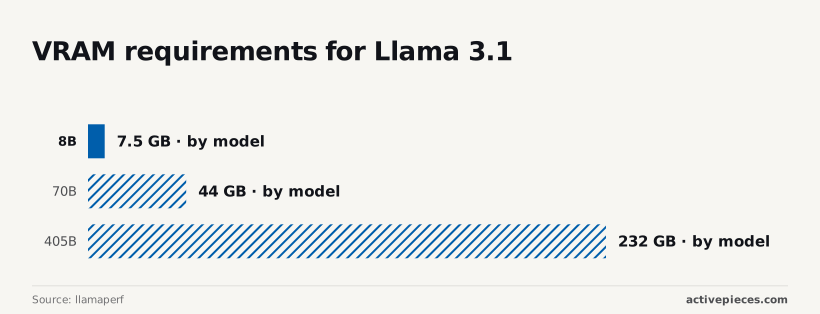
Professional-grade hardware like the A6000 or dual-GPU configurations are necessitated by the 70B variant, which requires 44 GB.
The flagship 405B variant demands 232 GB of VRAM, so a dedicated cluster of at least three H100 80GB cards is required just to load the weights into memory.
The following data illustrates how model intelligence directly impacts the procurement budget for on-premise infrastructure:
| Model Variant | Quantization | VRAM Required |
|---|---|---|
| Llama 3.1 8B | 4-bit | 7.5 GB |
| Llama 3.1 8B | 8-bit | 11 GB |
| Llama 3.1 70B | 8-bit | 74 GB |
For on-premise infrastructure, higher VRAM availability is the only way to achieve larger context windows and higher precision. This prevents the model from losing coherence during long document analysis.
The 'hidden' labor costs of model fine-tuning
Third-party APIs abstract away a continuous engineering overhead that a self-hosted stack introduces. Data engineers must sanitize internal datasets to prevent the model from learning sensitive PII during the fine-tuning process.
DevOps teams must manage the orchestration of containerized environments to share GPU resources efficiently across departments. Security analysts must perform regular weight-checksum audits to verify that the local model hasn't been tampered with or corrupted.
Power consumption and data center cooling requirements
Facility upgrades are often required when deploying high-VRAM clusters, as they increase the thermal load on existing server rooms.
A single rack of H100 GPUs can draw over 10kW of power, so IT must verify that the local circuit breakers can handle the sustained peak load of inference.
Furthermore, standard air cooling may prove insufficient for multi-GPU setups, meaning liquid cooling or increased airflow is necessary to prevent thermal throttling during heavy agentic workloads.
Easier to see it running than to read about it: set it up free, no card.
Common failure modes in private AI deployments
Many private AI deployments fail because teams neglect data sanitization protocols before information reaches the model or lose oversight of "shadow AI" instances.
Relying on the hardware to provide a perimeter is insufficient if the software layer allows unscrutinized data to flow into the inference engine. These failures manifest as three primary risks:
- Data Leakage: Employees utilize unapproved public tools because internal alternatives lack the necessary integrations, moving proprietary logic into third-party environments.
- Lack of Sanitization: Personally Identifiable Information (PII) enters model weights via Retrieval-Augmented Generation (RAG) processes, making sensitive data retrievable by unauthorized internal users.
- Governance Gaps: Infrastructure lacks centralized logging, preventing the audit of model outputs for compliance or safety violations.

The following failure modes represent the technical and operational hurdles that must be mitigated during the procurement and deployment cycles.
The data poisoning and prompt injection risk
Securing the network cable does not protect the model from malicious or malformed inputs that compromise the orchestration layer.
In a self-hosted environment, the lack of an external moderation API means the organization must implement its own filtering; otherwise, a prompt injection can force a model like Claude Opus 5.5 to ignore system instructions and exfiltrate data from connected internal databases.
PII ingested during a RAG document crawl becomes part of the context window unless a sanitization gate is present. This means any user with access to the agent can query for information they are not cleared to see.
Diagnosing latency issues in private AI deployments
When the local compute cluster is misaligned with the model’s requirements, privacy-focused architectures often suffer from latency bottlenecks.
If the orchestration layer adds significant overhead to a high-volume model like Gemini 3.5 Flash-Lite, the resulting delay forces users back to unauthorized public web interfaces to maintain their workflow speed.

| Bottleneck Source | Consequence for the Organization |
|---|---|
| Insufficient VRAM | The system must swap to system RAM, slowing inference to a speed that makes real-time chat unusable. |
| Unoptimized Quantization | Loading a full-precision Mistral Large 4 without 4-bit or 8-bit weights requires more GPUs, increasing the procurement budget. |
| Sequential Processing | Failing to batch requests through a model like GPT-6 Luna creates a queue, leaving employees waiting minutes for simple text extractions. |
Version drift in open-source model weights
A strict version control policy is required to manage local weights and prevent "model drift" where the underlying reasoning capabilities change without notice.
When a team updates a local instance of Mistral Small 4 to a newer revision without re-testing their prompt library, existing automation chains often break because the new version interprets instructions differently.
This drift necessitates a staging environment where updates are verified against a benchmark suite before being promoted to production. This verification keeps agentic workflows deterministic.
Automating private AI workflows with Activepieces
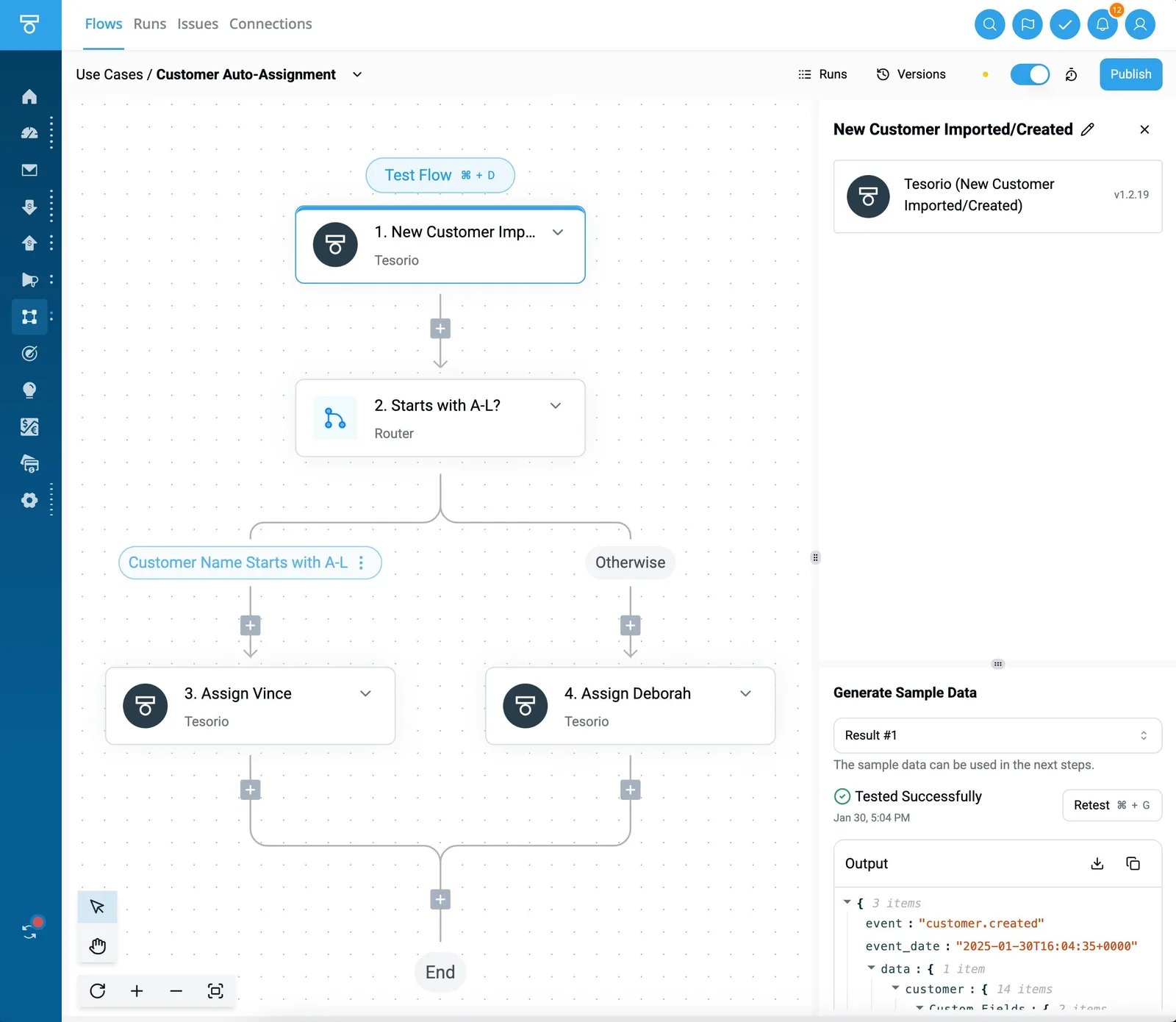
Activepieces runs the automation engine within the same environment as the model weights, ensuring that sensitive API payloads never leave the corporate network. By executing workflows locally, organizations connect internal data to local models without exposing traffic to the public internet.
Deploying automation within your own infrastructure
Every automation run executes on hardware the organization owns when Activepieces is deployed via Docker Compose or Kubernetes.
This deployment model keeps the execution logic and the data it processes behind the corporate firewall, so that a workflow querying a local SQL database never routes that information through an external cloud.
Every credential Activepieces touches (API keys, OAuth tokens, and connection secrets) can be routed to your own secret manager instead of a vendor database. By configuring a self-hosted instance against an external vault, you ensure that no vendor ever holds the credentials your business runs on.
[Data Perimeter Diagram]

The flow of data remains unidirectional and contained in this configuration. Following this setup, administrators can begin mapping specific access rights to the automated tasks.
Securing AI agents with RBAC, SSO, and SCIM
Activepieces enforces Role-Based Access Control (RBAC) and Single Sign-On (SSO) to ensure AI agents operate under the same security constraints as human employees.
Integrating with internal identity providers via SCIM ensures that when an employee leaves the company, their access to AI workflows is revoked immediately across the entire stack.
Every interaction between an agent and a model like Mistral Large 4 is captured in immutable audit logs. These logs provide a forensic trail for compliance officers to verify that no unauthorized data exfiltration occurred.
Air-gapped automations for regulated industries
Activepieces supports a fully air-gapped installation that functions without an outbound internet connection for highly sensitive environments.
This capability allows regulated firms to automate complex tasks, such as using Claude Sonnet 5.5 for document analysis, while the physical network cable remains disconnected from the outside world.
Unlimited self-hosted flows are allowed under the MIT-licensed core. Organizations can configure a self-hosted instance against an external secret manager to ensure credentials never leave their perimeter. Deploying the orchestration engine alongside local model providers eliminates third-party data residency risks.
How to set up a private AI proof-of-concept
Establishing a private proof-of-concept requires transitioning from public endpoints to a localized stack where every data packet remains within the corporate firewall. This transition ensures that intellectual property never leaves the premises during the model tuning or inference phases.
Step 1: Audit your data sensitivity tiers
A team can determine which workloads require a fully air-gapped environment versus those that can operate on internal private clouds by categorizing information by its regulatory impact. This classification prevents high-risk datasets, such as PII or trade secrets, from being inadvertently routed through shared infrastructure.
Step 2: benchmark models on local hardware
Independent of external provider uptime, running open-weight models like Mistral Large 4 on internal GPU clusters establishes a performance baseline.
By testing these models locally, an organization verifies that its hardware can handle specific reasoning tasks, such as complex document analysis, without relying on a third-party API availability.
Step 3: Secure the connectivity layer
Hardening the internal network ensures that the orchestration layer can communicate with the local model weights without opening any outbound ports to the public internet.
This isolation creates a closed loop where the identity provider manages access via internal SSO, Role-Based Access Control limits model interaction to authorized personnel, and audit logs capture every prompt and response for compliance reviews.
Frequently asked questions about private AI?
Is a VPC on AWS considered a private AI platform?
Network isolation is offered by a Virtual Private Cloud (VPC) on Amazon Web Services (AWS). It is not a sovereign AI stack because the underlying infrastructure and hypervisor remain under the cloud provider's administrative control.
While a VPC limits public internet exposure, the service provider retains the ability to intercept data at the virtualization layer or through administrative backdoors.
The organization is not granted exclusive physical or logical custody of intelligence assets in this scenario.
True privacy requires a stack where the compute, the orchestration layer, and the weights of models like Mistral Large 4 reside on hardware owned or leased directly by the organization. This prevents third-party vendor systems from accessing encryption keys and memory dumps.
Can private AI models be as accurate as GPT-4?
Reasoning capabilities of older proprietary benchmarks are now matched or exceeded by open-weight models available for local deployment. Mistral Large 4 has state-of-the-art multimodal reasoning on internal hardware, so sensitive document analysis stays behind the firewall.
Developers can automate internal repository management without sharing proprietary logic with a cloud host using Grok 4.7, which provides flagship-level coding and logic.
Z.ai GLM 5.3 supports a 1M-token context window, enabling the processing of entire technical libraries locally so that intellectual property never leaves the premises.
Do I need a specialized data scientist to run local LLMs?
Running local LLMs has shifted from a research-heavy data science task to a standard systems administration and DevOps workflow. Modern containerization allows IT teams to deploy models via standard infrastructure patterns.
- Standardize on Docker or Kubernetes to manage model runtimes, which ensures the deployment fits into existing CI/CD pipelines.
- Use pre-quantized model weights to reduce VRAM requirements, meaning the organization can utilize existing GPU clusters rather than procuring experimental hardware.
- Implement an orchestration platform to connect models to internal APIs, which allows the existing engineering team to build agents without writing custom inference kernels.