
Sales Lead Automation: What It Is, Benefits, and Examples
Learn all you need to know about sales lead automation, from what it is and the main benefits it brings, to the common examples.

December 22, 202514 min read @ashrafsam
Sales teams often collect hundreds of leads each week from forms, email marketing, ads, and website visitors, yet many of those names never receive a timely response.
Manual effort slows follow-ups and leaves high-intent prospects waiting as your sales reps sort inboxes and spreadsheets.
To avoid that, sales lead automation uses AI-powered tools to capture leads, score them based on customer behavior, and route them instantly so you can focus on closing deals.
In this article, you'll learn how this part of sales automation works and why it helps teams drive more sales.
Respond to leads instantly and keep deals moving. Contact Activepieces today!
TL;DR
- Sales lead automation uses software and AI to capture, qualify, route, and follow up with leads automatically so you respond faster and close more deals.
- Automation tracks buyer behavior and moves leads through the sales funnel.
- AI helps score leads, filter spam, enrich data, and draft replies before reps step in.
- Some of the most common lead automation examples include AI-powered lead qualification, automated lead routing, multi-tool lead enrichment, and automated follow-ups.
- Activepieces connects everything into one platform for advanced lead automation.
This takes minutes, not a project: automate it in Activepieces free.
What Is Sales Lead Automation?
Sales lead automation refers to the use of software and AI-powered systems to manage how sales leads enter, move through, and exit the sales process.
It removes repetitive tasks tied to lead generation, follow-ups, and basic decisions that usually slow you down. The end result focuses on eliminating manual effort inside sales operations so your reps can focus more on conversations and closing deals.
Through simple trigger rules, lead automation can connect tools, such as:
- Website
- Email marketing software
- CRM
Lead capture happens the moment someone interacts with your site, which removes manual data entry and keeps contact data consistent. AI systems then add demographic information such as company size or role, so it has context before outreach begins.
How Sales Lead Automation Works
Sales lead automation follows the buying journey step-by-step and changes how it responds based on what people do and how their intent grows.
Each stage uses different signals and rules, so the leads move forward.
Awareness
Awareness begins when people notice a problem, but don't plan to talk to sales yet. At this stage, automation focuses on reach and identification.
Systems watch how website visitors behave, including which pages they open, how long they stay, and whether they return after leaving. Those actions reveal early interest even when no form is filled out.
AI tools monitor:
- Intent signals on ads
- Search results
- Forums
- Job boards
Educational content appears through articles, videos, or guides that explain problems, not just pushing products. Chatbots even engage visitors 24/7 to answer basic questions and capture leads instantly.
Once someone shares details, software sorts them by source, topic, and company size. Retargeting ads then remind them of helpful content if they leave.
Interest
Interest develops when people return, click emails, or explore product pages more than once.
Lead automation shifts from simple customer engagement to strategic persuasion by reacting to those behaviors as they happen.
Lead scoring adjusts automatically as actions add or subtract value. For instance, someone reading pricing pages is prioritized. Otherwise, casual browsing reduces urgency.
Nurturing messages, on the other hand, change based on what each person views, which keeps content relevant. Alerts notify your sales teams when activity spikes, so outreach happens at the right moment.
Automation also identifies quiet buyers who research without responding, which brings hidden interest into view before attention fades.
Consideration
Consideration starts when buyers compare options and ask deeper questions. At this point, automation supports decision-making with evidence and context.
Systems watch for actions like:
- Viewing integrations
- Pricing
- Technical pages
It then responds with matching case studies or product details.
Using automation during the consideration stage can help shrink your sales cycles because they remove the need to find and send the right documents.
Decision
A decision happens when buyers narrow their choices and expect speed. Automation removes delays tied to contracts, approvals, and reminders. Proposal tools create agreements directly from CRM data, so errors don't slow progress.
AI reviews deal activity and flags risk when responses stop. Mutual action plans track steps on both sides and send reminders to the right person. Behavioral triggers deliver final proof when buyers revisit key pages.
Once signatures land, systems update records and notify teams right away, which keeps deals moving to close.
Action
Action begins after a deal closes and focuses on delivery and retention. Automation triggers handoffs between teams, so onboarding starts right away.
Customers receive guides and in-app support based on what they bought, which helps them reach value faster.
Usage patterns reveal when help is needed, while alerts flag risk before churn starts. Renewal and expansion messages trigger based on milestones, which keeps growth steady.
That structure turns closed deals into long-term relationships with fewer manual follow-ups.
Key Benefits of Lead Automation for Sales Teams
These are some of the benefits of automated lead generation:
Faster Lead Response Times
Response speed often determines whether a sales lead becomes a conversation or goes cold.
Automation removes waiting points that slow you down, such as:
- Manual data entry
- Inbox reviews
- Internal handoffs
As soon as someone fills out a form, clicks an ad, or replies to an email, the system sends an immediate message through email or text, even outside office hours. That first reply happens while interest stays fresh.
When a warm high-intent prospect suddenly revisits your pricing page after a month of silence, the system alerts the entire sales team instantly, so outreach happens at the exact moment interest returns.
Less time spent checking tools means more time spent talking to buyers who actually want answers.
Higher Quality Sales Conversations
Lead automation improves conversations by handling research before a call ever starts.
Once a lead enters the funnel, the system can collect:
- Firm details
- Role information
- Recent activity
- Past customer interactions
The behavior tracking explains why a conversation should happen right now. For example, multiple visits to feature pages or repeated email clicks signal readiness and urgency.
That preparation raises close rates and keeps reps focused on leads that match real demand.
Better Alignment Between Marketing and Sales
Lead automation removes friction between sales and marketing by enforcing shared rules from the start.
Sales and marketing efforts align around agreed scoring thresholds, response times, and ownership rules before campaigns launch. Marketing teams see how leads behave after handoff, and then sales sees which ads, emails, and pages shaped interest.
Shared dashboards act as a single reference point for both sides. Closed deals link back to campaigns, which helps teams invest in channels that actually drive revenue.
Automated handoffs prevent leads from sitting idle and keep messaging consistent at every stage of the funnel.
Lead Automation Examples in Real Sales Workflows
The sales automation examples below show how lead automation fits into real lead management scenarios.
Example 1: AI-Powered Lead Qualification
AI-powered lead qualification helps your sales teams identify which potential customers deserve attention before a call. It reviews activity on:
- Pages visited
- Emails opened
- Replies sent
- Timing patterns that signal intent
Patterns that match successful deals raise priority, then weaker signals lower urgency. Language analysis also reviews messages to detect deadlines or buying pressure.
High-value prospects move straight to sales, and others enter nurture paths until behavior changes.
Example 2: Automated Lead Routing
Automated lead routing keeps leads moving between tools. Lead capture starts the process when someone fills out a form or attends a webinar, which works as the trigger inside the system. From there, routing rules decide ownership based on conditions.
Typical routing logic includes:
- Location and region rules
- Company size thresholds
- Score leads based on recent activity and interest
- Fair rotation on available reps
Once a match appears, the system updates the CRM, sends a notification, and adds meetings to calendars. Backup rules step in if no response happens within a set time.
Response times drop from hours to seconds, and ownership stays clear. You also avoid favoritism since rules apply evenly.
Example 3: Multi-Tool Lead Enrichment and Syncing
Multi-tool lead enrichment and syncing fill gaps the moment a new lead appears. The trigger fires as soon as someone submits an email or domain. Based on that single detail, enrichment services pull job title, company size, tools used, and recent activity.
The process follows a flow:
- Lookup services return firm and role data
- Records update inside the CRM
- Syncing pushes updates into email tools, chat apps, and ads
Personal outreach improves because messages reference real context. Clean data also supports better planning since reports reflect reality.
Example 4: Automated Follow-Ups for Inbound Leads
The moment a lead enters the system, automation decides which sequence fits best. As soon as a lead is captured, the software automatically segments leads based on their behavior and source.
Follow-up logic usually includes:
- Immediate email or text within seconds
- Multi-channel messages on email and chat
- Behavior-based changes when links get clicked
- Pause rules that stop messages after replies
Prospects engaged through timely messages respond more often, which leads to more leads staying active. Long-term nurture paths keep your brands visible, too.
You can follow the rest of this with the builder open. Start free, no card.
Activepieces Helps You Build Sales Lead Automation Flows
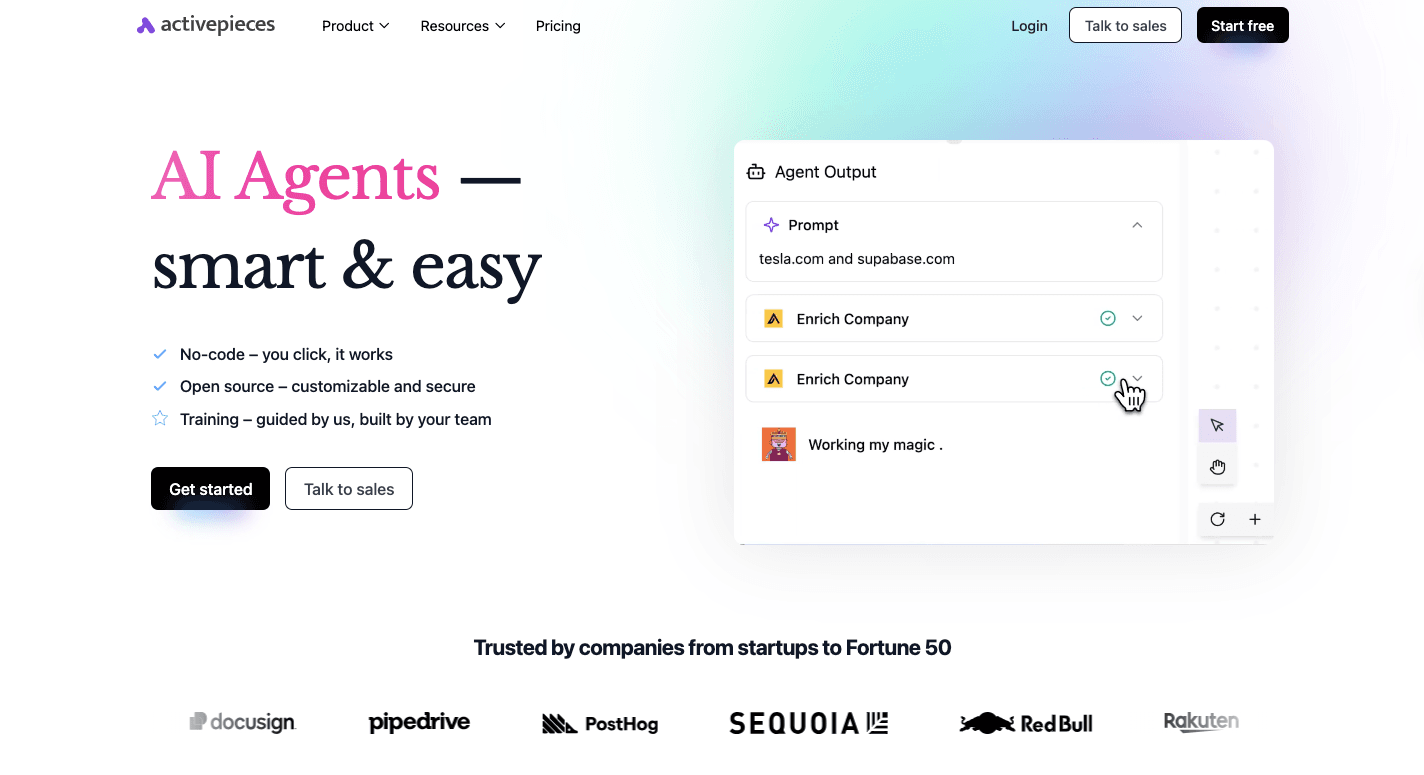
Activepieces, a workflow automation platform, is for those who need more than simple triggers and one-step automations.
With 549 pre-built pieces, you can connect marketing automation platforms, CRMs, email systems, and internal apps into a single flow that supports real sales work. Some of the integrations include:
- Zendesk-sell
- Apollo
- Instantly.ai
- Facebook Leads
- Lead Connector
Automated workflows handle routine processes without forcing you to rebuild your tech stack or change how you sell.
Several key features explain why teams use Activepieces to drive more deals:
- Native AI steps that read form replies, summarize intent, and draft responses tied to buyer needs.
- Logic paths that react to company size, location, past actions, and timing in one flow.
- Branching rules that route leads, update scores, and trigger follow-ups without manual checks.
- Custom TypeScript pieces that connect tools without waiting for official data integrations.
- Human approval steps that pause actions until a rep reviews messages for high-value prospects.
- Open-source options that allow self-hosting for full data control.
Seamless integration across tools keeps data consistent and actions timely. You even avoid fragile setups while gaining a comprehensive suite that adapts as volume grows.
See how Activepieces fits your sales operation and data needs. Talk to our sales team!
How to Build an AI-Powered Inbound Lead Qualification Flow
The inbound lead qualification flow below qualifies inbound leads, researches companies, replies with context, and alerts your team in real time without anyone touching a keyboard.
Everything runs through Activepieces with help from ChatGPT, Claude, Perplexity, Google Sheets, and Slack or Discord. You can copy the same setup and adjust it to your needs using the template.
Step 1: Catch Inbound Leads With a Webhook
Start by creating a new flow in Activepieces. Choose "Catch Webhook" as the trigger, as it'll be the entry point for your inbound form.
Copy the webhook URL and keep it private.
Next, connect the webhook to your website form. Your form should send a POST request that includes:
- Name
- Company
- Message
If you don't already have a form, ask ChatGPT to generate a simple HTML form with those four fields. Tell it to send the form data to your webhook URL.
Host the site on Netlify or update an existing form using the same POST logic. Submit a test entry to confirm the webhook receives data.
Step 2: Research the Company With Perplexity
Add a "Perplexity AI" step after the webhook.
Create a Perplexity API key and connect it inside Activepieces. Use a prompt that asks what the company does, company size, popularity, funding, and stability in three sentences or fewer. Map the company name from the webhook input into the prompt.
Save the output. Every following step will reference this research.
If Perplexity is unavailable, replace this step with an "Ask AI" step using Claude or ChatGPT and use the same prompt.
Step 3: Score Lead Priority With Claude
Add an "Ask AI" step and select Claude as the model.
Pass in:
- Company name
- Company research from Perplexity
- The inbound message
- Country from the request headers
Define clear scoring rules based on employee count, urgency, funding, and visibility. Tell Claude to return only one value such as "Low," "Medium," "High," or "Flaming Hot."
Step 4: Detect Spam Automatically
Add another "Ask AI" step using Claude.
Send the message, email, company name, and country. Ask Claude to decide if the submission looks like spam and return only true or false.
Avoid explanations. The result must be easy to branch on.
Step 5: Add a Timestamp
Insert a "Date Helper" step and choose your timezone and format. This timestamp will be used when logging entries to Google Sheets.
Step 6: Branch Based on Spam Status
Add a "Router" step.
Create two paths:
- If spam equals true, send the data to a Google Sheets Spam tab and end the flow
- If spam equals false, continue to qualification and response
Step 7: Create a One-Line Lead Summary
Add another "Ask AI" step using Claude.
Ask for a single informal sentence that explains who the lead is and what they want. Keep it short and human. The summary helps your team scan new leads quickly in chat tools.
Step 8: Generate a Custom Email Reply
Add one more "Ask AI" step.
Ask Claude to write a two or three-sentence email using the lead's name, company, message, and company research. Keep the tone friendly and conversational. Avoid links and promises.
Return only the email body.
Step 9: Send the Email Through Gmail
Add a "Gmail Send Email" step.
Map:
- To: lead email
- Subject: a simple thank you line
- Body: the AI-generated reply
The lead now receives an instant response that feels researched and personal.
Step 10: Log the Lead in Google Sheets
Add a "Google Sheets" step.
Create a spreadsheet with two tabs named Inbound and Spam. Add columns for name, email, company, company info, message, country, timestamp, spam status, priority, summary, and response.
Log the lead details to the Inbound tab.
Step 11: Notify Slack or Discord
Add either:
- "Slack Send Message" step
- Or an "HTTP Request" step for Discord
Send a formatted message that includes:
- Name
- Company
- Message
- Priority
- Company summary
- One line recap
Invite the bot to the channel if using Slack.
Once deployed, the flow runs without supervision. Inbound leads get researched, scored, filtered, replied to, logged, and shared with your team in seconds.
Check the full, in-depth tutorial here: How to Build an AI-Powered Inbound Lead Qualification Flow with Claude and Perplexity
Implement Automated Lead Generation With Activepieces
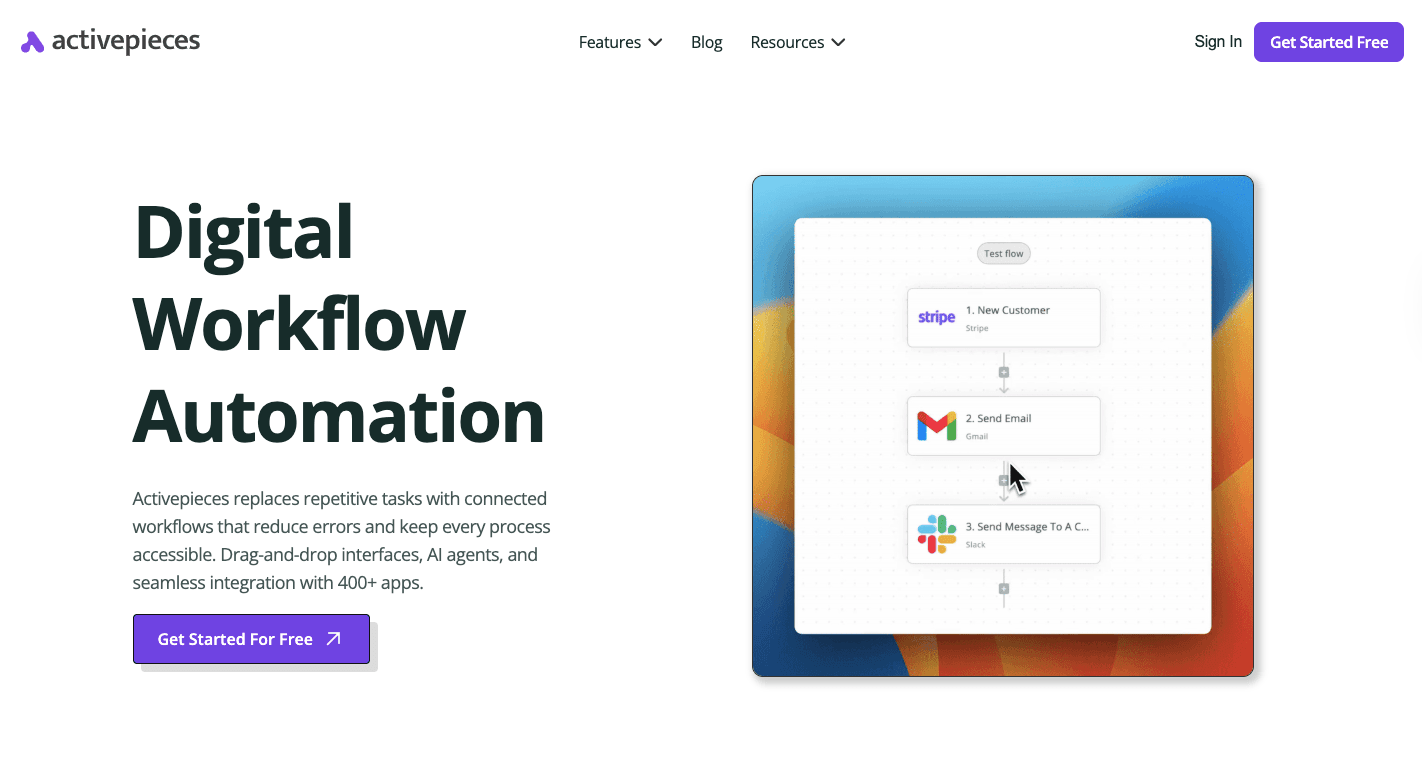
Activepieces makes automated lead generation practical by bringing everything into a single, unified platform that handles logic, data, and timing.
Sales leaders can gain control over how leads move without needing to do the manual tasks every step. At the same time, teams can generate lead activity without using disconnected tools or fixing broken flows.
Developers can set guardrails and security, then hand the builder to the rest of the organization. Native AI pieces handle research, scoring, and responses inside the same flow, which keeps lead nurturing consistent.
FAQs About Sales Lead Automation
Why is lead automation important for sales teams?
Lead automation removes time-consuming work from the sales process by automating routine tasks like lead capture, follow-ups, and qualification. B2B sales teams use lead automation to spend less time sorting data and more time talking to buyers, which leads to faster responses, better nurturing leads, and more sales.
How do AI agents fit into sales lead automation?
AI agents review inbound messages, website activity, and past behavior to decide priority and next steps. They research companies, score intent, detect spam, and draft responses before a human steps in.
What tools are used for sales lead automation?
Sales lead automation usually relies on CRMs, email automation tools, AI research models, analytics platforms, and workflow automation systems. These tools connect forms, inboxes, calendars, and chat apps so actions happen automatically without manual handoffs.
Do you need a CRM integration for sales lead automation?
CRM integration is not mandatory, but it makes automation far more reliable. Without it, lead data stays fragmented, and actions lose context. A connected CRM keeps records updated and makes sure every automated step supports sales activity.
Build it
Set this up in minutes.
No code required. Connect your accounts, and Activepieces runs it from there.
Start free Talk to sales