
Workflow Automation Platform: Your Quick Start Guide
Learn how a workflow automation platform works and explore its benefits, key features, and types. Discover how Activepieces can help with automation.

December 12, 202514 min read @ashrafsam
Small steps often grow into bigger delays. A message waits in one inbox, a form lives in another place, and a sheet needs one more update. Talk about workflow automation tools usually starts when that pattern becomes hard to ignore.
A workflow automation platform removes that slow build by running steps in a sequence. It pulls data from different apps and sends it where it needs to go without extra checking.
In this article, you’ll learn how these platforms automate business processes and what features they should have.
Turn scattered steps into one clear flow that runs on its own. Explore Activepieces!
TL;DR
- A workflow automation platform helps businesses automate repeatable tasks by connecting apps and running processes from trigger to completion without manual work.
- These platforms use triggers, actions, and logic to move data between tools like CRMs, email, sheets, and support systems in a reliable flow.
- Modern workflow automation software includes no-code builders, AI-powered steps, integrations, multi-step logic, security controls, and error handling.
- Teams use workflow automation to improve productivity, reduce errors, speed up handoffs, and scale processes across marketing, sales, operations, and support.
- Activepieces is a workflow automation platform that lets teams start with simple no-code workflows and grow into advanced, AI-driven automations as needs expand.
This takes minutes, not a project: automate it in Activepieces free.
What Is a Workflow Automation Platform?
A workflow automation platform takes work that usually jumps between inboxes, sheets, and chat and runs those steps in a repeatable way.
The platform acts like a control center for your tools and business workflows. You decide the rules once, and the system follows them every time.
Most platforms follow the same pattern. You start by drawing the process as a simple map, from the first event to the last result. Next, you pick a trigger, such as a change in a customer relationship management (CRM) system record or a fresh row in Google Sheets.
After that, you add actions and rules: send an email, create a record, update a field, or branch based on an amount or status. Finally, you watch the runs on a dashboard and adjust any weak spots.
That loop lets you automate repetitive tasks, cut down on manual effort, and see where automation helps the most inside your workflow automation setup.
Why You Should Use Activepieces as Your Workflow Automation Software
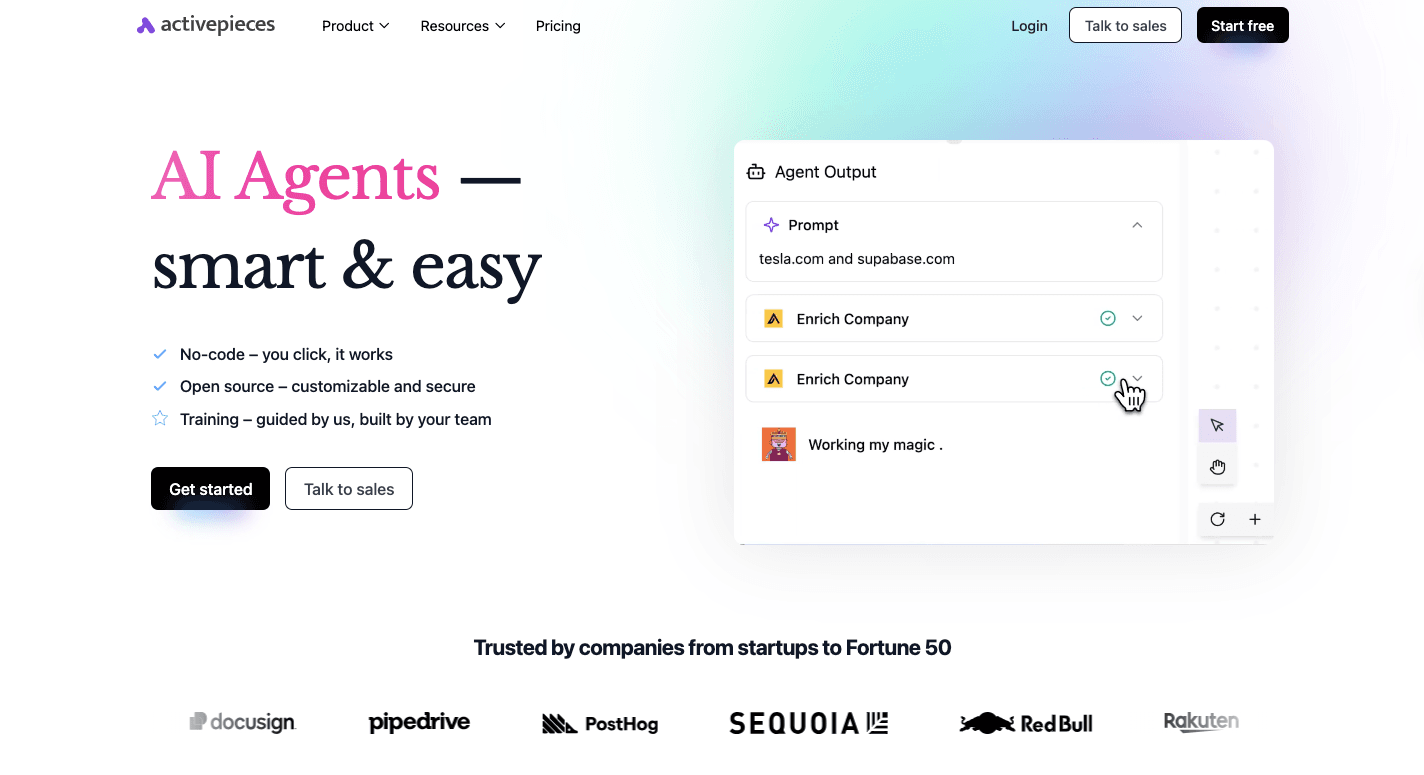
Activepieces gives you a single, unified platform where all your automation processes happen. It keeps the build process simple while still covering advanced needs.
The platform features:
- A drag-and-drop interface to build workflows fast without waiting on a dev sprint.
- Pre-built templates give you a starting point, then you tweak the steps to match your process.
- Strong automation capabilities that let flows handle approvals, branching, and AI steps in one place.
- Over 526 pre-built integrations, so a flow can pull data from Google Sheets and push it into CRM or support systems.
- A free plan makes it easy to test real automations before committing to a budget.
- A paid plan supports scale with stronger controls, governance, and enterprise options.
- Self-hosting for more control over data, access, and network rules when privacy matters.
You can start with simple flows, then grow into AI steps and deeper logic as needs expand, all without moving to a new platform.
Move from idea to live workflow fast with a drag-and-drop builder. Start with Activepieces now!
How a Workflow Automation Platform Works
A platform like this follows a pattern that moves from a starting event to the final result. Each part works together to support automating task flows:
Triggers
A trigger starts the flow. It marks the moment when the platform picks up new data and begins to act.
The platform watches for those events inside your connected apps through steady checks or real-time alerts. When the trigger fires, it collects the data tied to that event and creates a fresh run of the workflow.
Then, the trigger passes this data to the rest of the flow.
There are different kinds of triggers, such as:
- Event triggers that react right away when something changes
- Time-based triggers that follow a set clock
- Manual triggers that let someone press a button when needed
All of them give the system a reliable starting point for automated workflows.
Actions
Actions carry out the work after the trigger fires. Each action handles one task, such as adding a row to a sheet or updating a field in a database.
Afterwards, the platform reads the data from the trigger, moves it into the right app, and completes the step without more input from the user.
A set of actions can run in a straight line or adjust based on rules you build. As the flow grows, these steps form a chain that helps you handle more work without adding extra manual effort.
Logic
Logic decides how the flow changes based on the data it receives. It checks values, compares fields, and moves the workflow into the right branch, which allows your automated workflows to behave differently when data changes.
Several methods guide these decisions:
- A simple rule can split one path into two
- A switch-type rule can sort a record into many paths
- Loops help the flow run the same step for each item in a list
- Approvals pause the flow until a person makes a choice
Each piece builds toward a system that adapts to more complex tasks.
Benefits of Using a Workflow Automation Tool
A workflow automation tool reshapes your daily work. Key benefits include:
- Teams gain time since automation software reduces manual effort.
- Clear ownership and status views support task management and keep priorities from slipping.
- Consistent replies and faster resolutions raise customer satisfaction across support and account teams.
- Automated flows move work faster and boost productivity without forcing longer hours on staff.
- Smooth handoffs and clear steps improve service delivery for both internal and external requests.
- Smart data flows stop spending hours on manual data entry, which leads to fewer errors.
- Project managers see where work stalls and adjust flows before delays grow into real problems.
- Automation around hiring and access makes employee onboarding smoother for new hires and teams.
- Steady processes handle more work and help the company move business forward.
- Flexible rules let teams adapt to new market demands without redesigning every process from scratch.
Key Features in Workflow Automation Software
Workflow automation software should not only run tasks but also support your business goals, grow with your team, and stay safe as more data moves through it.
These features shape how well the platform fits your needs:
No-Code Workflow Builders
A no-code builder lets you design flows without your IT team’s help. You just drop blocks for triggers, actions, and checks onto a canvas, then connect them to match how work really moves.
It further lowers the learning curve, so user adoption doesn’t stall after the first few experiments.
AI Agents and AI-Powered Steps

AI features add more than simple rules. An AI-powered step can read natural language, extract values from a document, or group requests by intent.
In many flows, artificial intelligence uses machine learning models to decide which action to take next. Some teams go further and build multi-step AI agents that move across tools with an objective, such as closing a ticket or preparing a brief.
These AI tools handle more complex processes and take care of edges that static rules often miss. When you add AI to key workflows, you’ll often notice smoother handoffs and faster cycle times.
Integrations With Different Apps
Data integrations keep information in sync across the stack. A quality platform needs to connect email, CRM, support tools, sheets, and other tools so each step has the right context.
You can even find the configuration options for two-way sync to connect different apps when records must stay aligned in both places. With these connectors, you reduce copy-paste work, and you can keep working inside the tools you already know.
Multi-Step Workflow Logic
Business processes rarely move in a straight line. Multi-step logic lets a flow branch, pause, or run tasks in parallel based on real data.
For instance, one order can go through extra checks when the value is high, while a smaller order skips those steps and finishes faster. The same workflow can update records, ping a channel, request approval, and schedule follow-up tasks.
That structure gives you room to change rules while the platform still keeps every action in the right order.
Security Governance
As more work runs through automation tools, security and control matter more. Role-based access keeps sensitive flows in the right hands and limits who can change key steps.
Meanwhile, you can use logs to review changes, see who ran which flows, and support compliance tracking when auditors ask for proof. Central controls also help leaders decide which data can leave core systems and which flows must stay inside strict boundaries.
Error Handling
No stack stays perfect, so the platform needs smart error handling. When a call fails or a service goes offline, the system can retry, move to a backup path, alert a person, or park the run for review. That approach keeps a single missed call from breaking an entire flow.
You can follow the rest of this with the builder open. Start free, no card.
Types of Workflow Automation Tools
Teams use different types of workflow automation tools depending on skills, size, and risk tolerance. You will most often see four groups:
No-Code Workflow Automation Software
No-code platforms let you build flows in a visual editor. That makes it easier for operations, marketing, HR, and finance to change processes without waiting on a long dev queue.
With shorter build cycles, your team can test ideas, learn from results, and quickly adapt when a form changes or a new app joins the stack.
Common uses include:
- Routing new leads into the right sales list
- Moving support requests into the correct queue
- Syncing simple records between two or three apps
- Automating status updates for internal requests
AI Workflow Automation Platforms
AI workflow automation platforms can read emails, forms, and chats, then decide what should happen based on meaning. Many of these can also blend classic workflows with AI automation, so you can keep your existing flows and still add smarter steps where needed.
Inside these platforms, AI uses machine learning models to score leads, classify tickets, or choose next best actions. Some setups run agents across several stages, and these flows can handle more complex tasks that shift from case to case.
Many tools also offer process mining so you can see how work really moves and adjust weak areas. You can further use an AI-focused platform to:
- Sort and route incoming support emails by topic and urgency
- Pull key fields from contracts or invoices and push them into systems
- Score leads based on past wins instead of simple firmographic rules
Enterprise Workflow Automation Systems
Enterprise automation tools handle cross-team processes and strict control needs.
Most enterprise setups run across several environments. Many companies use a mix of cloud services and on-premises resources so sensitive data stays close to core systems while other workloads sit in hosted stacks.
Typical use cases include:
- Coordinating approval chains for large purchases
- Syncing data between enterprise resource planning (ERP), CRM, and analytics tools
- Managing access and offboarding flows across many regions
Open-Source Workflow Automation Tools
Open-source workflow automation tools appeal to teams with internal engineering capabilities and specific needs. The code is open-source, so developers can review how it works, adjust pieces, or write new blocks to match their stack.
However, hosting an open-source tool brings more responsibility. Someone needs to deploy the platform, keep it patched, and watch performance as usage grows.
In return, you can choose where the system runs, which services it connects to, and how deeply it ties into in-house code. For teams that care about fine-grained control and are willing to invest time, this path can line up well with long-term plans.
Teams often pick open-source when they want to:
- Host automation in their own network
- Add custom steps for internal services
- Avoid vendor lock-in while still gaining strong automation features
Common Workflows You Can Automate
Below are common workflows you can automate:
Marketing Workflows
Marketing teams do daily tasks across forms, email lists, analytics, and social channels. A marketing automation workflow can capture a new lead from a landing page, add the contact to the right list, and send the first email within minutes.
Social posts can also follow a schedule based on a publish event, then report basic results back to the team so no one checks three dashboards by hand.
Sales Workflows
Sales teams often lose time on specific tasks that feel small but add up fast. A sales workflow can route new leads based on company size or region, then alert the right rep right away.
In addition, CRM fields can be updated after a call log or a stage change, which keeps the pipeline clean without extra typing. Proposal follow-ups can also run on a timer, so deals don’t stall just because someone forgot to send a reminder.
Operations Workflows
Ops teams usually care about increasing efficiency across handoffs and approvals. A workflow can build an onboarding checklist the moment HR adds a start date, then assign tasks across IT, finance, and facilities with due dates.
Purchase requests can even follow approval rules based on the amount, then post the final decision back to the requester.
Support Workflows
Support teams that deal with routine tasks can boost efficiency when automation handles triage and follow-through. A workflow can read ticket fields, set priority, and route issues to the right queue based on topic or customer tier.
Besides that, teams that run case management in customer service can push updates into the CRM, start SLA timers, and send surveys after a ticket closes, all without manual tracking.
Give Your AI Workflow Automation Ideas a Room to Grow With Activepieces
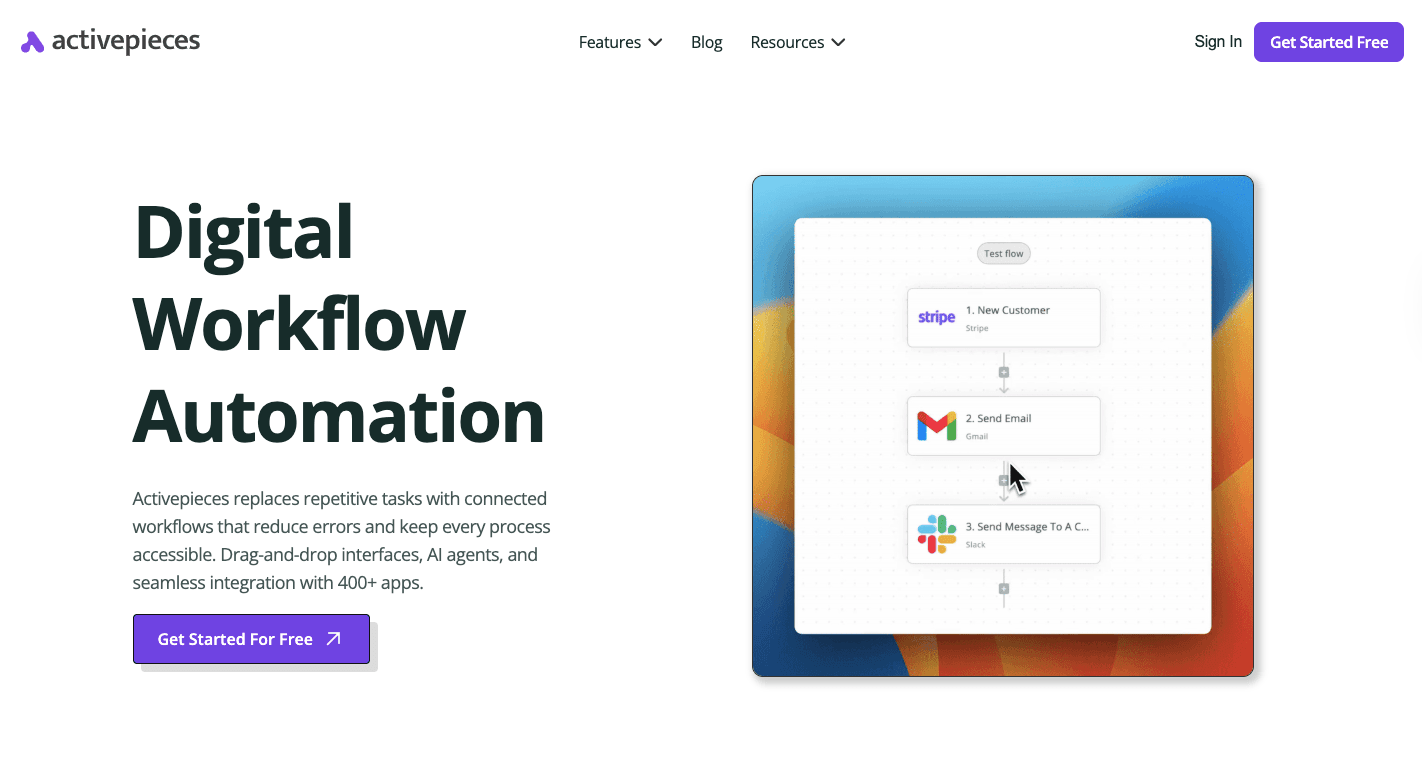
A workflow automation platform works best when it grows with the team using it. Automation rarely starts at full scale. Most ideas begin as small experiments, then expand once people see clear results. Activepieces supports that path without forcing a rebuild as needs change.
It has a user-friendly interface that helps non-technical users stay involved, and developers extend pieces when deeper logic is needed. You can even integrate AI into decision-making or data handling while keeping the rest of the workflow easy to follow.
As workflows grow complex, the platform continues to streamline workflows. That setup turns Activepieces into a complete toolkit that helps teams adapt quickly.
FAQs Workflow Automation Platform
What is the best workflow automation tool?
The best workflow automation tool is the one that removes manual work without forcing you into rigid setups. It should also support both simple automations and advanced flows, work across many apps, and scale as needs grow.
Activepieces fits that well because you can start fast, improve processes over time, and save time without locking yourself into complex pricing or narrow use cases.
Is a workflow automation platform the same as business process automation?
They overlap, but they are not the same. A workflow automation platform focuses on connecting steps across tools and teams, so work moves smoothly from start to finish.
Business process automation usually covers broader, end-to-end operations that include policies, audits, and long approval chains. Many teams begin with workflow automation, then expand into larger process automation as needs grow.
Do you need coding skills to use a workflow automation tool?
Coding is not required for most use cases. Many platforms offer low-code or visual builders so you can design flows with clicks and forms.
Is workflow automation different from robotic process automation?
Yes. Workflow automation connects systems through APIs and shared data. Robotic process automation, on the other hand, copies human actions like clicks and keystrokes inside apps.
Build it
Set this up in minutes.
No code required. Connect your accounts, and Activepieces runs it from there.
Start free Talk to sales