
B2B Sales Automation: A Complete 2026 Guide
B2B sales automation streamlines lead routing, CRM updates, and follow-ups so reps spend less time on admin and more time selling.

Dec 11, 202519 min read
B2B sales automation is the use of software to handle repetitive sales tasks—lead routing, CRM data entry, follow-ups, and meeting scheduling—so reps spend less time on admin and more time selling. It works by connecting your CRM, outreach, and communication tools so triggers, such as a form fill, a stage change, or a reply, automatically kick off the right next action. The payoff is faster response times, cleaner data, and deals that keep moving instead of stalling between steps.
This guide covers what B2B sales automation is, how it differs from B2C automation, the most common use cases and tool types, how to choose a platform, the metrics that prove it's working, and how to launch your first workflow with Activepieces.
TL;DR
- B2B sales automation replaces repetitive sales tasks (lead capture, routing, follow-ups, CRM updates) so reps focus on real selling, and deals move faster.
- It improves response times, pipeline movement, consistency, and end-to-end buyer experience.
- Core use cases include lead gen, scoring, outreach sequences, prospect research, meeting scheduling, proposal automation, and onboarding.
- Effective automation needs tight CRM integrations, multi-step workflows, AI personalization, and cross-tool data syncing.
- Activepieces helps teams launch and scale these workflows easily with a visual builder and 500+ integrations, eliminating manual work without engineering support.
This takes minutes, not a project: automate it in Activepieces free.
What Is B2B Sales Automation?
In B2B sales, a lot of work follows the same pattern every day:
- Find leads
- Send first emails
- Book meetings
- Record notes
- Update stages
Many teams still do all of that by hand, which slows everyone down. With B2B sales automation, software takes over those repeatable steps.
Under the hood, sales automation tools connect to your CRM system, watch for triggers, then run actions. As deals move forward, the same platform can fill proposals from CRM data, log sales calls, and guide next tasks, so long sales cycles stay under control.
It also supports sales leaders and marketing campaigns, since the system makes results easier to compare. Later in the funnel, automation can start onboarding flows the moment a team marks a deal as won.
B2C vs B2B Sales Automation
Online retail moves at high speed, so business-to-consumer (B2C) automation focuses on quick moves and volume. When a shopper, for instance, opens a page, a pop-up offers a small discount, and their email goes straight into a list.
As that person leaves items in the cart, an email later that day can say, “Hey, did you forget this?” and send them back to checkout. Once they pay, the system sends a receipt, alerts the warehouse, and texts a tracking link.
Product pages also swap in lines like “Customers who bought this also bought…” based on recent clicks.
In comparison, B2B automation focuses on context and support. Rules can score activity and highlight qualified leads while software handles routine tasks in the background.
At the same time, sales managers, marketers, enablement personnel, and revenue leaders see clear data on where each account stands and which step should come next.
Why B2B Teams Rely on Automation Today
B2B teams lean on automation for these reasons:
- Reps spend less time on repetitive tasks, which keeps attention on real buyer talks.
- Fast routing and follow-ups help your sales team to quickly respond to prospects before interest drops.
- Automation covers the entire sales process, so leads do not stall between stages.
- Shared rules create consistency across your sales and marketing efforts, which tightens handoffs and timing.
- Teams see a decrease in the time spent performing back-office activities, such as pipeline management and invoicing.
- Smoother handoffs and on-time touches improve the customer experience.
- Stronger focus and fewer gaps help sales stay steady and drive revenue growth.
Real-Time B2B Sales Automation: Why Speed Matters
Real-Time B2B Sales Automation: Why Speed Matters
Speed is often the difference between a lead that converts and one that goes cold. Real-time B2B automation means workflows fire the moment a trigger happens, not on a nightly batch job or a rep's next free hour.
A few examples of what real-time automation looks like in practice:
- A demo request routes to the right rep and pings their Slack within seconds, instead of sitting in a queue until someone checks the CRM.
- A pricing-page visit from an existing lead moves them into a hot-lead sequence immediately, while the intent signal is still fresh.
- A signed contract flips the CRM stage to "Closed Won" and kicks off onboarding tasks the same minute, without anyone updating records by hand.
The benefit compounds over the sales cycle: faster first response, faster follow-up, and fewer leads that go quiet simply because no one saw the signal in time.
Common Use Cases for B2B Sales Automation
Teams usually apply automation where work repeats daily and where delays cost deals.
Lead Generation
Lead-gen automation handles the very top of your sales funnel, before a rep even opens their inbox. A common trigger is a “Request a Demo” form.
Let’s say a CFO requests a demo at 9:00 AM. The system creates a lead in the CRM and routes it to the rep who owns finance accounts. Your rep also gets an alert right away, so follow-up starts while intent is fresh.
For outbound sales, automation helps with lead generation by building lists that match your ideal customer profile (ICP). It pulls names, emails, and company details, then drops them into your sales automation tools.
Aside from that, when a lead gives only an email, the system can add company size, industry, revenue band, and location. In that way, your reps can open the record and start strong.
Lead Scoring
Lead scoring sorts leads using two signal types.
First is the “fit rules” that score the leads based on who they are. For example, a CFO can get +20, while a student can lose -15. Then, “intent rules” track actions. A pricing page visit could add +10, a white paper download +15, and an email open +2.
Once someone passes your set line, like 50 points, the system flips them from MQL to SQL, stops marketing emails, and pings the assigned rep. That keeps reps working the right accounts first and shortens sales cycles.
Customer Relationship Management Data Entry
CRM automation removes manual data entry. Email and calendar sync logs every thread and meeting under the right record the moment it happens.
Call notes and meeting summaries can also auto-sync after a Zoom or Teams call. Conversation tools transcribe the talk, pull pain points and next steps, then drop that into the CRM.
With these records, all sales team members move faster because nobody needs to ask what happened on the last call or dig for notes.
Outreach and Sequencing Automation
Outreach automation runs multi-step cadences that mix auto emails with human tasks. A basic flow can look like:
- Day 1: Email
- Day 3: Call task
- Day 4: Follow-up email
- Day 6: LinkedIn step
- Day 10: Final email
Automated outreach also reacts to behavior. If a lead visits pricing three times in an hour, the system can move them into a hot lead sequence and send a message that matches that interest.
Sales professionals still control the message and step in when someone replies. The automation just makes sure the 8 to 12 touches happen on time, which is what B2B sales need to turn cold leads warm.
Automated Prospect Research
Automated prospect research cuts the 15 to 30 minutes that reps often spend per account. When a new lead enters, the system can pull company size, industry, revenue band, and tech stack into the CRM.
Besides that, when it spots “Company X just hired a new CTO” or “Company X raised $10M Series B,” it can create a lead, tag the event, and alert the right rep to reach out. Those alerts feed prospecting campaigns with fresh signals.
Better context further raises reply rates, since first messages speak to something real about the buyer.
Automated Follow-Ups and Sequences
In B2B sales, one email almost never gets a reply, so you need a clear touch plan that runs without someone managing every step. Automated follow-ups keep leads warm when buyers go quiet. Many teams also use automated LinkedIn messaging to maintain consistent follow-ups across channels without increasing manual workload.
You set the rules once, then the system runs the timing and stops the moment a prospect answers. That reduces administrative tasks, such as follow-ups, and eliminates the “Did I forget them?” problem.
In addition, once a lead returns to your pricing page after months, automation can drop them into a re-engage sequence right away with a message tied to that interest.
Meeting Scheduling Automation

Meeting scheduling automation removes the long back-and-forth that slows deals. You share a booking link, the buyer picks a slot that fits their time zone, and both calendars update on the spot.
Rules can limit times, add buffers, and route meetings to the right person based on deal type. That helps sales organizations move faster without adding headcount.
After booking, the tool can send reminders, add a video link, and update the CRM stage to “Demo scheduled.” Fewer no-shows follow, and sales reps keep their days clean and predictable.
Proposal Quote and Document Automation
Proposal and quote automation speeds up the last stretch of a deal. When a rep clicks “Generate proposal,” the platform pulls pricing, terms, and contact info from the CRM and drops them into a ready template in seconds.
Approval rules can kick in for large discounts, so the right leader reviews the doc before it goes out. Once sent, e-sign flows track opens and signatures, which keeps momentum high for closing deals.
Signed files save back into the record automatically, and the deal stage flips to won without extra typing.
Customer Onboarding and Handoff Automation
Onboarding automation starts the moment a deal turns “Closed Won.” The system notifies the onboarding or success team, creates a setup task list, and copies key notes from the sales process into a new client record.
New customers also get a welcome series right away with next steps, kickoff links, and simple prep asks. That keeps the handoff clean and consistent, even when your team closes a lot of deals in a short span.
Types of B2B Sales Automation Tools
You can follow the rest of this with the builder open. Start free, no card.
Types of B2B Sales Automation Tools
Modern sales automation spans multiple tool categories, and each one solves a different part of the work your team handles every day.
CRM Integration Software
CRM integration tools connect every app you use to your system of record so nothing sits in silos. These tools read and write crm data in real time, which keeps every action tied to one clean source.
That structure supports the foundation of any automation strategy because accurate inputs drive accurate forecasting later.
Useful actions from CRM integration tools include:
- Logging emails, calls, and calendar events without extra clicks
- Mapping form fields from your site into the right CRM objects
- Syncing data from enrichment tools so reps start with full records
- Sending deal updates into chat tools when a stage moves forward
AI Workflow and Automation Platforms
AI workflow tools act as a decision layer across your stack. These platforms read signals from CRM, outreach, product data, and support tools, then guide automated workflows across multiple steps.
Many teams use them to score intent, detect risk, route leads, and surface next actions for reps.
Other uses include:
- Ranking new records with live intent scores
- Routing high-scoring leads to the right rep
- Summarizing calls and writing action items
- Drafting first touch emails tied to funding rounds or job changes
Try Activepieces for Your B2B Sales Automation Workflows
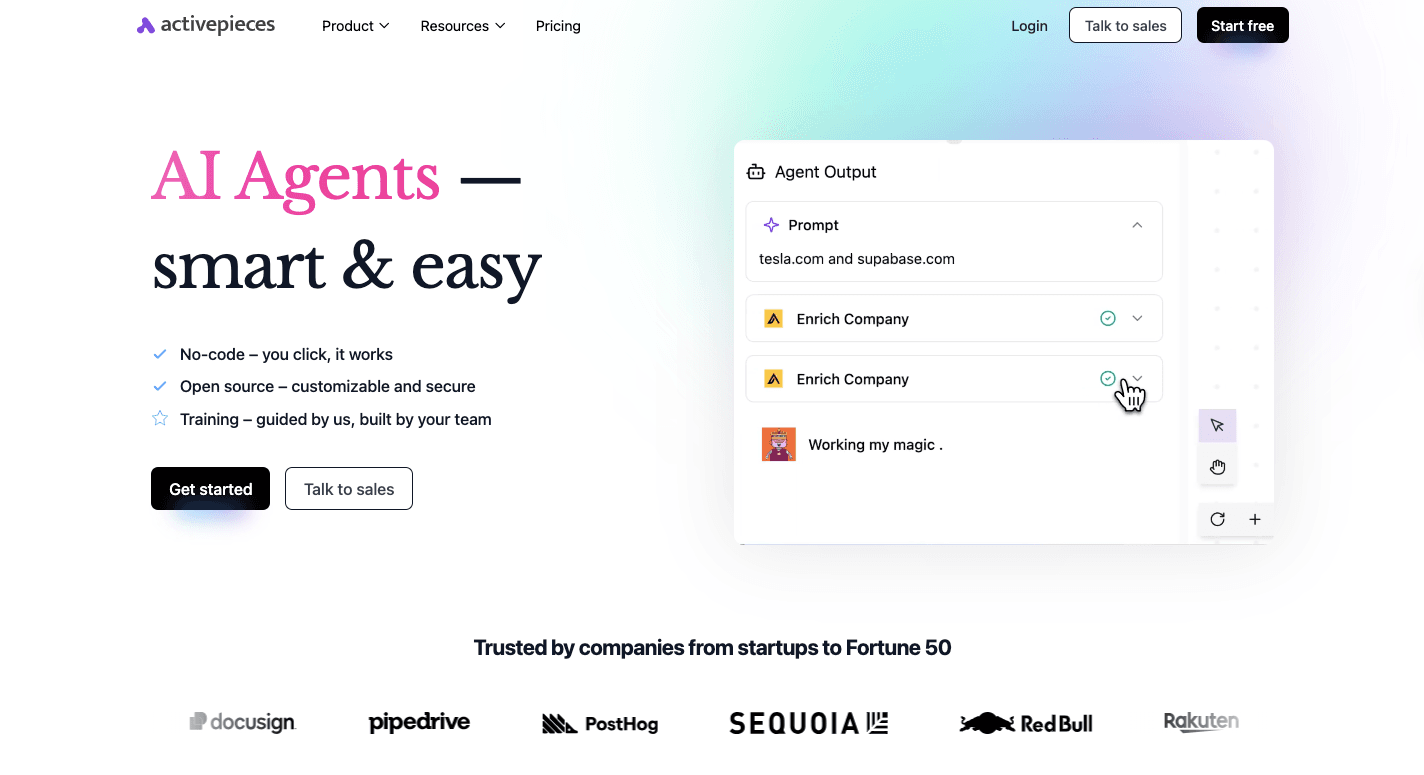
Activepieces acts as the brain that connects your tools and turns scattered steps into clear workflows. It is a leading sales automation tool for teams that want serious power without hiring a full engineering squad.
You drag blocks on a canvas, set rules, and ship flows that remove time-consuming tasks from every day so rep focus stays on calls, deals, and real conversations.
Flows can watch your CRM system for new leads, score intent, send emails, push updates into Slack, and create tasks in one run. The same automation can branch when a prospect replies, clicks a link, or fills a form, so your team reacts in real time.
As of September 2026, Activepieces connects your entire tech stack with 525+ pre-built pieces, including email tools, data providers, meeting apps, and AI models. You can even trigger actions through your outbound tools with LinkedIn integration, so research, outreach, and follow-up move in one rhythm.
Sales Engagement and Outreach Automation Tools
Sales engagement tools handle structured outreach across email, calls, and LinkedIn.
Reps drop leads into a cadence, and the system handles timing while presenting daily tasks in one queue. Sequences shift or stop when someone replies, so the experience stays personal.
These tools even capture engagement data, which helps shape buyer engagement strategies and improves later runs of the play.
Key capabilities include:
- Multi-step sequences mixing automated and manual steps
- Tasks for calls and LinkedIn actions
- Stop triggers when a reply lands
- Tests to see which subject lines or messages perform better
Communication Software
Communication software covers email, chat, video, and calling. When connected to your CRM and automation tools, they help teams stay aligned and keep records complete.
It also supports team collaboration by keeping everyone on the same page, from reps to managers to onboarding teams.
Common benefits include:
- Automatic activity logging for emails, calls, and meetings
- Call transcripts and AI summaries tied to contact records
- Scheduling links that remove the constant back-and-forth
- Internal alerts that update teams when key events happen
B2B Sales Automation Tools Compared
B2B Sales Automation Tools Compared
Each tool category solves a different part of the sales process. Use this as a quick reference when deciding where to start:
| Tool Type | Best For | Typical Trigger |
|---|---|---|
| CRM Integration Software | Keeping deal and contact data accurate without manual entry | New email, call, or form submission |
| AI Workflow and Automation Platforms | Connecting multiple tools and adding decision logic across steps | Lead score change, new CRM record, stage update |
| Sales Engagement and Outreach Tools | Running multi-step, multi-channel outbound cadences | Lead added to a sequence, reply received |
| Communication Software | Logging calls, meetings, and chat activity automatically | Call ends, meeting booked, message sent |
Most teams don't pick just one category. A typical stack pairs a CRM integration layer with an AI workflow platform like Activepieces to connect everything, plus a sales engagement tool for outbound cadences.
How to Choose the Best Sales Automation Tool
How to Choose the Best Sales Automation Tool
Selecting the right sales automation tool becomes easier when you break the decision down into features that match how your team works day-to-day.
Key Features Every B2B Sales Automation Software Should Have
Automation starts with a platform that handles core features without creating new problems or disconnected tools.
Easy to Build Workflow Automation
A sales automation platform lets you build steps without code.
Most teams prefer a simple visual builder because it shows how each trigger connects to an action. For example, you can map a rule that says, "If a form is submitted, create a record and alert the rep."
It also helps non-technical users adjust flows as sales processes change. Over time, that flexibility saves a lot of time because workflows keep up with shifts in strategy.
AI Features for Personalization
Real personalization goes beyond plugging a name into a subject line. AI helps by reading signals from web visits, emails, and social activity to shape messages that match each person's needs.
An AI platform can scan firmographic data, recent news, and engagement data to suggest the next step or draft a message that feels specific to that buyer.
Integrations With Your CRM and Outreach Tools
Automation works well only when tools share the same customer data. When a buyer books time through a scheduler, the meeting should appear in the CRM without manual steps.
Without tight links, you end up with slow updates and confused routing.
Support for Multi-Step and Conditional Workflows
Basic automation rarely fits a long B2B cycle. The right automation tool handles long sequences with branches that react to buyer actions.
One path can send a follow-up to people who open an email, while another alerts a rep when someone clicks a link.
Questions to Ask Before You Buy
Before signing a contract, especially for an outbound automation platform aimed at B2B SaaS teams, run through this checklist:
- Does it connect natively to your CRM, or will you need a middleware tool to sync data?
- Can non-technical reps or ops staff edit workflows, or does every change require a developer?
- Does it support branching logic based on buyer behavior, not just fixed-time delays?
- How does it handle data privacy and permissions across teams and regions?
- Does pricing scale with contacts, tasks, or seats, and does that model fit your growth plan?
- Can it trigger actions across email, LinkedIn, CRM, and chat from one workflow, or does it stay siloed to one channel?
Answering these questions up front helps you avoid picking a tool that solves one problem but creates three new ones.
Metrics to Track for B2B Sales Automation Success
You’ll get real value from automation when you track the numbers that show real change in daily work and deal outcomes. Keep it simple, but stay strict about checking the same set of metrics every month so you can spot patterns fast, such as:
- Lead response time shows how long it takes your sales team to reply after a form fill or inbound message.
- Sales cycle length tracks days from first contact to signed deal, so you see if deals move faster.
- Pipeline velocity measures how many qualified pipelines you create and close in a set period.
- Lead-to-opportunity rate tells you how many leads turn into real sales talks.
- Meeting-show rate shows whether reminders and scheduling flows cut no-shows.
- Email open rate and reply rate reflect whether your automated outreach lands well with buyers.
- Call activity per rep shows if automation frees time for more sales calls.
- Win rate shows if your process helps you close more of the deals you start.
Track all of these together, and you’ll get actionable insights you can trust.
When one slips, adjust strategies in the exact part of the flow that touches it, then watch the next two weeks of conversion rates to confirm the fix improved sales performance.
Launch Your First B2B Sales Automation Workflow With Activepieces
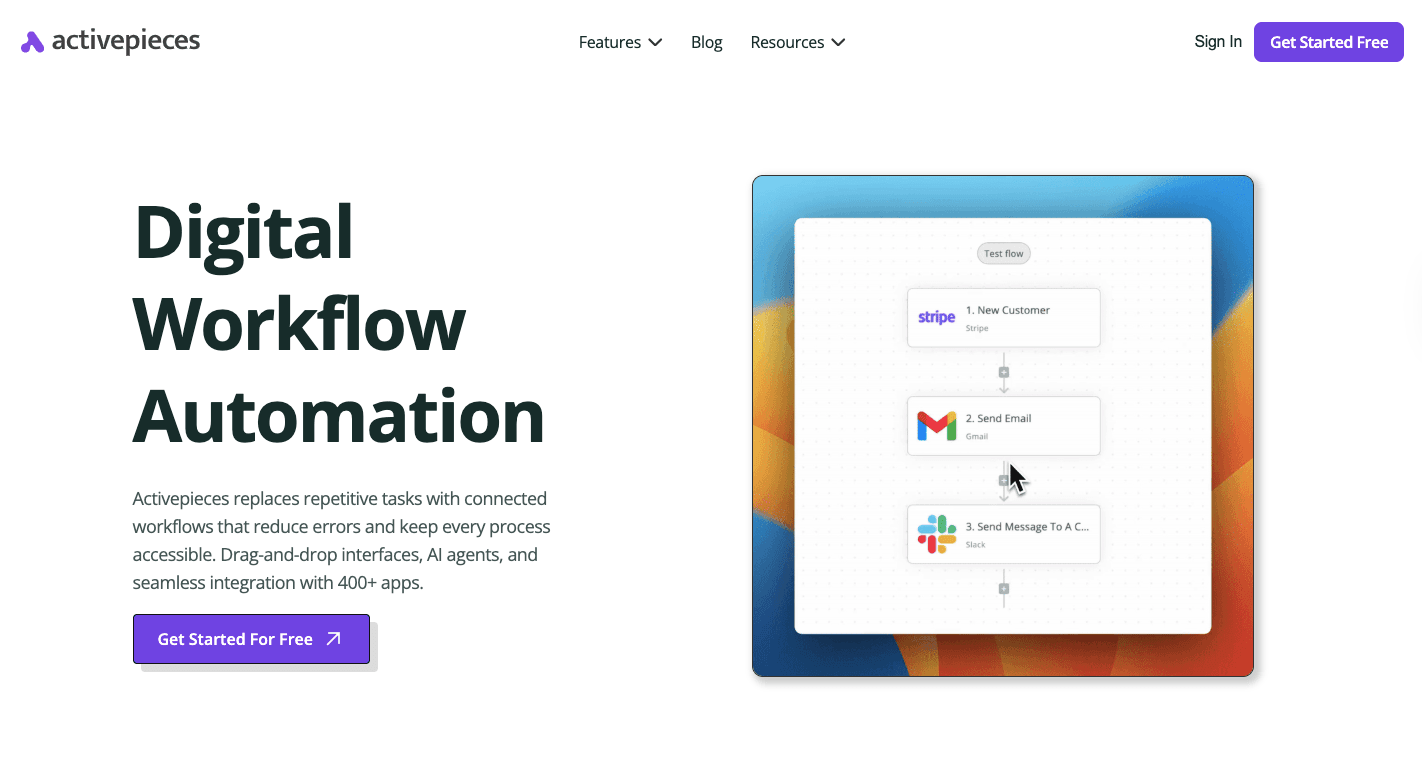
Activepieces gives you a path to build your first workflow without coding. Once you plug it into your stack, the platform replaces manual tasks with automation paths so your team moves faster and spends more time selling.
The visual builder lets you set rules, connect triggers, and shape flows that work across your entire tech stack. You also get smooth data flow with no data silos, even when multiple tools share the same record.
It further enables reps to add LinkedIn integration, calendar tools, or enrichment services in minutes. Every connector works exactly the same way, which keeps setup simple and helps you accelerate growth without rebuilding flows each time you add something new.
Activepieces delivers enterprise-grade capabilities for any team that wants predictable automation and room to grow.
FAQs About B2B Sales Automation
FAQs About B2B Sales Automation
What are examples of B2B sales automation?
Examples include auto-logging emails and meetings into your CRM, routing new leads to the right rep, running follow-up sequences, scoring leads based on activity, and pulling firm data into records so reps prep faster for sales calls.
What tools do I need for B2B sales automation?
You need a CRM, a sales engagement or outreach tool, a workflow automation platform that connects apps, and a data tool for enrichment and lead scoring, so you cut manual effort.
What should I automate first in B2B sales?
Start by automating the high-volume stuff that slows deals down, like lead capture, follow-ups, and CRM updates, so you automate repetitive tasks and keep deal management clean.
What is the difference between B2B marketing automation and sales automation?
B2B marketing automation runs top-of-funnel work like nurturing, email drips, and campaign triggers, while sales automation supports reps after handoff with outreach, task routing, forecasting, and pipeline moves.
What is a B2B workflow automation portal?
It's a central hub, usually a visual builder like Activepieces, where teams design, monitor, and manage every automated flow that touches sales, from lead intake to CRM updates to onboarding, instead of scattering logic across separate point tools.
What process changes help teams get more out of B2B sales automation tools?
Automation works best when you first standardize how reps qualify, log, and hand off deals. Map your current process, remove duplicate steps, agree on one CRM field set, then automate what's left, rather than automating a messy process as-is.
Which tools connect CRM deal stages to post-purchase nurture and rep follow-up automations?
Workflow automation platforms and AI workflow tools, the same category covered under Types of B2B Sales Automation Tools, typically handle this by watching for a "Closed Won" stage change in the CRM and triggering onboarding tasks, welcome sequences, and rep follow-up reminders from that single event.
Is B2B sales automation real-time?
Modern platforms react to triggers, like a form fill, a pricing-page visit, or a stage change, within seconds rather than on a batch schedule, which is what lets reps respond to hot leads while interest is still fresh.
Build it
Set this up in minutes.
No code required. Connect your accounts, and Activepieces runs it from there.
Start free Talk to sales