
Volcengine Ark Pricing: Plans and Quotas (2026)

Nov 7, 202614 min read
Which of two billing modes you're in decides what Volcengine Ark costs: per token, or a subscription with a credit quota.
Most plan prices aren't published in the sources I could confirm, so size by quota, the same way you would when wiring model calls into an automation tool like Activepieces and estimating volume before cost.
Below is every plan, with "not published" wherever I couldn't confirm a cell.
Volcengine Ark Plans, Prices, and Quotas
| Plan | Billing mode | CNY price | Inclusions | Limits | Free tier | Check date |
|---|---|---|---|---|---|---|
| Coding Plan Lite | Subscription | not published | not published | not published | not published | not published |
| Coding Plan Pro | Subscription | not published | not published | not published | not published | not published |
| Agent Plan Small | Subscription | not published | AFP credits | 2,000 per 5 hours; 7,000 weekly; 20,000 monthly | not published | 2026-11-07 |
| Agent Plan Medium | Subscription | not published | AFP credits | 10,000 per 5 hours; 35,000 weekly; 100,000 monthly | not published | 2026-11-07 |
| Agent Plan Large | Subscription | not published | not published | not published | not published | not published |
| Pay-as-you-go | Per token | not published | not published | not published | not published | not published |
| Batch | Per token | not published | not published | not published | not published | not published |

I couldn't confirm per-token rates for any model, so none appear here. Check the live rate for your model on Volcengine's pricing page before you quote a budget, because a wrong guess here becomes a wrong invoice.
AFP credits are the plan's own quota unit, not a price, and the sources don't say what one measures. The subscription section below shows how to find out.
Subscription and coding plans
At 2,000 AFP credits per 5 hours, 7,000 weekly and 20,000 monthly, Agent Plan Small can lose its whole 5-hour window to one heavy afternoon while the month looks fine.
According to Modelplan, the next tier up allows 10,000, 35,000 and 100,000, five times Small on the 5-hour and monthly windows and the weekly window alike.
What an AFP credit measures
The sources I could confirm do not say whether a credit is a request, a fixed token amount, or a unit weighted by model. Until you know which, 2,000 credits could be a handful of long jobs or thousands of short ones.
Find the conversion in the console. Run ten real tickets, note the credit balance before and after, and divide.
If every ticket costs the same, credits count requests; if long tickets cost more, they track tokens; if the same ticket costs more on a bigger model, they are model-weighted.
Tickets per day then equals the credits in a window divided by credits per ticket. That is the figure to carry into the worked bill below.
If you are running this arithmetic for your own team, see what the same workload costs on Activepieces.
A Worked Monthly Bill for One Named Workload
Price the ticket summariser on Volcengine Ark as if no free usage exists: daily tickets times tokens, with input and output billed at separate rates. A subscription wins only above a break-even volume you can calculate yourself.
The workload and its token assumptions
Each new ticket and its thread go in, and a short summary for the agent comes out.
Take your token counts from a week of real tickets, and include the longest one, the angry customer email with a pile of forwarded replies.
Use the average and you will miss that ticket, the one that blows through a budget. Output is short, but it's priced higher than input, so it still counts.
Before any single rate, get the order of the sum right, because it matters more. Follow these steps:
- Daily input tokens equal tickets per day times input tokens per ticket. Work out daily output tokens the same way.
- Monthly tokens equal daily tokens times the days in your billing month, so weekends and spikes are counted.
- List-price cost equals monthly input millions times the input rate, plus monthly output millions times the output rate.
Cost the summariser as a flow in Activepieces and the step count drops out of the sum: a run is 1 credit, whether fetch, trim, summarise and post sit in two steps or ten.

Zapier's pricing page bills per task and Make's per module, so the same split costs more there, which taxes the builder for choosing smaller, more reliable steps. MoneyGram, Moneypenny, Alan and FundingSocieties run Activepieces in production.
Bill with cache and batch discounts
When a request repeats its fixed instruction prompt, only that part benefits from caching. The ticket text is new every time, so it stays at the normal rate.
Summaries nobody is waiting on suit batch pricing. I couldn't confirm the cache-hit or batch rates, so read them from your console and continue the sum.
Move the share of input that repeats to the cache-hit rate, then move the share of tickets that can wait to the batch rate.
To cost a subscription, take the flat monthly fee, plus pay-as-you-go for anything beyond its quota. Break-even is the flat fee divided by your blended cost per ticket after those two moves.
Below that ticket count, stay on pay-as-you-go. Above it, the subscription wins only if its rate limits still let your busiest hour through. That's the next thing to check.
Hidden Limits and Costs on Volcengine Ark
Through request and token caps, subscription windows, context tiers, thinking tokens, dedicated-endpoint and fine-tuning charges, and account friction, Volcengine Ark's bill drifts away from the sticker price.
Rate limits and quota resets
Hit either the requests-per-minute cap or the tokens-per-minute cap and you are throttled, whichever comes first. Every model on Ark carries both, and the embedding models have their own.
A nightly job sized by price alone will stall halfway, then retry, and retries cost tokens too.
On top of that, subscription plans add rolling windows (short, weekly and monthly), and what happens at the cap matters: a hard stop and a switch to pay-as-you-go billing are very different outcomes.
Context tiers and thinking tokens
Where a model prices by context length, a long prompt can land in a more expensive tier than the one you budgeted for.
Ask a reasoning model a question and its thinking tokens bill as output, so a short answer can cost far more than its visible length suggests. Test with real tickets and compare the billed output tokens to what the user actually saw.
Ask a reasoning model a question and its thinking tokens bill as output, so a short answer can cost far more than its visible length suggests.
Volcengine Ark endpoint, fine-tuning, and add-on charges
Leave a dedicated endpoint idle and it still costs money, because it is billed for the capacity you reserve, not just the traffic you send.
Fine-tuning adds training charges and usually a separate cost to serve the tuned model. Both only pay off when the volume is steady.
Worth checking against a plan that does not meter every step: one credit covers a whole run on Activepieces.
Volcengine Ark Against Its Closest Alternatives
Ark's flagship Doubao Seed 2.1 Pro lands in the middle on list price, above DeepSeek's V4-Pro and below Alibaba Cloud Model Studio's Qwen3.8-Max, so the budget is decided by limits and billing mode, not by that ranking.

Price and discounts side by side
The table shows where each vendor sits and where the discounts come from, so you can see which one the headline rate flatters.
| Option | Price | Free tier | Rate limits | Cache / batch | Subscriptions | Non-China signup | Date |
|---|---|---|---|---|---|---|---|
| Ark Doubao Seed 2.1 Pro | Middle of the three Chinese options | Trial quota varies by account | Set per account and model | Cached input and offline batch available | Check the console for fixed plans | Through ByteDance's international arm | Check on purchase day |
| DeepSeek V4-Pro | Lowest of the three Chinese options | No standing allowance to count on | Dynamic, tied to server load | Automatic context caching | Pay as you go | Open to international users | Check on purchase day |
| Qwen3.8-Max | Highest of the three Chinese options | New-account quota on the international site | Set per account and model | Cache and batch offered | Check the console for plans | Through the international site | Check on purchase day |
| OpenAI | Varies by model tier | Do not budget on one | Tiered by spend history | Cached input and batch discounts | Chat plans are separate from API billing | Direct signup | Check on purchase day |
Volcengine Ark rate limits and free tiers
DeepSeek's load-dependent limits suit steady work and are harder to plan around for a fixed-hour peak.
For Ark and Alibaba, limits are tied to your account and model, so ask for the numbers in writing before you commit. OpenAI raises limits as your spend history grows, which is predictable but slow for a new account.
Which Volcengine Ark alternative suits which team
If your users and billing sit inside China's cloud ecosystem and you can confirm quota for your peak hours, choose Ark. If cost per token matters most and your load is steady enough to tolerate shared capacity, choose DeepSeek.
Want a strong top-tier model and an international signup route, and can accept the higher rate? Then choose Alibaba Cloud Model Studio.
If you need the simplest signup outside China and a limit ladder you can read in advance, choose OpenAI.
The Strongest Case That Headline Price Is Enough
Why Ark's headline price may seem enough
The best objection to sizing by quota is that it solves a problem you may never have: Ark's per-token rates are low, and if you hit a limit you can ask for a higher one, so the headline price is all you need.
A low rate does make a bill small, and a limit increase request is a normal part of using the service.
Why Ark quota increases are not guaranteed
The trouble is in the word "request." A raised limit is something you ask for and wait on, and nothing on the price page says how long that wait is or whether the answer will be yes.
Billing mode has the same blind spot
Billing mode has the same blind spot. A rate quoted per token tells you what a call costs, not what you commit to paying when traffic is quiet.
When Ark's headline price is enough
One condition lets the objection win outright: low, steady volume that sits comfortably inside the default limits. A weekly competitor price check is the textbook case, with one scheduled run, a handful of pages and a short model call for each.
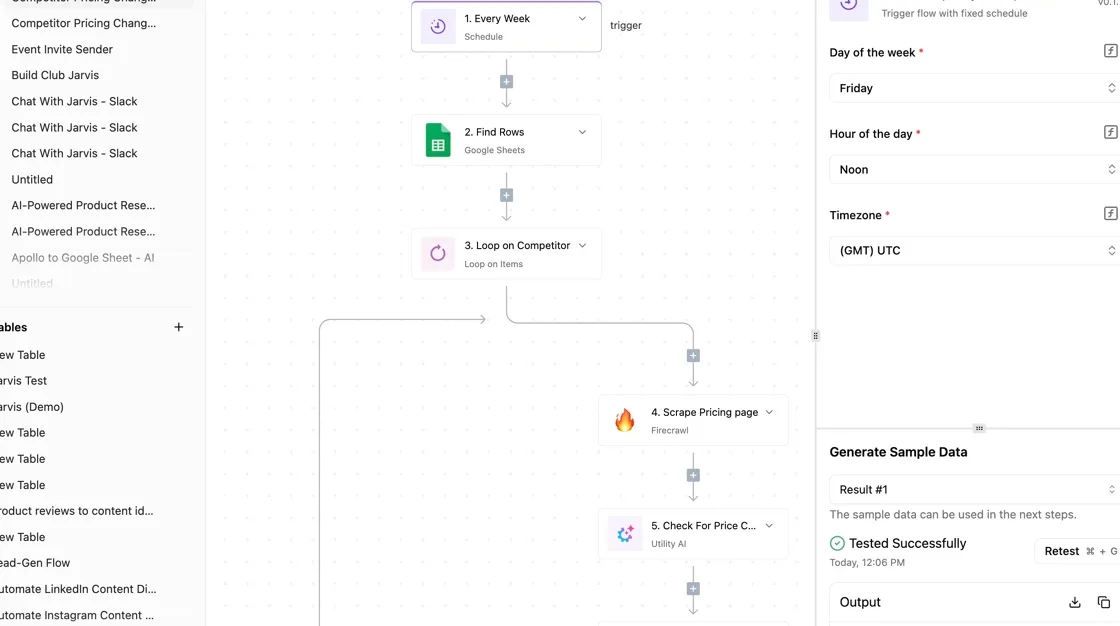
Once volume is bursty, grows, or serves live customers, that condition no longer holds, and the quota decides the bill.
Monday pricing and quota reviews for Volcengine Ark
Spend Monday re-pricing last month's real usage against the current Volcengine Ark price list, then fix your quota and alerts before the next traffic spike does it for you.
Work through these in order:
- Reopen the pricing page and write down the date you read it, so a later bill dispute starts from a known baseline.
- Export last month's token usage, split into input and output.
- Price that usage under online, batch and the Lite and Pro model tiers.
- Request a quota increase for the peak you expect, not the average you saw.
- Set a spend alert that reaches a person.
Re-price your real usage
Headline rates look the same for everyone, but your bill depends on how much of your traffic could wait for batch and how much needs an online answer.
Then compare Lite and Pro on the work each actually does. Here Lite and Pro are model tiers, not the Coding Plan Lite and Pro subscriptions in the plan table. If Lite handles a task acceptably, the cheaper rate is real.
If it produces answers your support team has to correct, the saving has been paid back in escalations.
Ask for the quota increase early, because approval isn't instant and the request is easiest to make before you're already being throttled. Size the request from your busiest hour.
Then set the alert at a level that gives you time to act, not at the budget ceiling, where it only tells you the damage is done.
Activepieces is plumbing here and nothing more. It can make an HTTP call to Ark on a schedule, read the usage back, and post a daily cost message to the channel your team already watches.
What Activepieces does about this
The quota problem is a watching problem. Agent Plan Small's 2,000 credits per 5 hours can vanish in one afternoon, and nobody sees it until requests fail, so users report the problem before any monitoring system detects it.

In Activepieces you can schedule a flow that calls Ark, reads usage back, compares it with the window you bought, and messages a person at a threshold you set before the cap.
The same flow can hold the work that can wait. Tickets nobody is waiting on go into a queue for the batch route, and a failed call retries on a delay instead of immediately, so a stalled nightly job doesn't burn tokens on retries.
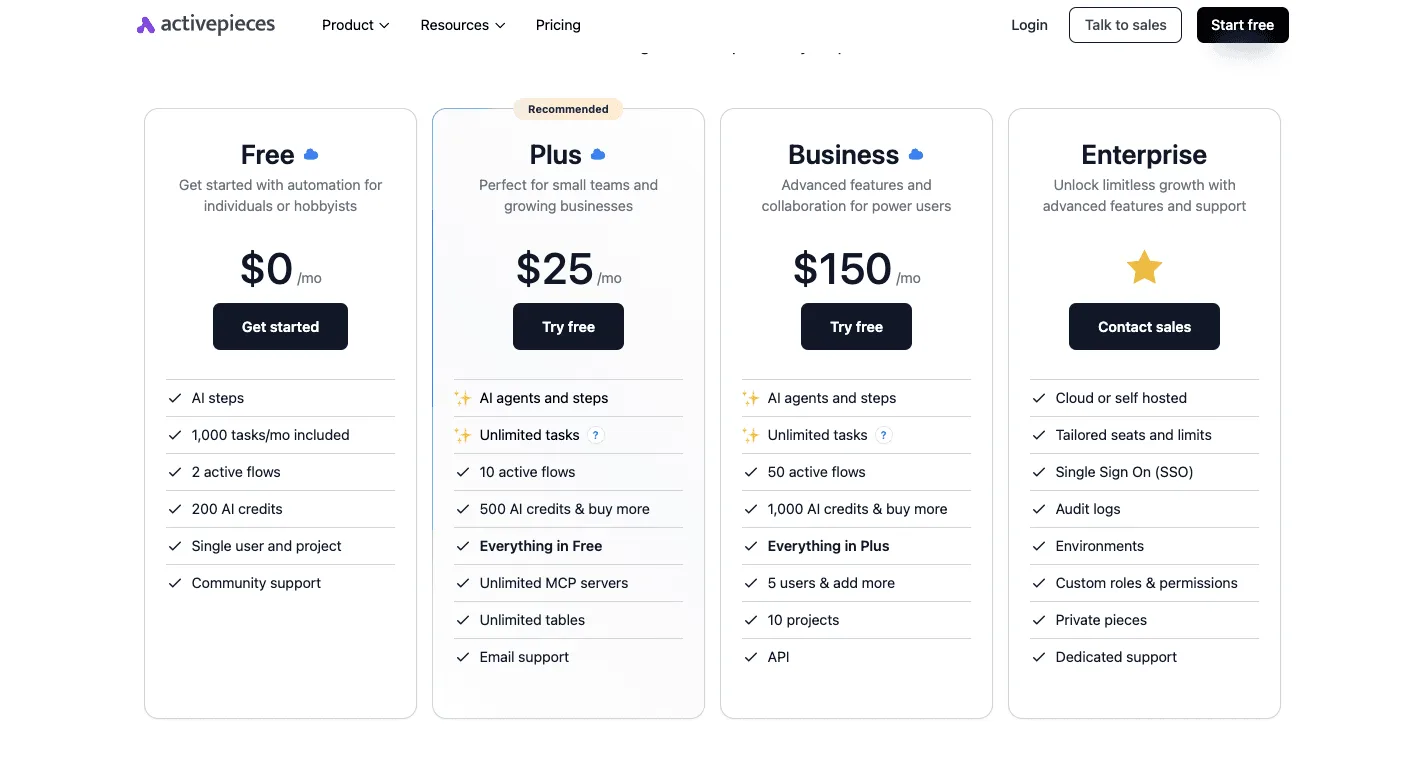
A run costs 1 credit however many steps it has. The core is MIT-licensed and self-hostable, so the monitor doesn't depend on a plan tier. It still can't raise a limit or change a rate. Those remain requests to Volcengine.
Frequently asked questions
Does Volcengine Ark have a free tier?
Ark has offered trial token allowances on selected models, but they're trials rather than a standing free plan, and they differ by model and account.
Read the allowance on the model's own page in the console, and budget the paid rate from day one.
Can I use Volcengine Ark outside China?
Outside mainland China, the usual route is BytePlus ModelArk, the international service from the same company, not the mainland Volcengine console.
It has its own sign-up, pricing and model availability, so a price you read on the mainland page doesn't carry over.
Confirm the model and rate on the international listing before you commit.
Are Volcengine Ark prices quoted in yuan or dollars?
The mainland Volcengine listing quotes in yuan. Dollar pricing belongs to the international service.
Convert at your own payment rate and add any card or transfer fees, because the exchange step is a real line on the invoice. Keep the currency of the source page written next to every price you copy into a spreadsheet.
How often does Volcengine change Ark prices?
There's no schedule we could confirm, and changes tend to arrive alongside new model releases and promotions. Treat any price as true on the date you checked it.
Is Volcengine Ark compatible with the OpenAI SDK?
Point the SDK's base URL at Ark, supply an Ark API key, and name the model or endpoint Ark expects, and in most cases that works, because Ark exposes an OpenAI-style interface. Compatible doesn't mean identical.
Run your real requests, especially tool calls and streaming, through a test before you migrate.
Related reading
References
Running the numbers
See what the same workload costs here.
Free forever plan, and every paid plan self-hosts at no extra cost.
See pricing Talk to sales