
What Is On-Premise iPaaS and How Does It Work in 2026?

Oct 13, 202614 min read
On-premise iPaaS lets you deploy integration logic directly onto your internal servers or private clouds. This architecture, which can be implemented using platforms like Activepieces to maintain local sovereignty, ensures that your sensitive data never exits your controlled network perimeter while it's being processed.
Cognitivemarketresearch projects the iPaaS market size will climb from $4,562.25 million in 2021 to $14,430.71 million by 2026, signaling a massive expansion in the demand for integrated cloud services, which means the sector is poised for rapid, sustained commercial growth.
You're centralizing your automation strategy to handle a tripling of integration density.
As modern frameworks demonstrate, moving away from vendor-hosted clouds is the primary method for maintaining an air-gapped security posture while you're utilizing enterprise-grade automation.
On-premise iPaaS provides integration control within private infrastructure
Data residency vs. data processing
Standard cloud integrations often satisfy data residency (where data is stored) but fail at data processing. Processing requires the information to be decrypted on the vendor's hardware to execute logic.
For high-frequency automation, the physical distance between the iPaaS and the target system introduces significant performance overhead. According to network latency budgets defined by AllTools, the round-trip times vary significantly by infrastructure.
| Infrastructure Type | Latency | Impact on Workflow |
|---|---|---|
| Same datacenter | 1ms | Allows for near-instantaneous synchronous triggers. |
| Same region | 10ms | A manageable delay for local cloud services. |
| Mobile 5G | 15ms | Baseline lag for field-service edge devices. |
| Mobile 4G LTE | 40ms | Can cause visible delays in real-time user interfaces. |
| Cross-region traffic | 70ms | Slowing down multi-step sequential workflows. |
| Transatlantic connections | 80ms | Often resulting in timeout errors for sensitive API handshakes. |
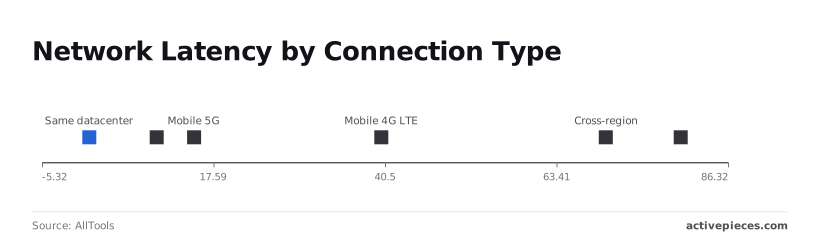
By keeping the iPaaS in the same datacenter at 1ms, you ensure that even complex agentic workflows using Claude Sonnet 5.5 remain responsive. This avoids the 70ms to 80ms penalty of crossing regions or oceans.
The shift from legacy ESB to modern iPaaS
Modern on-premise iPaaS replaces the rigid, code-heavy Enterprise Service Bus (ESB) with a containerized architecture that supports modern AI and API standards.
While a legacy ESB requires specialized middleware teams to manage XML transformations, a modern system integrates Anthropic’s Claude Fable 5.1 for reasoning tasks or Gemini 3.8 Flash for agentic coding directly within your local network.
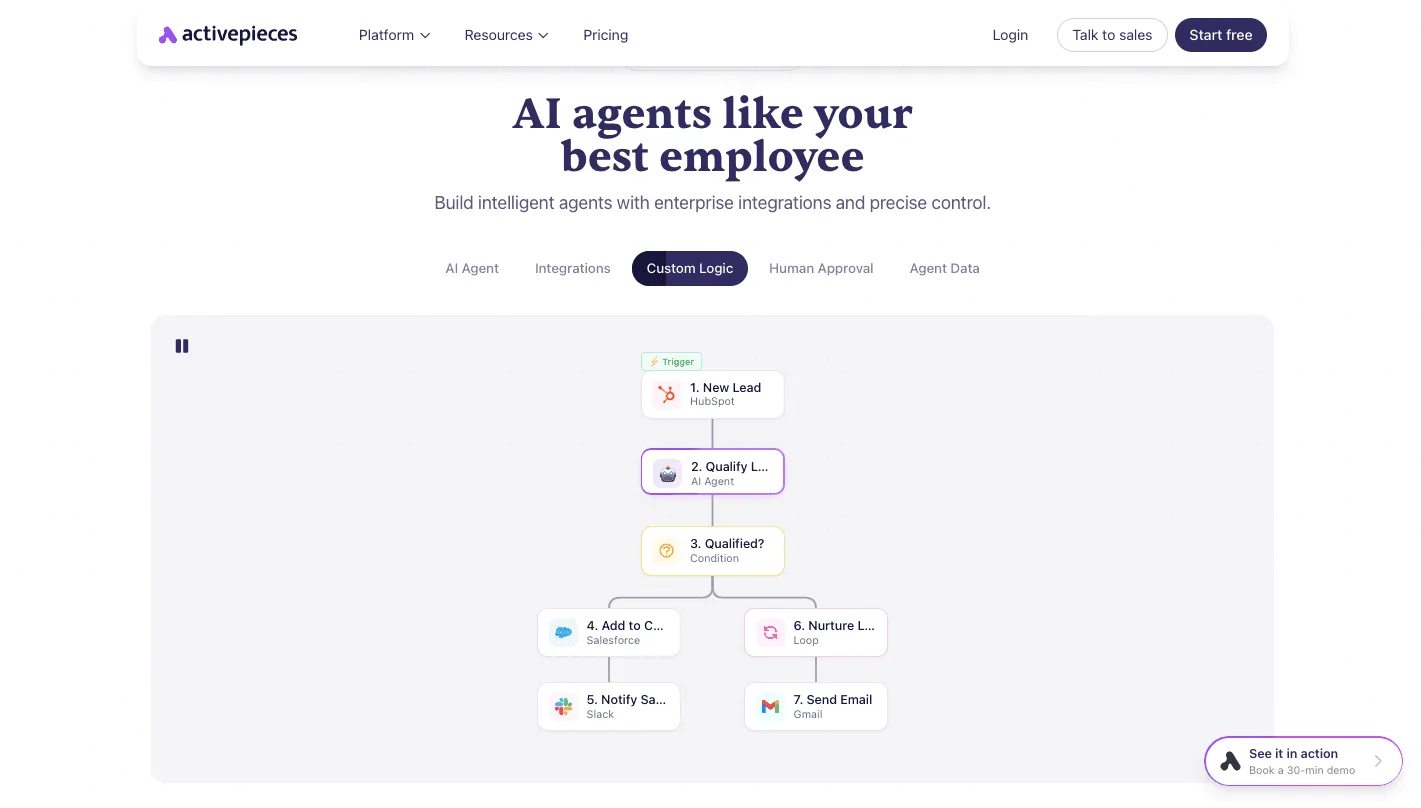
You can approve a single platform that handles both legacy database connections and frontier AI models, provided the models are hosted locally or accessed via secure, private endpoints.
Unlike legacy systems, container-native iPaaS deployments allow for automated audits and version control that match the speed of your software development.
Everything below works on Activepieces' free plan. Start without code or a credit card.
How private integration engines process data behind firewalls
Private integration engines ensure data sovereignty by isolating the execution of your automated workflows within your corporate network while keeping administrative management in a secure, centralized interface.
This architecture prevents raw data payloads from traversing the public internet, satisfying the primary requirement of your internal risk committees who forbid the transmission of PII to third-party cloud environments.
Control plane vs runtime plane in on-premise iPaaS
The separation of the control plane from the runtime plane allows you to manage integrations through a unified dashboard while keeping the actual data processing strictly local.
In this model, the Control Plane is the design and monitoring hub where you build logic and view metadata.
The Runtime Plane is the execution engine that interacts with your internal databases and applications.
The 'Control Plane' (UI/Management) sits in a cloud or management zone and the 'Runtime Plane' (Execution Engine) sits behind your corporate firewall, with data remaining local.
How data and commands flow between planes
The visual logic of this architecture relies on a strict unidirectional flow for sensitive information.
The Control Plane sends execution commands and logic updates down to the Runtime Plane, but the Runtime Plane only sends back metadata, such as success or failure logs, without including the actual data payloads.
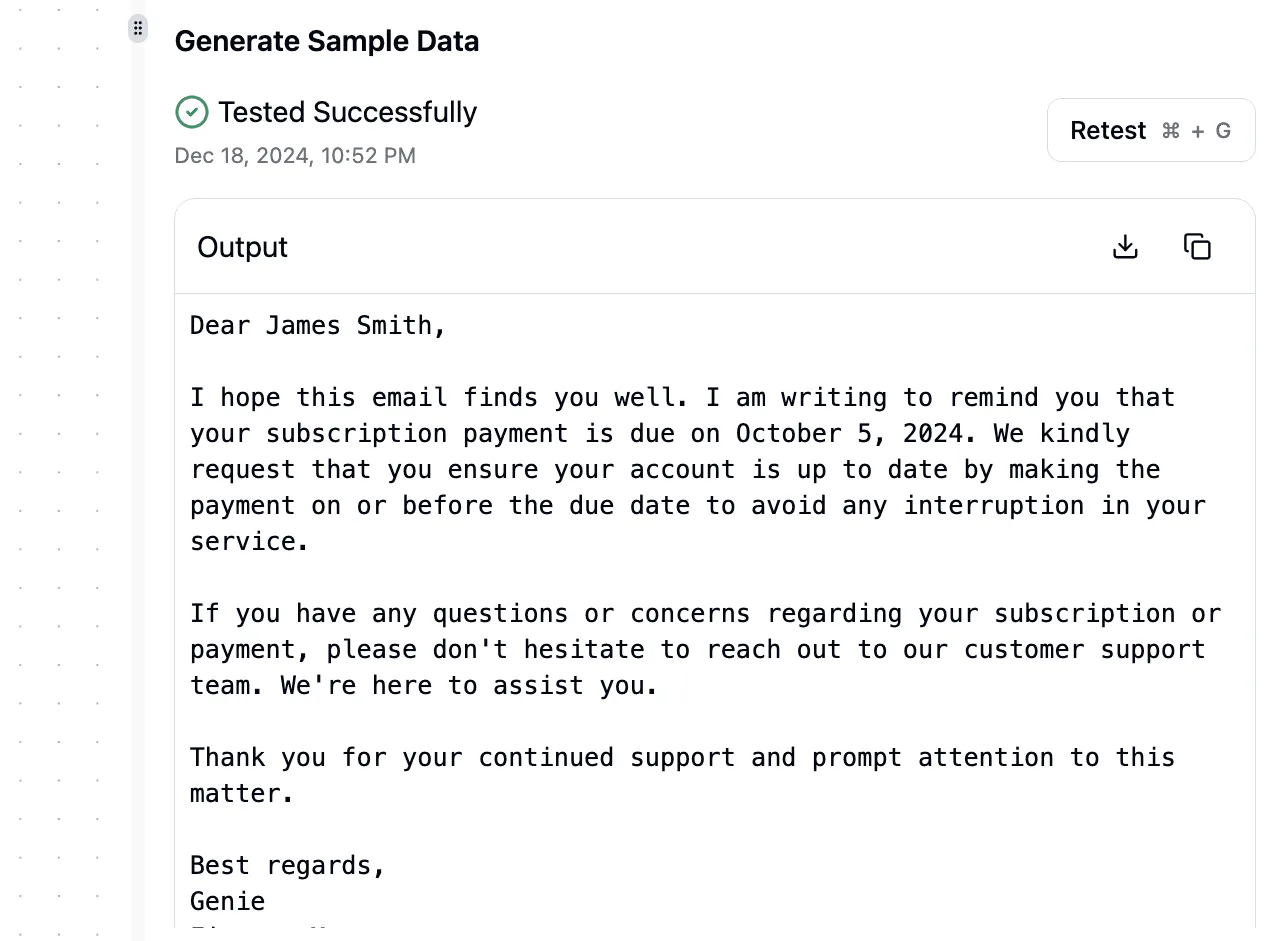
This ensures that the cloud-based management layer never sees the contents of your internal ERP or database. By visualizing the boundary, you can see that the Execution Agent acts as a one-way gatekeeper that processes data locally and reports status only.
Logic mapping without data exposure
When a user builds a workflow in the cloud-hosted Control Plane, they must map data fields between steps. To prevent PII from leaking to the UI during this design phase, the system uses sample schemas rather than live production data.
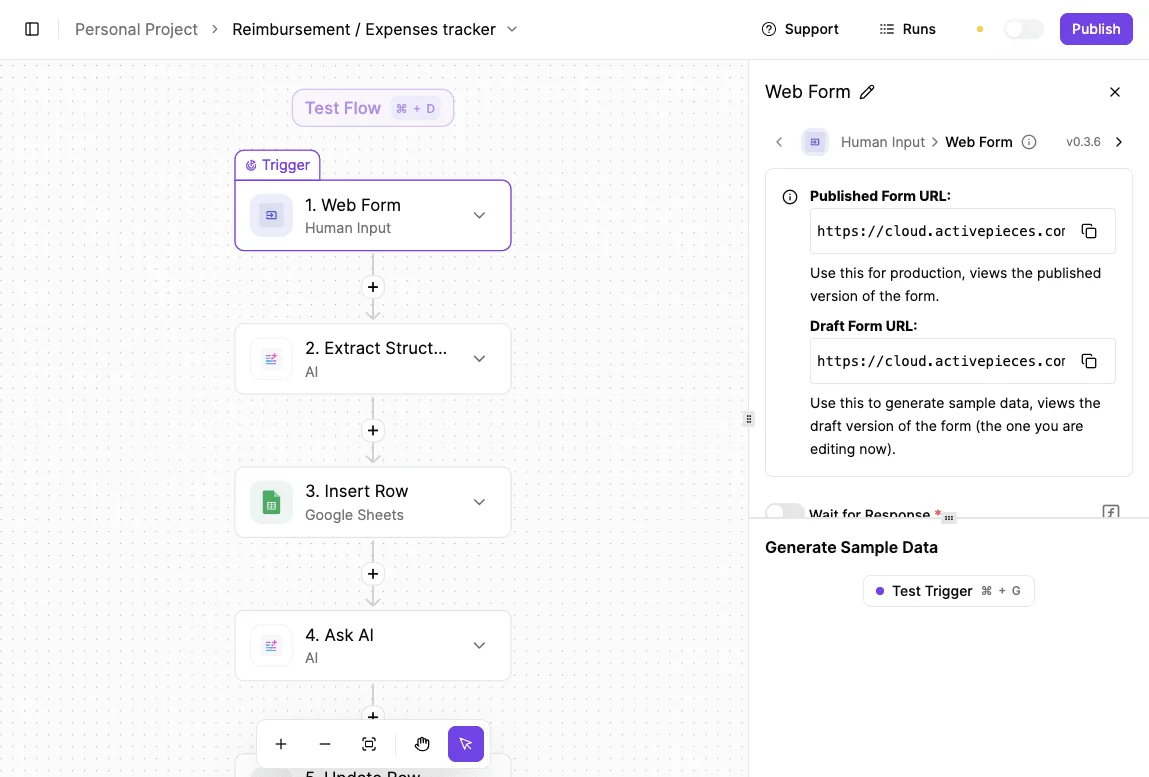
The local Runtime Plane generates a structural template of the data it sees behind the firewall and sends only this non-sensitive schema up to the designer.
The user sees a field named "Customer_Email" in the UI, but the actual email address "[email protected]" never leaves the local agent.
Achieving total isolation with air-gapped hosting
For organizations requiring absolute data sovereignty, the hybrid model is insufficient because the control plane remains external. A true on-premise deployment involves self-hosting both the control plane and the runtime plane within your own private infrastructure.
By hosting the UI and the metadata database locally, you eliminate the need for any outbound connection to a vendor's dashboard. This configuration is essential for air-gapped environments where systems must operate without internet access to prevent external surveillance or data exfiltration.
A stripped self-hosted build is how most vendors monetise this control, but Activepieces provides the same SSO, SCIM, custom RBAC, audit logs, and secret manager integration in its air-gapped build as it does in the managed cloud.
Regulated organisations like MoneyGram and FundingSocieties run this edition in production to maintain governance without sacrificing the feature set.
You can verify this by comparing the enterprise feature list in the self-hosted air-gapped documentation against the managed cloud tier pinned to a SOC 2 Type II region.
You can update a workflow using Claude Opus 5.5 for complex logic design in the cloud UI, but the actual execution against a local SQL Server happens entirely behind your firewall.
Secure connectivity via site-to-site VPNs
Establishing a secure tunnel between the management layer and the local runtime is the only way to maintain centralized oversight without exposing your internal execution engine to the open web. A Site-to-Site VPN or a dedicated TLS-encrypted gateway typically achieves this.
These tools ensure that only authenticated traffic from the control plane can trigger local actions. By restricting ingress to a single, hardened point of entry, your IT security team can apply granular firewall rules that prevent unauthorized external actors from reaching your integration environment.
Managing local execution agents
Local execution agents are containerized services that reside on your internal hardware to act as the hands and feet of your integration platform.
These agents facilitate direct connections to sensitive internal resources, such as Active Directory, providing the necessary identity context for your automated onboarding workflows.
Every credential Activepieces touches, from API keys to OAuth tokens, can be routed to your own secret manager instead of a vendor database in both the self-hosted and enterprise cloud tiers.
By configuring a self-hosted instance against an external secret manager, you ensure that no vendor holds the credentials your business runs on.
This allows teams to inspect the database and confirm that sensitive secrets are not stored within the iPaaS itself, a capability missing from cloud-only providers like Zapier or Make.
They also connect to on-premise ERP systems, allowing for the synchronization of financial records without cloud exposure. Private LLM instances, such as Mistral Large 4 running on your local GPUs, ensure that proprietary prompts never leave your air-gapped environment.
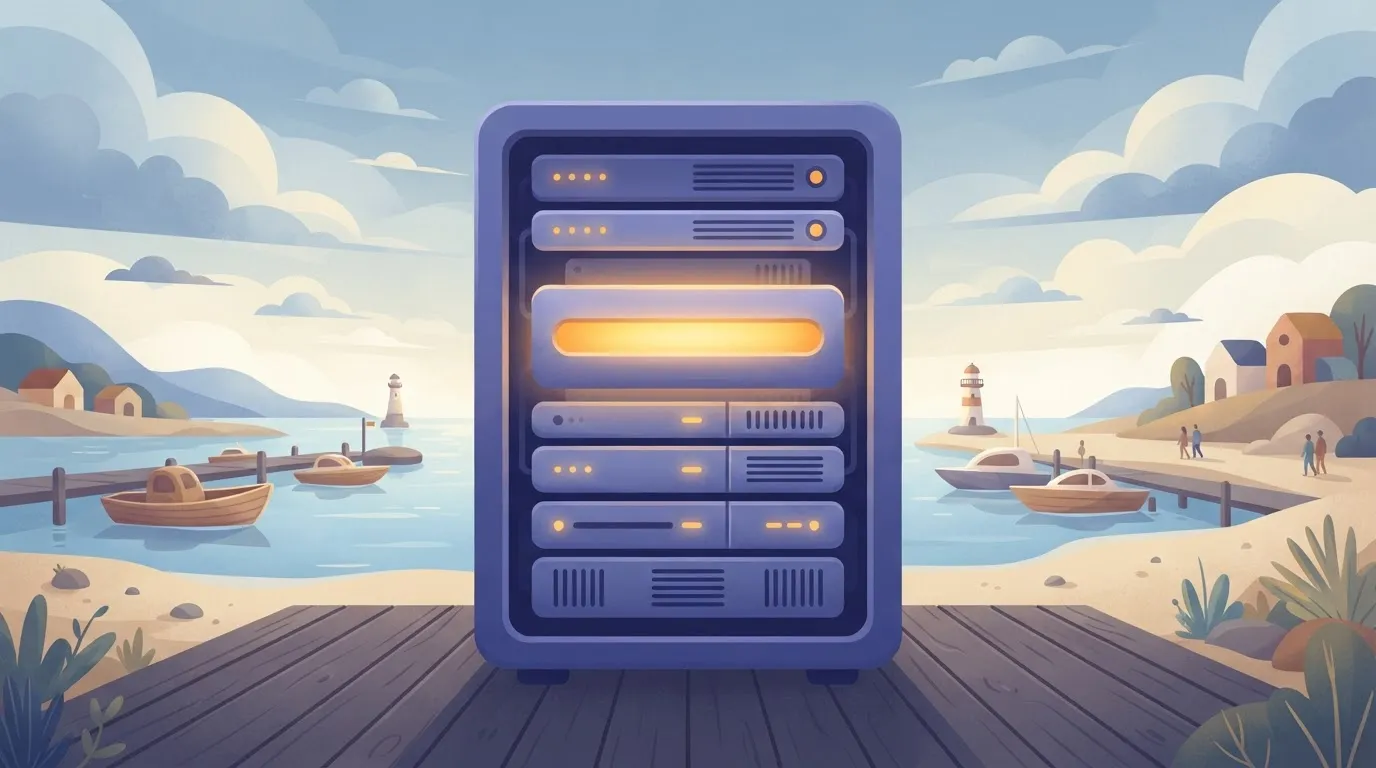
Because these agents are managed as standard Docker containers or Kubernetes pods, your infrastructure team can apply existing patching schedules and resource limits. This ensures your integration layer adheres to the same stability standards as any other tier-one application.
The hidden operational costs of self-hosted middleware
Self-hosted middleware requires a deliberate allocation of capital and engineering hours that exceeds the sticker price of cloud subscriptions.
While the "Average Cost of a Data Breach in 2023" report by IBM shows that Healthcare organizations face $9.77 million in average breach costs and Financial Services face $6.08 million, these figures justify the mandate for self-hosting, so organizations are increasingly prioritizing internal infrastructure to mitigate these extreme financial risks.

The cost of a leak outweighs the cost of private infrastructure. Your procurement process must account for the following overheads as the price of total data sovereignty.
**The cost of a leak outweighs the cost of private infrastructure.
Infrastructure and compute overhead
On-premise deployments necessitate a baseline investment in high-performance hardware to support low-latency execution of modern reasoning models. If you utilize Gemini 3.8 Flash for high-volume routing or Grok 4.7 for complex logic, your internal server must maintain enough VRAM to prevent request queuing.
Otherwise, your automated workflows will time out during peak traffic. Running local instances of Mistral Large 4 requires dedicated GPU clusters. This means your infrastructure team is now responsible for power, cooling, and hardware lifecycle management that a cloud provider would otherwise absorb.
Costs of upgrading self-hosted integration software
Maintaining a self-hosted integration layer requires a recurring commitment of DevOps hours to manage stateful migrations and security patches.
- A standard version upgrade for an orchestration platform often involves creating a full snapshot of the database to ensure a rollback point exists if the schema migration fails.
- Your team must then test the new binary against a staging environment to confirm that existing custom connectors for internal tools like GitHub or Jira remain compatible.
- Finally, your team updates the container image across the production cluster during a scheduled maintenance window.
Because these steps are manual, your team might spend 10 to 15 engineering hours per month just staying current. This represents a direct diversion of labor from building new business logic.
Hardware scaling limits for on-premise iPaaS
Fixed hardware environments lack the instantaneous elasticity of public cloud services, creating a hard ceiling on concurrent process execution. A cloud-native service can scale horizontally in seconds to handle a spike in GPT-6 Astra API calls.
Your self-hosted environment is limited by the physical CPU cores and memory allocated to the virtual machine.
If a marketing campaign triggers a 500% increase in lead processing, your integration layer may drop packets or delay syncs until your infrastructure team can manually provision additional nodes.
Easier to see it running than to read about it: set it up free, no card.
Deploying sovereign automation with Activepieces
Activepieces keeps workflows and credential data within your company’s private network using a self-hosted architecture, satisfying the strict data residency requirements of your internal audit committees.
By moving the execution layer from a vendor’s cloud to your local infrastructure, you ensure that sensitive PII never traverses the public internet. This removes the need for complex cross-border data transfer impact assessments.
Docker and Kubernetes deployment paths
Activepieces is distributed as a containerized application, which allows your infrastructure teams to deploy the service using standard Docker Compose or Kubernetes manifests. Because the software is designed for portability, it can be installed in air-gapped environments that have no outbound path to the internet.

This satisfies the physical isolation requirements of your high-security zones. The core engine is released under an MIT license, providing your legal department with a permanent right to use the software without the risk of a sudden vendor-driven service termination.
For your orchestration platforms, the Kubernetes deployment path allows the automation layer to scale horizontally. This ensures that a sudden spike in background tasks doesn't exhaust the memory allocated to the primary workflow pod.
Running AI agents on local LLM providers
The platform supports AI-driven automation by connecting to models hosted on your internal servers rather than public endpoints.
When your team uses the Activepieces AI agent to process documents, they can route those requests to an internal instance of Gemini 3.8 Flash or Mistral Large 4.
The prompt data never leaves your corporate firewall. This local routing ensures that your proprietary intellectual property remains protected under your existing cybersecurity controls.
By integrating with internal model gateways, your procurement team can consolidate AI spending while your security team maintains a single point of inspection for all inference traffic.
Enterprise governance for regulated teams
While the Community edition provides unlimited workflow runs for individual teams, the Enterprise version includes the administrative controls required by your Chief Information Security Officer. These features integrate the automation layer into your existing identity stack.
This ensures that only authorized personnel can modify critical business logic. Single Sign-On (SSO) and SCIM protocols automate user provisioning and deprovisioning. An employee’s access to sensitive workflows is revoked the moment they're removed from your central corporate directory.

Role-Based Access Control (RBAC) restricts permissions to specific environments, preventing a junior developer from accidentally deploying a test script into a production finance stream.
Audit Logs provide a tamper-proof history of every change made to a workflow, which is a mandatory requirement for passing annual SOC2 or ISO 27001 audits.
If you require these governance features or specialized support for regulated, air-gapped deployments, you should coordinate with the Activepieces sales team to align the deployment with your specific compliance framework.
Frequently asked questions about on-premise iPaaS
Can on-premise iPaaS connect to cloud apps?
On-premise iPaaS facilitates hybrid connectivity by acting as a secure egress point that initiates outbound requests to external webhooks and public APIs. While the orchestration engine resides within your corporate firewall, it utilizes standard communication protocols to interact with software-as-a-service platforms.
The system can push data to a customer relationship management tool like Salesforce or a communication platform like Slack. This ensures that your internal workflows can still trigger external actions.
For your organization, if you prohibit all inbound traffic, the iPaaS can use a persistent outbound connection to a message broker.
This allows it to receive external updates without opening a port in your hardware firewall. Before data leaves the secure zone, the iPaaS can execute transformation logic to redact sensitive fields, so that third-party cloud logs never ingest protected information.
Is self-hosting more secure than SOC2 cloud?
Self-hosting provides a higher degree of control by ensuring that the underlying infrastructure, data persistence layers, and execution environment are governed solely by your internal security policies.
While a SOC2 Type II report from a cloud provider confirms they follow their own stated controls, it doesn't grant you oversight of the physical hardware or the hypervisor.
Self-hosting addresses specific audit requirements that cloud services can't meet. The database containing execution history and secrets remains on physical disks owned by you, which satisfies strict regional sovereignty laws.
The entire stack can be deployed in an air-gapped environment, which removes the risk of credential theft via the public internet.
By connecting the iPaaS to locally hosted large language models, such as Mistral Large 4 or Claude Sonnet 5.5 running on your internal GPU clusters, you ensure that proprietary prompts never leave your private network.
Does on-premise iPaaS support real-time triggers?
On-premise iPaaS supports real-time execution by utilizing local listeners and long-polling mechanisms that operate with lower latency than cloud-to-local relays.
Because the orchestration engine is physically closer to your internal databases and legacy systems, it eliminates the transit time typically required to send packets to a vendor's data center.
The Project Settings dialog for the "Secret Gadget Labs" project shows how these concurrent operations are managed.
The General tab displays a Project Name field and a Max Concurrent Jobs field set to "Default (5)," which dictates the maximum number of flows that can run at the same time for this project.
This setting ensures that high-volume real-time triggers don't exhaust your host's CPU or memory resources.
It prevents a single runaway process from impacting your entire infrastructure. Following the configuration of these execution limits, you'll typically define the specific network routes for your high-priority traffic.