
AI Agents for Marketing: What They Are and Why Use Them
Explore common examples of AI agents for marketing and learn how they can help. Discover how Activepieces can automate your marketing workflow.

Dec 15, 202510 min read
Basic automation improves repetitive tasks, but it breaks once your campaigns grow complex. Rules then stop working when audiences change and performance shifts mid-campaign.
AI agents for marketing go further by analyzing data, adjusting actions, and supporting marketing campaigns while they run.
In this guide, you’ll see how AI marketing agents fit into daily operations, where human oversight still matters, and why teams now rely on agents to manage work that once required constant attention.
Move from fixed rules to agents that adjust while campaigns run. Start with Activepieces!
TL;DR
- AI agents for marketing run parts of your campaigns on their own by watching signals, deciding next steps, and taking action inside your tools.
- Marketing agents adapt when performance shifts mid-campaign, unlike basic automation that relies on predefined rules.
- Teams use agents for lead routing, email flows, paid ads, content, analytics, CRM cleanup, and segmentation, with human oversight on risky steps.
- Integrations matter, since agents need shared data sources and access to external systems to act.
- Activepieces supports this with 526 pieces, MCP servers, and approvals.
Everything below works on Activepieces' free plan. Start without code or a credit card.
What Are AI Agents for Marketing?
AI agents act autonomously to perform marketing tasks using artificial intelligence. Marketing teams use them when manual updates slow down results, and no one can watch every channel at once.
An agent follows a simple loop to automate processes: observe, decide, act.
It reads signals like performance data and customer engagement patterns, then chooses the next step. One agent can adjust ad spend or launch a new campaign creation with limited human intervention.
Traditional automation runs on predefined rules, so it breaks when conditions change mid-campaign. Agents adapt as data shifts, which helps marketing campaigns stay on track across multiple channels.
Marketing agents can further draft social media posts, suggest personalized messages, and keep your brand voice. Human oversight still matters, especially for creative direction and edge cases.
Why Businesses Are Adopting AI Marketing Agents
Businesses adopt AI marketing agents because they help them:
- Reduce manual effort inside business processes that drain time every week.
- Help your teams perform complex tasks with less human intervention while keeping clear control points.
- Cut labor-intensive work like reporting, tagging, routing, and routine updates across tools.
- Improve customer experience by reacting to real customer behavior across multiple channels.
- Raise conversion rates by adjusting ad spend and messages sooner, not after the campaign ends.
- Support marketing and sales teams that work closely, so lead handoffs stay fast and clean.
- Shorten planning cycles and create faster innovation cycles by testing ideas more often.
- Guide content strategy using real signals.
- Mine behavioral data and sentiment analysis, then flag issues and opportunities before they spread.
- Create time savings by handling repetitive tasks that block higher-level work.
Real-World Examples of AI Agents for Marketing
Real gains show up when agents plug into your marketing process and take ownership of steps from signal to action.
AI Agents for Lead Qualification and Routing
Leads come in from forms, chat, webinars, and trial signups, then the sorting work starts right away.
An agent pulls signals like pricing-page visits, repeat sessions, email clicks, and firm details already stored in the customer relationship management (CRM) system. It ranks intent, then routes each lead to the right owner so your sales teams can focus on the strongest potential customers first.
Most teams set a few simple rules, then let the agent handle the rest. For example, you can score each lead using recent activity and past deal patterns, route leads by territory, product interest, or account size, or send a short handoff note with what the lead did and the next best step.
Lower-intent leads move into nurture, and the agent updates status as new signals show up. Over time, the scoring improves as it learns which behaviors lead to closed deals and which ones stall.
AI Agents for Email Marketing and Lifecycle Campaigns
Email marketing breaks once every user gets the same timing and message.
An agent watches opens, clicks, site actions, and purchases, then adapts dynamically to individual customer behavior as those signals change. It can change timing, swap the next email, or pause a sequence when someone shows strong intent.
Teams often use agents for three high-impact areas:
- Welcome flows that change based on the first actions a new user takes
- Cart or trial follow-ups that adjust offers based on engagement patterns
- Win-back sequences that react to drop-offs before churn becomes final
Campaign optimization based on performance data helps the agent tune subject lines, segments, and cadence while marketing campaigns stay live. Besides that, personalized messages land better when they match the last action a person took.
AI Agents for Paid Advertising Optimization
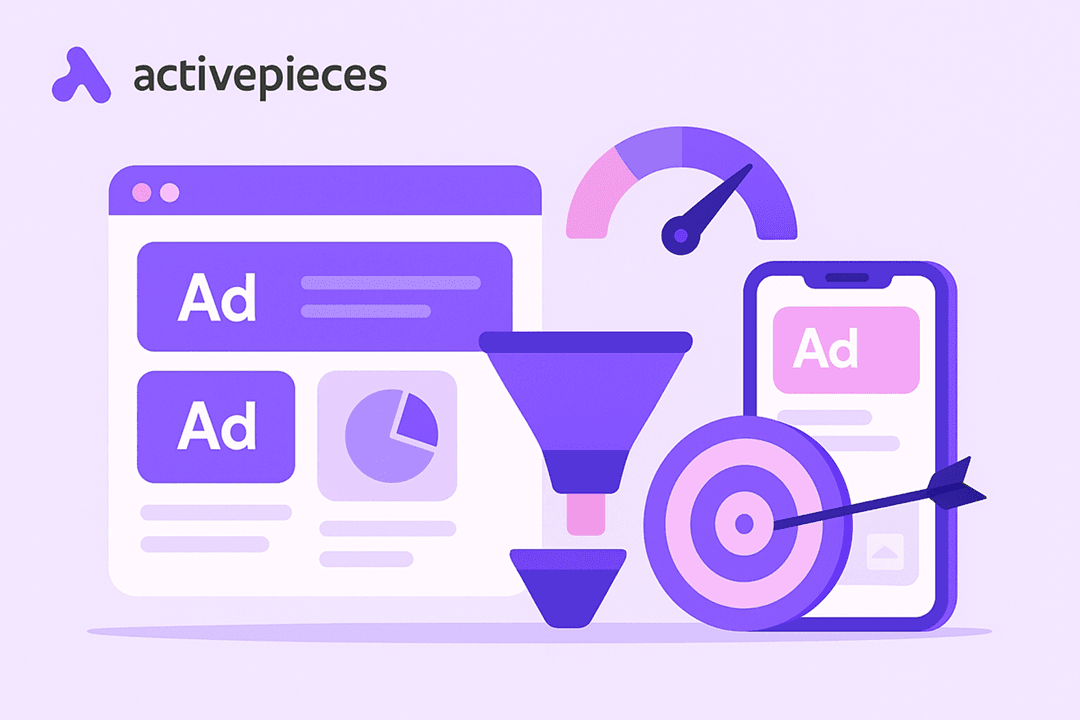
Digital advertising moves fast, so slow changes burn budget. An agent connects to ad accounts, watches results by audience and creative, then adjusts bids and budgets inside guardrails you set. It can shift ad spend away from weak segments and pause ads that stop converting.
Many teams start with these actions:
- Rebalance budgets across campaigns when results swing mid-day
- Pause creatives that drop below a click or conversion threshold
- Expand audiences that keep strong returns, then cut waste fast
AI Agents for Content Creation and Promotion
Content generation takes time, and the work rarely stops at writing a draft.
A content agent can plan topics, prep assets, schedule posts, and then push updates across multiple channels. It often uses large language models (LLMs) to draft blog sections, email copy, and social media posts while you stay focused on creative direction.
The agent further reads brand guidelines, then checks tone, wording, and claims so the pieces it generates are on brand.
For example, a flow can start with drafting a first version, then offering two alternate angles for review. You can then repurpose the same message into email, ads, and social formats. Follow how it performs so that you can schedule, monitor, and refresh posts when engagement drops.
AI Agents for Marketing Analytics and Insights
Marketing data floods in from ads, email, web, and CRM, and most teams can’t read it fast enough to act.
An analytics agent runs data analysis across sources, then pulls out actionable insights you can use the same day. It also watches campaign performance tracking so small issues show up early.
Using machine learning, the agent can link engagement patterns to outcomes like signups, demos, and purchases, then flag what changed and why it likely changed.
AI Agents for CRM Data Enrichment and Hygiene
Poor CRM data quietly breaks campaigns. A CRM agent can analyze customer data, find missing fields, merge duplicates, and standardize names so targeting stays accurate.
A basic setup usually covers jobs like these:
- Fill in the missing company size, role, and industry fields
- Merge duplicate contacts, then keep the newest record
- Flag records with bad emails before a send goes out
AI Agents for Customer Segmentation and Personalization
Segmentation fails when it stays frozen while people change their behavior week to week.
A segmentation agent watches actions across channels, then updates groups based on real signals like visits, clicks, purchases, and churn risk. That lets you serve personalized content that matches what the person did last.
Teams also use these agents to keep offers tight. One segment can respond to proof and case studies, while another group needs pricing clarity before it clicks.
Common moves include:
- Building a high-intent group from repeated pricing and demo-page visits
- Identifying a churn-risk group based on drop-offs and lower usage
- Personalizing messages per segment, then tracking lift by group
Easier to see it running than to read about it: set it up free, no card.
How Activepieces Enables Real AI Agents Across Your Marketing Operations
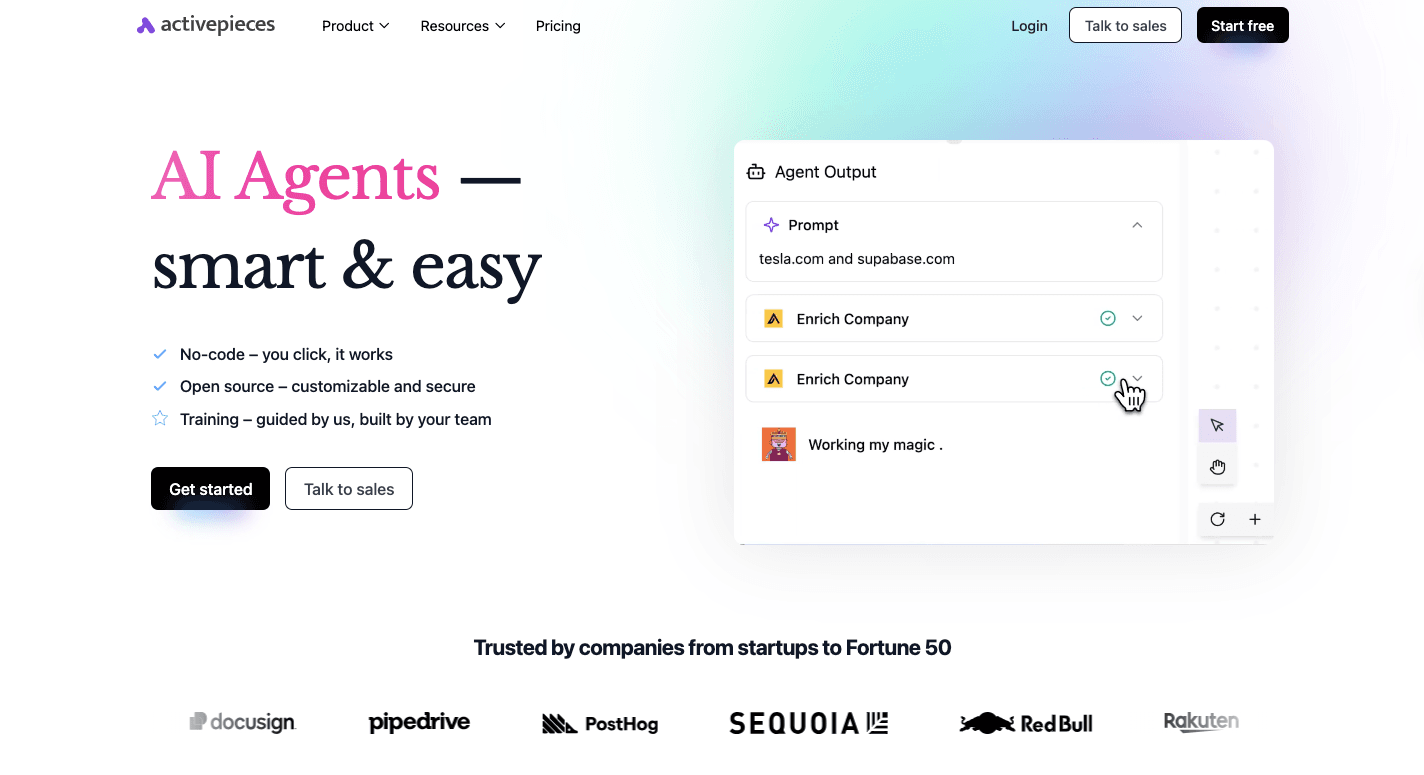
Activepieces is a workflow automation platform that helps you build AI agents for marketing that can actually run work across your stack. You connect triggers, data, and actions in one flow, so the agent can read signals and take the next step without waiting for someone to copy and paste info.
Here are some ways it enables AI agents in your operations.
Connect Your Stack Without Glue Work
Activepieces uses pre-built data integrations called pieces, and that keeps setup fast when you already rely on a big tool set. Activepieces currently lists 526 pieces, which cover a lot of the apps teams use day to day. New pieces get added daily.
In addition, you can connect internal tools when you need workflows that touch your own systems.
Put Decision Logic Inside the Workflow
A flow can run integrated AI models and conditional logic, then choose the next action based on the result. That keeps the “thinking” step and the “doing” step in the same place, which cuts delays and missed handoffs.
You can even connect with generative AI like ChatGPT, then route the output into lead notes, content drafts, or follow-up messages as part of AI-assisted workflows.
Let Agents Use Tools Through Model Context Protocol
Model context protocol (MCP) fits when you want agents to call tools in a controlled way without hard-coding every possible action. Activepieces supports MCP servers, so an agent can access the same set of actions your flows already use, then run them when new data hits.
Keep Humans in Control When It Matters
Some actions deserve a checkpoint, especially budget shifts, outbound messages, or changes that affect many users. Activepieces lets you add approval steps and delays, so human oversight stays in the loop.
Control the final send and automate the prep and follow-up. Sign up for Activepieces!
Why AI Agents for Marketing Require an Integration-First Platform
AI agents for marketing only work when they can read signals and take actions across your stack.
Many businesses run marketing through a CRM, email platform, analytics, ad accounts, chat tools, and spreadsheets, and those systems rarely share context on their own.
An integration-first platform pulls signals from many data sources into one view, then pushes actions back into the tools your team already uses.
Partial data leads to poor decisions, especially when one channel looks strong while another shows churn risk. A connected setup gives the agent a 360-degree view of the customer journey, so it reacts to real behavior across touchpoints.
The agent also needs access to external systems so it can update records, trigger follow-ups, adjust budgets, and route leads.
Lead the Shift to Autonomous AI Marketing With Activepieces
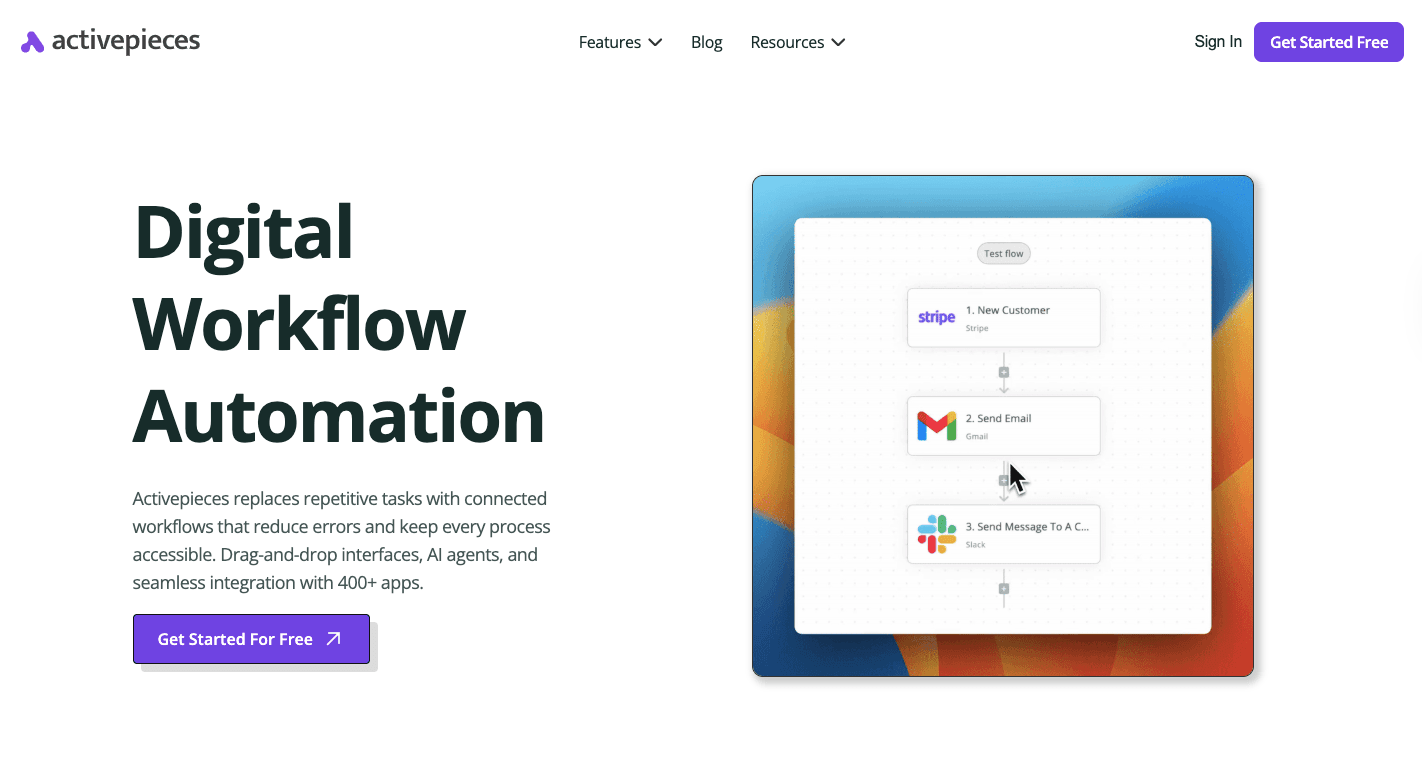
Agentic AI needs a platform that can run actions across your stack without fragile glue work.
Activepieces gives you an open-source automation platform built for AI agents, with support for complex workflows that marketing and sales teams can scale from small tests to enterprise rollouts.
Activepieces offers 526+ pre-built integrations called pieces, plus an open ecosystem where the community contributes many connectors. Developers can build custom pieces in TypeScript, then test locally with fast reload, so edge cases don’t force messy workarounds.
You can also connect AI tools inside the same flow, then mix actions with conditional logic and approvals so humans stay in control where it matters.
FAQs About AI Agents for Marketing
How do marketing AI agents work?
Marketing AI agents follow a loop: they collect signals, choose the next action, and then execute it inside your tools. You usually train the agent with relevant data and content guidelines, then add human oversight for risky steps, since predefined rules still help with limits and approvals.
A solid setup can automate repetitive tasks, run performance analysis, and keep your human team focused on decisions that need judgment.
Can AI marketing agents fully replace human marketers?
No, AI marketing agents don’t fully replace human marketers in real teams. People still own strategy, creative judgment, and final calls on brand and risk.
Does agentic AI require coding?
No, agentic AI does not always require coding, since many platforms let you build flows with a no-code builder. Coding helps when you need custom integrations or deeper control.
What tools are needed to build AI agents for marketing?
You need an automation layer to manage tasks across apps, access to data sources, and connectors for email, CRM, ads, and analytics, plus an AI step for reasoning. Activepieces helps you connect your stack, run agents, and ship an end-to-end transformation from signal to action.