
How to Choose AI Governance Tools for LATAM Compliance

Oct 1, 202614 min read
LATAM data residency requirements for AI workloads
LATAM data sovereignty laws beyond GDPR alignment
Beyond the passive adoption of European standards, most Latin American regulatory frameworks have moved to enforce strict local sovereignty over how automated systems handle citizen data.
The current enforcement climate prioritizes domestic oversight, even though early drafts of regional privacy laws mirrored the general principles of the General Data Protection Regulation (GDPR). This ensures that judicial authorities can audit the logic of proprietary algorithms.
For a Chief Data Officer, this means the legal basis for processing no longer rests solely on user consent but on the physical location of the infrastructure.
While many vendors treat air-gapped control as a secondary tier, Activepieces provides the same enterprise features (including SSO, SCIM, custom RBAC, audit logs, and secret managers) in its self-hosted edition as it does in its managed cloud.
Regulated organizations like MoneyGram and Moneypenny run this air-gapped build in production to maintain residency without sacrificing the governance tools required for large-scale automation.
Comparing the self-hosted documentation against the SOC 2 Type II managed cloud reveals an identical feature set, ensuring that moving to a local LATAM instance does not result in a stripped-down product.
Directly to your enterprise goes the liability if you fail to maintain this boundary. Domestic regulators increasingly view cross-border transit as an inherent security vulnerability rather than a standard operational procedure.
Specific mandates in Brazil (LGPD) and Chile
Heavy financial penalties now face you under the Brazilian General Data Protection Law (LGPD) and updated Chilean privacy statutes if you fail to justify the necessity of international data transfers for AI processing.
These mandates require that any automated decision-making involving sensitive personal information be subject to local review. Hosting the underlying model in a foreign jurisdiction makes this requirement technically impossible.
Domestic regulators increasingly view cross-border transit as an inherent security vulnerability rather than a standard operational procedure.
The following table outlines the maximum financial exposure for your organization if you bypass these residency requirements:
| Country | Regulation | Maximum Regulatory Fine |
|---|---|---|
| Brazil | LGPD | R$50M |
| Mexico | LFPDPPP | ~$1.9M USD |
| Colombia | Law 1581 | ~$500k USD |
Legal teams often veto AI implementations that can't guarantee a domestic footprint due to these financial risks.
Why 'region-us-east' no longer meets compliance standards
Routing LATAM enterprise data to North American data centers creates a jurisdictional conflict that invalidates the "local processing" requirements now appearing in government procurement contracts.
Bnamericas reports that even when using frontier models like GPT-6 Astra or Claude Opus 5.5, the latency of a 5,000-mile round trip combines with a loss of legal protections.
Foreign surveillance laws apply to data stored in a US-based region, often contradicting LATAM privacy rights. When a developer selects a US-East region in a cloud console, they're effectively opting out of the local legal safe harbors designed to protect their customers' most sensitive information.

This makes air-gapped, self-hosted deployments the only viable architecture for high-stakes industries like banking or healthcare. In these sectors, the risk of a foreign subpoena outweighs the convenience of a managed cloud service.
This takes minutes, not a project: automate it in Activepieces free.
Latency costs of routing AI through US servers
A structural latency tax is imposed on any firm routing inference through US-based data centers, degrading user experience and violating the data sovereignty requirements your legal teams now demand.
While North American firms enjoy near-instantaneous responses, your enterprise operating via remote gateways faces a physical distance barrier that no software optimization can bridge.
Why LLM latency breaks real-time agentic workflows
The network distance between a user in Buenos Aires and a server in Virginia creates a lag that effectively breaks the "flow state" required for agentic workflows.
When an engineer uses Claude Opus 5.5 (Anthropic’s model for long-running agentic coding) through a US-routed API, the round-trip time for every sub-task adds up.
Over a minute is how long a complex debugging sequence can take in Santiago, even if it only takes thirty seconds in New York.
This isn't a minor delay. It's a fundamental barrier to deploying autonomous agents that must interact with local databases in real time.
São Paulo data center routing for lower latency
For the region, domestic hosting is the only way to bypass the massive inter-continental transit times that characterize current AWS infrastructure. The data shows a stark disparity in millisecond (ms) round-trip times when connecting from a LATAM baseline to global nodes:
- Ohio: 81ms [Resilio]. This represents the "ideal" speed US competitors enjoy.
- Sydney: 165ms [Resilio]. Australian branches experience double the friction of their US counterparts.
- Singapore: 247ms [Resilio]. Southeast Asian routing introduces a quarter-second delay before the model even begins processing.
- São Paulo: 681ms [Resilio]. A local request routed through typical AWS cross-region paths faces over half a second of transit lag.
- Tokyo: 775ms [Resilio]. This effectively renders real-time voice models like GPT-Realtime-2.1 unusable due to perceived telecommunication "dead air."

Geographical routing slows local traffic because it wasn't optimized for the southern hemisphere, as the AWS Latency Tax for LATAM Inference chart illustrates. CTOs prioritize air-gapped, on-soil hosting to bring that 681ms figure down to single digits.
The competitive disadvantage of 600ms+ response times
A 600ms+ delay ensures that your firm can't compete in the emerging market for high-velocity AI assistants.
If a customer service lead deploys Gemini 3.8 Live (Google’s low-latency voice agent) but the signal must travel to North America and back, the resulting "clobbering" destroys the utility of the interface.
The Chief Product Officer is ultimately accountable for this. Choosing US-based routing is a conscious decision to ship a product that feels broken to the local market compared to domestic alternatives.
Governance models for localizing AI data processing
Whether you prioritize immediate speed to market or the absolute elimination of third-party data exposure determines which governance model you select. The Chief Information Officer must distinguish between the convenience of managed services and the rigorous requirements of local data residency.
The choice dictates whether sensitive intellectual property ever leaves the physical or logical control of your firm. While global models like GPT-6 Astra or Claude Opus 5.5 offer frontier intelligence, deployment architectures that introduce legal risk or high-latency routing through overseas gateways limit their utility.
The following table compares the three primary architectures available to LATAM organizations seeking to balance performance with regulatory compliance.
| Governance Model | Deployment Speed | Data Isolation Level | Maintenance Overhead |
|---|---|---|---|
| On-premise | Slowest | Physical Air-gap | Highest |
| Local VPC | Moderate | Logical Network Isolation | Moderate |
| Managed Sovereign Cloud | Fastest | Contractual & Regional Isolation | Lowest |
The "fastest" path often carries the highest risk of logical data leakage if the sovereign provider relies on non-local sub-processors.
The Engineering Lead must ensure that the chosen infrastructure can support high-performance reasoning models, such as Gemini 3.8 Flash or Mistral Large 3, without defaulting to US-based inference endpoints that bypass these local safeguards.
Infrastructure maturity and self-hosting
For organizations handling classified financial data, moving from a Local VPC to a fully air-gapped On-premise environment is often the only way to satisfy internal audit requirements. These "Zero-Export" data policies shift the burden of model optimization entirely onto your internal DevOps team.
For resource-intensive workloads like video generation via Veo 3.1 or cinematic editing, this is especially true. The decision to self-host is a commitment to infrastructure maturity. This architecture keeps your most valuable datasets invisible to the providers of the models you utilize.
You can follow the rest of this with the builder open. Start free, no card.
Enforcing residency with Activepieces self-hosted orchestration
Activepieces is an MIT-licensed AI automation platform that allows your enterprise to orchestrate AI workflows entirely within your own infrastructure. This ensures that sensitive data never touches the international transit routes typical of multi-tenant SaaS providers.
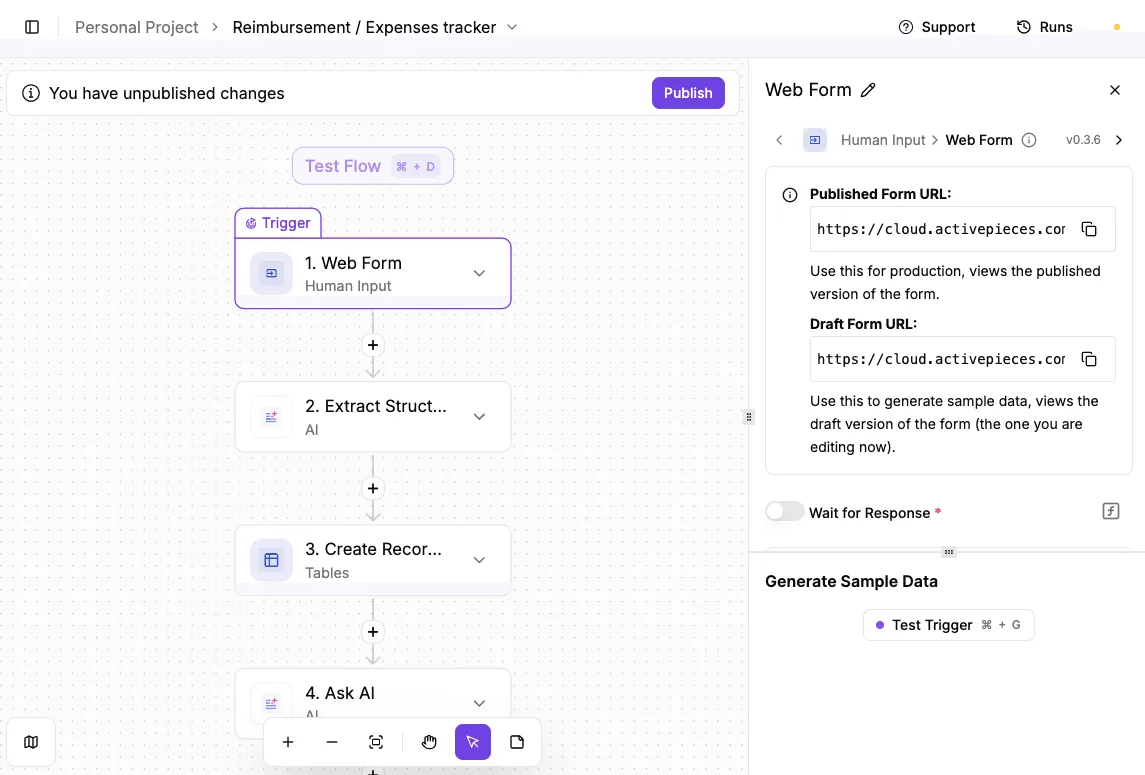
By deploying this automation engine as a self-hosted instance, your Chief Information Security Officer gains absolute control over the execution environment where local datasets meet frontier models.
Restricting LLM prompt data to regional servers
Activepieces provides 738+ integrations that allow your infrastructure teams to terminate all API connections within a private virtual cloud, effectively preventing the "black box" routing that occurs when using US-based automation platforms.

When your organization integrates Gemini 3.8 Flash for enterprise workflows or Claude Sonnet 5.5 for intelligent data processing, the orchestration layer sits behind your corporate firewall.
Only in memory on local servers or within regional instances of model providers does the prompt reside under this architectural choice.
The prompt is the exact point where intellectual property is most vulnerable. By removing the SaaS middleman, you prevent data from being cached or logged in jurisdictions where you lack legal recourse.

Auditing data flows without external telemetry
Through its project-level controls, the platform provides a transparent view of every data movement.
This visibility allows your internal audit team to verify that no unauthorized Model Context Protocol (MCP) servers are bridging the gap between secure internal databases and public internet endpoints.
Activepieces records every agent tool call and the specific data it acted on in a per-step decision trace, which can be reviewed in the Run Details and Debugging UI.
These traces export directly into your existing SIEM via the audit logs and event-streaming feature, ensuring that an agent's autonomous decisions are governed with the same rigor as a deterministic workflow.
Granular local controls are visible in the Project Settings dialog for the "Secret Gadget Labs" project. Specifically, the Max Concurrent Jobs field limits the number of flows running simultaneously to prevent infrastructure strain.
Following this configuration, the local database stores every execution log, providing a complete forensic trail that remains under your sole custody.
Automating compliance reporting for LGPD audits pipelines
Activepieces provides the granular audit logs and event-streaming features required to push every local AI decision directly into the SIEM your security team already runs. Compliance officers can build specialized flows that trigger every time a high-reasoning model like GPT-6 Astra is called.

- These flows document the origin and destination of the data packet.
- Execution logs prove that data stayed within the sanctioned VPC during processing.
- Environment variables verify that local vaults provided API keys and secrets, rather than cloud-hosted configuration files.
- Integration metadata documents exactly which version of a connector was used to ensure no unauthorized data-scraping logic was active during the audit period.
The Monday morning AI residency audit checklist
To prevent unauthorized jurisdictional exposure, an effective AI residency audit requires your IT leaders to verify that every hop in a data packet’s journey terminates within local borders.
While high-level policy often focuses on the final model output, the technical reality of data leakage usually resides in the invisible transit layers and storage dependencies that support modern agentic workflows.
Detecting hidden US routing in AI middleware
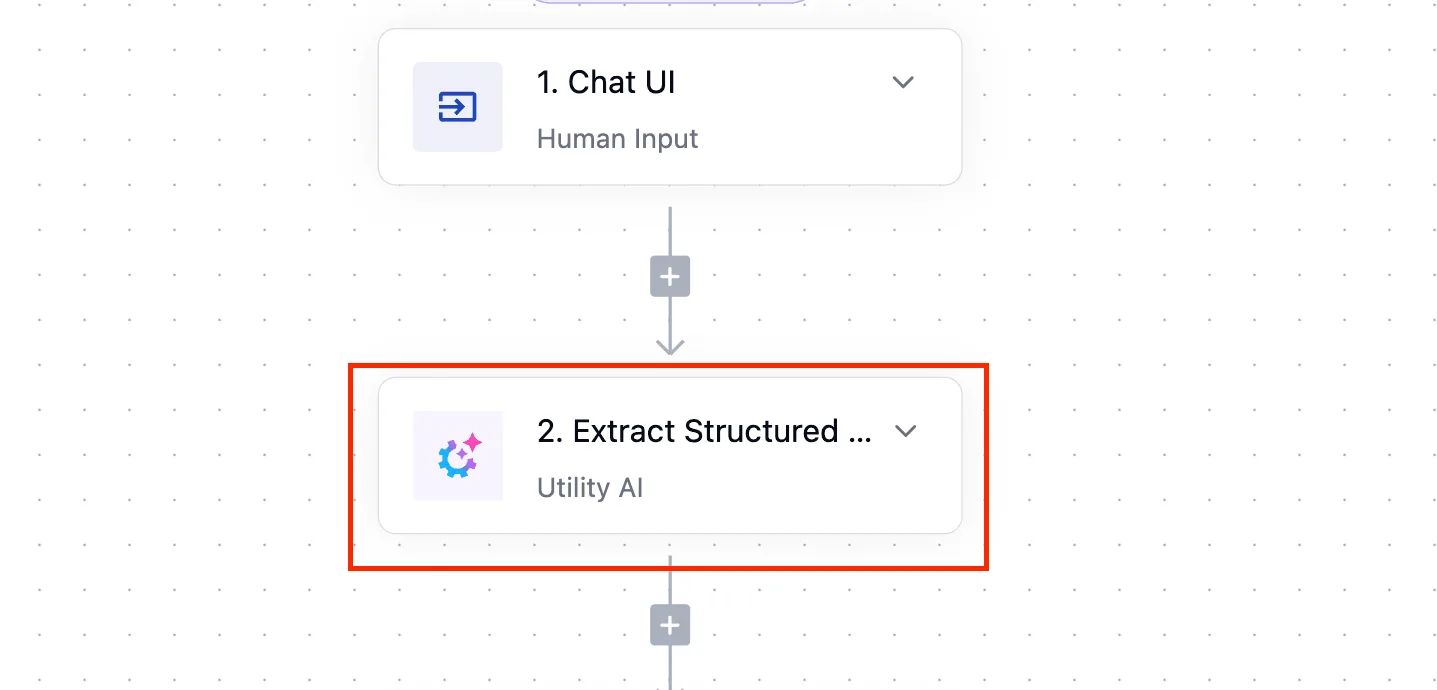
IT leaders must trace the execution path of every API call to ensure that orchestration layers don't default to US-based routing for secondary tasks.
Many organizations utilize specialized services for auxiliary functions, such as Mistral Moderation 2 for jailbreak detection or Voxtral Mini Transcribe 2 for audio processing.
On different infrastructure clusters than the primary reasoning engine, these may operate.
If North American regions host these utility models while the core application resides in LATAM, your enterprise incurs a latency tax and violates data sovereignty mandates. The Chief Information Officer is accountable for ensuring that every microservice in the stack shares a unified residency configuration.
Mapping the physical location of vector databases
The audit must confirm the geographic coordinates of the infrastructure hosting your organization’s long-term memory and retrieval systems.
When using Gemini Embedding 2 for multimodal search or Codestral Embed for repository indexing, the resulting vectors are often stored in managed databases that default to global distribution for high availability.
Mirroring sensitive corporate intellectual property across international borders places the data under foreign legal discovery rules.
To maintain strict residency, your infrastructure team must verify the primary storage region for the vector database. They must also check the location of all automated failover and backup instances, and the physical site of the compute nodes performing the similarity search.
Validating sub-processor residency clauses
Legal and procurement teams must reconcile the technical architecture with the specific sub-processor disclosures provided by model vendors.
While a contract may state that a flagship model like GPT-6 Astra is "regionally available," the fine print often allows the provider to route overflow traffic to US-based clusters during peak demand or for specialized safety filtering.
Only during low-traffic periods is data residency maintained, creating a compliance gap.
The General Counsel is responsible for securing written guarantees that prevent dynamic load-balancing across borders. These guarantees establish residency as a hard technical constraint rather than a best-effort service level.
Frequently asked questions about LATAM AI governance
Does São Paulo have enough GPU capacity for local fine-tuning?
Insufficient local GPU availability in the São Paulo region often forces teams to choose between high-latency international routing or restricted local compute clusters.
While basic inference is generally supported, the scarcity of high-end H100 or A100 clusters means that a Chief Technology Officer must prioritize which models are tuned locally versus which remain as stock deployments.
If a team attempts to fine-tune a massive parameter model like Mistral Large 3 without reserved instances, the job will frequently sit in a queue or fail mid-cycle.
This results in lost engineering hours and incomplete model weights. Enterprises are increasingly moving toward air-gapped, on-premises hardware for sensitive fine-tuning to bypass the unpredictable spot-pricing and availability of the public cloud.
Can I use OpenAI while maintaining LATAM residency?
OpenAI doesn't currently offer a native, physically isolated region within South America. Any direct API call to a model like GPT-6 Astra will transit through North American data centers.
This creates a mandatory border hop that subjects the data to US discovery laws and introduces a performance penalty due to physical distance.
The legal department must differentiate between public API access and Azure OpenAI Service (Brazil South) for organizations that require strict residency. Public API access means data leaves the continent, which violates strict sovereign data mandates.
Azure OpenAI Service provides a regional endpoint, but high-demand reasoning models like GPT-Realtime-2.1 are often delayed in their regional rollout compared to US East regions.
Private proxy layers encrypt data before it leaves the region, though this adds complexity to the network stack and doesn't satisfy laws requiring data to be at rest only within national borders.
How does the Chilean Fintech Law impact AI data storage?
The Chilean Fintech Law (Ley FinTech) mandates that any automated processing of financial data must be auditable and secure.
This effectively requires that the underlying data used by AI models stay within jurisdictions that allow for immediate regulatory inspection.
Granular access to data logs is required by the Commission for the Financial Market (CMF). Using a model like Claude Opus 5.5 through a standard global cloud provider often fails the audit unless the provider can prove the data never left the approved zone.
If the data is routed to a US-based server for inference, the institution risks heavy fines and the potential suspension of their operating license.
The CMF can't exercise its oversight powers on foreign soil. The Compliance Officer must therefore ensure that any agentic workflow, such as those using Gemini 3.8 Flash for enterprise workflows, is pinned to a local instance to remain compliant.
Related reading
References
Build it
Set this up in minutes.
No code required. Connect your accounts, and Activepieces runs it from there.
Start free Talk to sales