AI Contract Review Automation

Nov 14, 202613 min read
Before a human practitioner ever intervenes, automated contract review uses Large Learning Models (LLMs) to identify, categorize, and evaluate specific clauses against an organization’s predefined legal playbook.
This process transforms a document submission into a structured risk report by routing the text through an orchestration layer like Activepieces, which connects the document source to a reasoning engine for immediate analysis.
Organizations like MoneyGram and Moneypenny run this in production to manage complex automation environments, ensuring that high-volume document flows remain under central governance.
AI contract review automation replaces manual first-pass legal screening
How semantic AI understanding improves contract review
Legacy systems were often unreliable because exact string matching failed to identify non-standard phrasing. Modern LLMs utilize semantic understanding to interpret the intent and obligation within a sentence, rather than just the vocabulary used.
When identifying high-volume classification patterns, Claude Haiku 5.5 is the preferred choice. To determine if a limitation of liability clause violates internal thresholds, GPT-6 Astra processes complex reasoning.
Modern LLMs utilize semantic understanding to interpret the intent and obligation within a sentence, rather than just the vocabulary used.
By providing multimodal reasoning, Mistral Large 4 allows the system to interpret structured tables and signature blocks that traditional text-based search tools often skip.
Why legal teams automate the first-pass review
Manual first-pass review creates a bottleneck where qualified counsel spends hours identifying basic non-compliance instead of negotiating high-value terms. By automating this initial screening, teams ensure every document meets minimum filing requirements before it consumes professional billable time.
The following data compares the performance of automated reasoning against traditional human-led methods in identifying critical contract risks:
| Method | Precision | Recall | Speed (per 10 pages) |
|---|---|---|---|
| Human Associate | 92% | 95% | 45 minutes |
| GPT-6 Astra | 94% | 91% | 12 seconds |
| Claude Sonnet 5.5 | 93% | 92% | 15 seconds |
While human associates maintain a slight edge in recall, the precision of top-tier models ensures flagged risks are genuine violations. This reduces the "noise" senior partners must filter.
The moment the system flags a document, it generates a risk score. If the score exceeds internal tolerance, the automation halts the signature process and notifies the relevant officer.
This prevents the accidental execution of unfavorable terms that occur when manual reviewers overlook a single sub-clause in a hundred-page agreement.
Everything below works on Activepieces' free plan. Start without code or a credit card.
Building your first contract review bot
A linear sequence is required for reliable automated screening. A no-code automation platform, such as Zapier for simplicity or Make for complex logic, orchestrates the movement of document data between your inbox and an LLM.
Triggering contract review with new email attachments
The workflow begins by monitoring a specific intake channel, typically a shared legal inbox. In an automation builder, you select Gmail as the trigger app and "New Attachment" as the event.

To avoid processing image signatures, apply a filter for file extensions ending in ".pdf" or ".docx".
The automation platform must hand the file off to a dedicated parser like Adobe PDF Services to convert the document into a raw text string.
Converting PDF contracts into readable text
Large Language Models are designed to process tokens, which are essentially numerical representations of text characters. A PDF file is a binary format containing complex instructions for how to render fonts and layouts on a screen, which the AI cannot read directly.

The parsing step is the bridge that translates this binary data into a clean, sequential text string that the LLM can ingest.
Even though some models are multimodal, providing a raw text string remains the most reliable way to ensure the AI analyzes every specific word of a legal clause without distraction.
Connecting the document to the parsing engine
This hand-off requires a separate API subscription to a parsing service, which you link to your automation platform using an API key.
The platform sends the binary file content to the parser's endpoint, where the service extracts the text and returns it as a structured data object.
You then map this returned text variable into the next step of your flow, ensuring the AI receives a clean string rather than a raw file.
Extracting contract text with open source libraries
If you prefer to avoid third-party parsing subscriptions, you can handle text extraction using built-in code steps within your automation platform.
Most platforms allow you to run a Python or Node.js script that utilizes open-source libraries like PyPDF2 or pdf-parse to read the binary data directly.
By writing a short script to loop through the document pages, you can concatenate the text into a single variable. This approach keeps your data within your own automation environment and eliminates the per-document cost of external parsing services.

Step 2: Map your legal playbook to an AI prompt
Standardizing review criteria involves translating your firm’s "Red Flag" list into a structured system prompt. You must define specific indemnity thresholds, jurisdiction requirements, and termination notice periods.
By using a high-reasoning model like Claude Fable 5.2, the system can handle the long-horizon task of comparing a hundred-page document against these rules without losing context.
Step 3: Extract and score clauses automatically
The core processing step sends the parsed text and your playbook to the LLM. Configure the model (such as GPT-6 Astra) to output findings in a structured format, identifying the clause number, the problematic text, and a risk score.

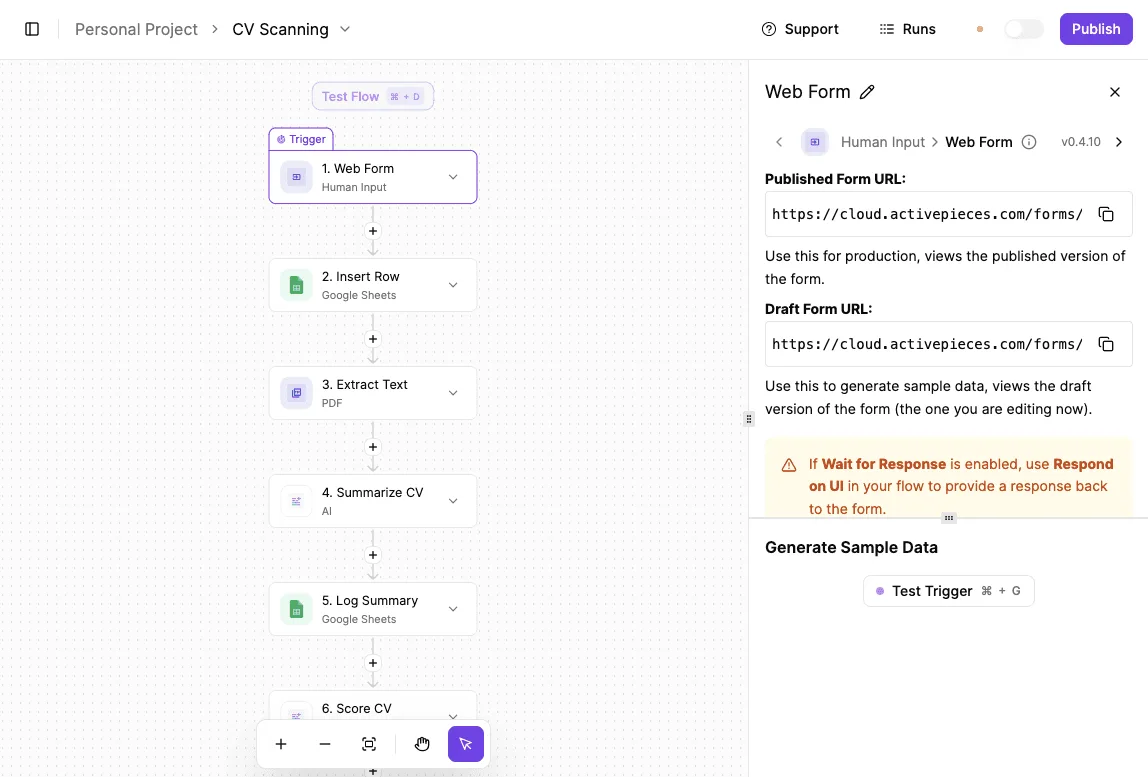
Activepieces connects these legal analysis steps to the team's existing tools while exposing every connected integration as a tool for the AI agent.
The same integration action that runs in a deterministic flow is exposed as an MCP tool, a mechanism visible in the packages/pieces directory of the open source repository.
This allows an agent to call a contract review tool directly from a chat interface without a second integration step, leveraging a library of 748 integrations where roughly 60% are community-contributed, ensuring a vast ecosystem of third-party support is available to the user, which means the platform relies heavily on external developers to maintain its breadth.
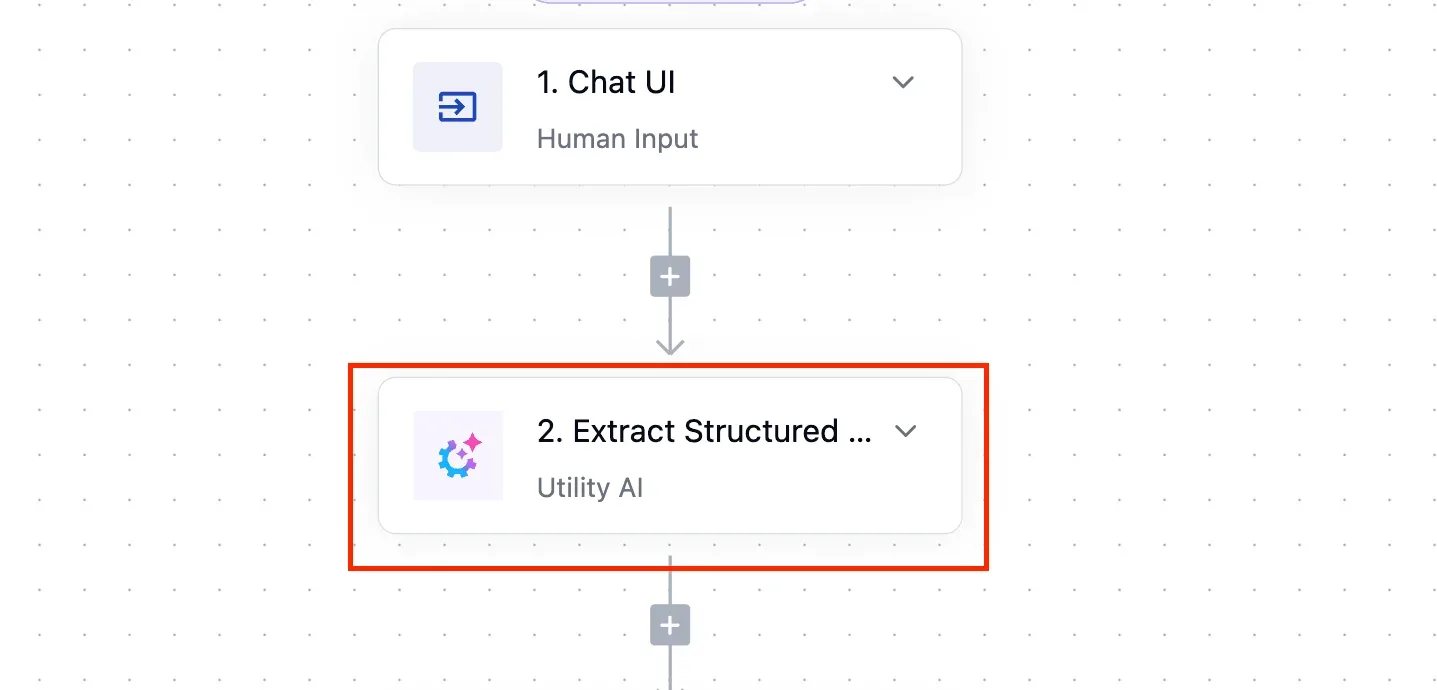
For internal compliance reviews, this structured logging in Google Sheets creates a permanent audit trail of every automated decision.
Step 4: Route high-risk contracts for human approval
The final stage uses a conditional "Router" step. If the LLM assigns a "High" risk score, the platform triggers an immediate alert via Slack, providing a direct link to the document and the specific flags raised.

This ensures the legal team prioritizes contracts with significant liability gaps.
Choosing between specialized legal AI and custom automation tools
Whether your organization requires a pre-configured audit trail or the flexibility to integrate with existing procurement software determines the choice between a dedicated legal platform and a custom automation build.
Specialized CLM platforms for enterprise legal teams house all data
Contract Lifecycle Management (CLM) platforms function as a single system of record where document storage, version control, and AI analysis occur within one managed environment.
The following table compares the primary market options for teams evaluating the trade-off between managed services and infrastructure control:
| Tool | Price | Setup Time | Privacy Control |
|---|---|---|---|
| Harvey AI | $1k-$2k/mo | Moderate | Vendor-managed encryption |
| Spellbook | $89-$350/mo | Fast | Tenant-level isolation |
| Custom LLM | $2.50/1M tokens | High | Full data sovereignty |
Custom automation workflows for high-velocity sales and procurement
Custom automation allows a team to trigger a review the moment a file hits a cloud storage folder or an attachment arrives in a shared inbox. This approach is necessary for departments that handle high volumes of vendor agreements across multiple platforms.
To build a reliable first-pass screening system, the workflow follows a specific sequence of logic:
- The process initiates when the system detects a new document in a monitored source, such as a Microsoft OneDrive folder.
- An Optical Character Recognition (OCR) tool, such as OCR 4.1, extracts the text to ensure the AI can read scanned PDFs and images.
- A high-intelligence model, such as GPT-6 Astra, compares the extracted text against a "Standard Terms" reference document to identify deviations in liability or payment terms.
- A conditional branch checks the risk score; if the score exceeds a set threshold, the system sends an alert to a Slack channel for immediate human intervention.
- If the document passes the automated check, the system moves the file to an "Approved for Signature" folder and updates the status in a CRM like Salesforce.
- When a step fails, such as an unreadable scan, the system routes the original file to a "Manual Review" queue.
Every agent decision and the data it acted on is captured in a step-by-step trace within the same run as the deterministic workflow steps.
Activepieces exports these traces as audit logs and event streams into existing SIEM systems, as seen in the Run Details and Observability documentation, ensuring that an agent’s legal reasoning is reviewed with the same rigor as a fixed workflow.
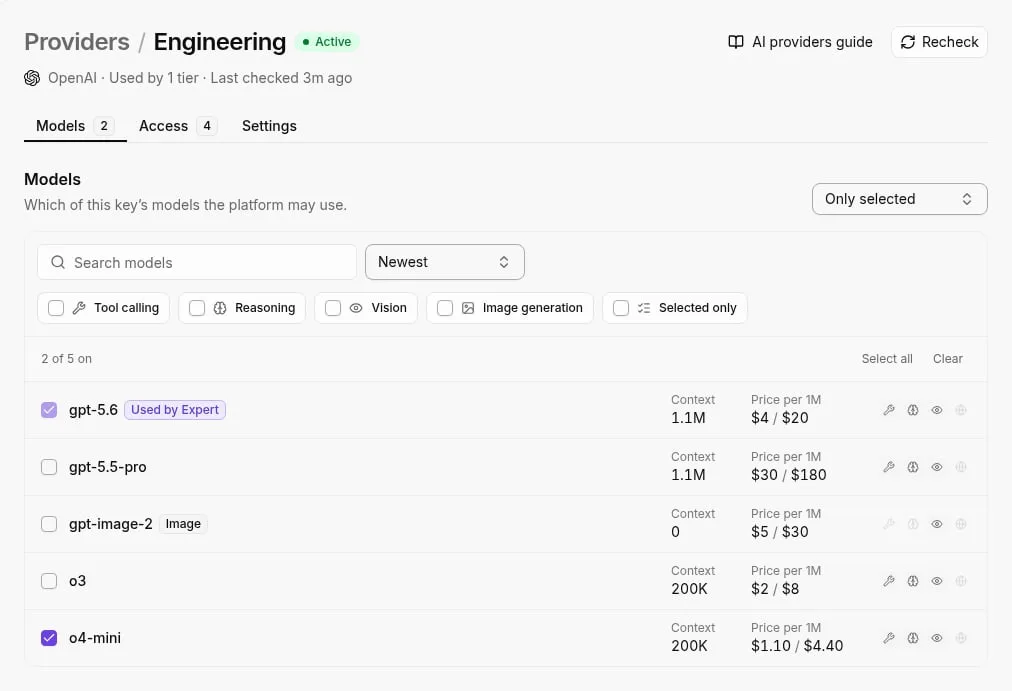
This monitoring is available even on the MIT-licensed core, allowing teams to maintain a complete record of AI judgment calls alongside standard data movements.
Easier to see it running than to read about it: set it up free, no card.
Solving common AI contract review errors and technical limits
By configuring specific logic gates, a team ensures the LLM only analyzes the text provided rather than relying on its training data to guess at standard terms.
Managing AI token limits for long contracts
Exceeding a model's "context window" limit causes the system to ignore the beginning or end of a contract.
2,048 tokens were used by GPT-3 (2020). 4,096 tokens were used by GPT-3.5 (2022). 128,000 tokens are used by GPT-4o (2024).
Since 128,000 tokens roughly equates to 96,000 words, a procurement team using GPT-4o could process roughly 300 pages of legal text in a single prompt.
If using a smaller model like Claude Haiku 5.5, you must implement a "Map-Reduce" workflow that splits the document into sections for individual review.
Preventing AI hallucinations with chain of thought prompting
To prevent hallucinations, users must employ "Chain of Thought" prompting. This is a technique where the AI must show its work by quoting the specific paragraph and line number before providing its risk assessment.
Within a no-code automation, the user sets a "System Prompt" that explicitly forbids the model from using external legal knowledge.
Using OCR to read non-searchable PDF contracts
Because standard LLMs can't read "flat" PDF files, an automation flow must include an Optical Character Recognition (OCR) step, such as OCR 4.1 by Mistral, which converts images into machine-readable text.
- In a document management system like SharePoint, the workflow monitors a specific folder.
- If the PDF does not contain selectable text, a utility step routes the file to the OCR service.
- The cleaned text is then passed to the LLM for the actual risk screening.
The Monday morning checklist for legal automation deployment
Establishing the automation foundation
Deploying an automated first-pass review requires a structured transition. This begins by isolating the most frequent, low-complexity agreements where human intervention consistently results in the same redlines.
- Identify top 3 high-volume NDAs: Select the specific Non-Disclosure Agreement templates that consume the most administrative hours.
- Export 'Standard' vs 'Non-Standard' clause examples: Create a reference set of approved language and previously rejected variations.
- Define 5 'Must-Flag' dealbreakers: Document specific legal requirements, such as governing law or indemnity caps, that must trigger human escalation.
- Connect Gmail to automation platform: Link the primary legal intake inbox to the orchestration tool.
- Run 10 historical tests: Process a batch of already-signed contracts through the new logic to verify accuracy.
For the heavy lifting of clause comparison, Claude Sonnet 5.5 by Anthropic provides the most effective balance of speed and intelligence for identifying subtle linguistic shifts.
Choosing AI models for speed and cost
If the volume of incoming NDAs exceeds capacity, Gemini 3.5 Flash-Lite by Google offers the fastest 3.5 model. While these models act as the "eyes" of the system, the structural integrity of the workflow depends on the automation platform that coordinates the data transfer.
Frequently asked questions
Is AI-assisted contract review legally binding?
Rather than being a source of legal authority, AI-assisted contract review is a decision-support mechanism.
The output serves as a risk advisory that must be ratified by a qualified professional to carry legal weight. Before they reach the legal desk, the automation platform acts as a high-speed filtering layer that applies your internal playbooks to incoming drafts.
Because the system lacks the professional standing to provide legal advice, its findings are treated as internal work product.
Final liability remains with the human signatory. The system should be configured to include a mandatory "Human-in-the-Loop" step where a lawyer approves or overrides the AI’s flags before the document is returned to the counterparty.
How do I keep my contract data out of AI training sets?
By selecting enterprise-tier API endpoints that explicitly disable "data training" or "improvement" cycles as part of their service level agreement, data privacy is maintained.
When you connect a model like Gemini 4 Carbon or Claude Sonnet 5.5 through an automation platform, you're typically using an API rather than the consumer-facing web chat interface.
For API users, most providers offer a specific "Zero Data Retention" or "Opt-out" setting.
This ensures that the text of your non-disclosure agreements or master service agreements is deleted from the provider's buffers after the inference task is complete.
To verify this, you must check the "Data Usage" section of your provider’s dashboard to ensure the training toggle is set to "Off."
What is the average accuracy rate of AI legal review?
The clarity of the instructions provided in the prompt determines the reliability of an automated screening system.
Performance varies based on the complexity of the clause. At identifying missing clauses, such as the absence of a "Mutual Indemnification" requirement, high-reasoning models like GPT-6 Astra or Gemini 4 Argon excel.
For extracting structured dates and parties, high-speed models like Claude Haiku 5.5 are better suited. As confidence in these outputs grows, current adoption trends indicate that legal departments are moving from experimentation to standard operating procedure.
83% of commercial lawyers are expected to use Legal AI by 2026, up from 61% in 2025, signaling a rapid shift toward near-universal adoption within the profession, so practitioners who resist this technology risk falling behind their peers in a very short timeframe.
Within a year, manual-only review will become a minority practice in the industry.
Furthermore, 54% of these professionals report using these tools "often," indicating that the technology has moved past the "trial" phase and is now a core component of the document lifecycle, which means the software has successfully transitioned from a novelty to an essential utility.