
GDS API Integration: How to Build a Private AI Stack

Oct 1, 202617 min read
Integrating Amadeus and Sabre into a private travel infrastructure requires a sophisticated approach to API orchestration and data normalization. Developers must manage complex SOAP and REST protocols while ensuring that real-time booking data flows seamlessly into internal management systems.
By utilizing robust middleware solutions, such as Activepieces for automated workflow triggers, agencies can synchronize passenger name records across multiple global distribution systems without manual intervention.
This level of connectivity is essential for maintaining pricing accuracy and inventory availability in a competitive market where milliseconds can define the success of a transaction.
Private Amadeus and Sabre integration refers to the practice of orchestrating travel distribution workflows through self-hosted AI models and infrastructure to ensure data sovereignty and reduce reliance on public API providers.
Self-hosted AI infrastructure for travel booking privacy
By utilizing self-hosted AI, travel agencies can maintain a private infrastructure where models and PII remain within controlled servers rather than being processed by public cloud providers. This architecture ensures that sensitive passenger data never leaves the corporate perimeter during complex itinerary construction.
The risks of public LLMs in travel data handling
When an agency sends a detailed corporate itinerary to OpenAI, they create a persistent leak of proprietary customer profiles and travel patterns to third-party providers.
Under current pricing tiers, GPT-6 Astra costs $15.00 per million output tokens, which means companies must budget significantly higher operational expenses for high-volume text generation.
This figure forces agencies to choose between high operational overhead and data privacy. According to AI Flash Report, Claude Opus 5.5 demands $15.00 per million output tokens, meaning a high-volume agency could spend thousands daily just to summarize flight options.
Moving to an open-weight model like Llama 3 via Groq drops that cost to $0.79 per million tokens, so businesses can drastically reduce their infrastructure overhead while maintaining similar output capacity.
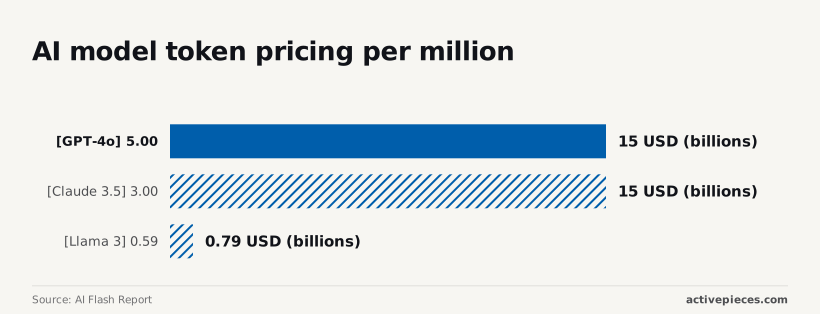
This allows an agency to run 18 times more queries for the same budget while keeping the logic behind their firewall, effectively scaling operations without requiring additional capital expenditure.
Hardware requirements for local model execution
To ensure that agentic workflows don't stall during peak booking hours, local execution requires dedicated compute resources. An agency needs an NVIDIA H100 (a high-end graphics processing unit) to run a model like Mistral Large 3 at production speeds.
This ensures that inference latency stays below 500ms for real-time customer chats. Without this dedicated hardware, the system will lag during complex multi-city searches, leading to abandoned carts.
Why Amadeus and Sabre require secure middleware
Because Global Distribution Systems (GDS) like Amadeus and Sabre are built on rigid legacy protocols, they do not natively "speak" to AI:
- While many vendors gate governance behind cloud subscriptions, Activepieces does not sell a stripped product to those who need the most control. The air-gapped build includes the same SSO, SCIM, custom RBAC, and audit logs as the managed cloud, ensuring that air-gapped means full control rather than a fraction.
- Phocuswire reports that this setup is critical because the industry's Look-to-Book (L2B) ratio has exploded; it was 5:1 in the green-screen era, grew to 10:1 in the 1990s, and has now triggered a surge in infrastructure costs from $100M to $15B globally.
- This chart shows that agencies are now paying for thousands of searches for every one ticket sold, making efficient, private middleware essential to prevent API fees from consuming all margins.
- By hosting this logic internally, agencies can filter high-volume search data before it ever hits a paid external service.
This takes minutes, not a project: automate it in Activepieces free.
Connect local LLMs to Amadeus APIs
You can prevent third-party model providers from logging sensitive passenger search patterns by self-hosting the bridge that converts natural language intent into the strict schema required by travel distribution systems. The following sequence establishes a secure, private pipeline for real-time flight data retrieval:
- Generate Amadeus for Developers API Key
- Load flight-search system prompt into local LLM
- Map LLM JSON output to Amadeus 'Flight Offers Search' parameters
- Test
Generating your Amadeus API credentials micro-service
Before obtaining the API Key and API Secret, you must first secure access to the Amadeus for Developers portal, a self-service platform for travel APIs.
Store these credentials in a local .env file rather than hardcoding them to ensure you never commit production secrets to control.
Furthermore, because Amadeus uses OAuth2 for authentication, your local stack must handle a POST request to the security endpoint every 30 minutes. Otherwise, your flight search calls will return a 401 Unauthorized error during active booking sessions.
Configure your LLM for Amadeus JSON output
To bridge the gap between human requests and the API, your model needs a system prompt that enforces a JSON schema compatible with the Amadeus 'Flight Offers Search' endpoint.
Using a model like Gemini 3.8 Flash, which is the flagship for enterprise workflows, allows you to process these complex mappings with high reliability.
If you are running locally on a Dual RTX 4090 setup, you can expect roughly 19.06 tokens per second, which means a typical flight query takes about three seconds to parse. This is a manageable wait for a travel agent.
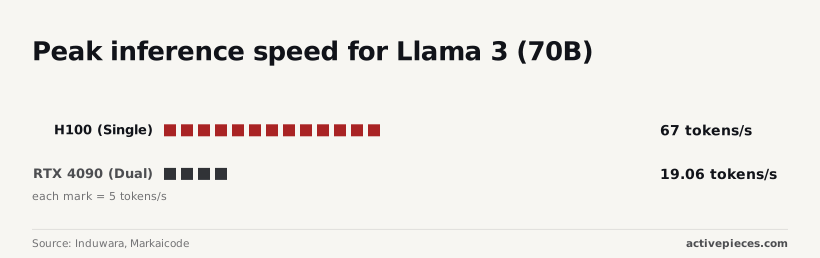
Moving to a Single H100 increases this to 67 tokens per second, so the interface feels instantaneous to the end-user.
Test the Amadeus flight search integration locally
Verifying that the LLM correctly extracts the origin, destination, and departure date into the exact IATA codes Amadeus requires is the final step.
- Input: "Find me a flight from London to New York on Christmas."
- LLM Output:
{"originLocationCode": "LHR", "destinationLocationCode": "JFK", "departureDate": "2026-12-25"} - API Response: A list of available flight offers with pricing and cabin classes.
The search loop will break if the LLM fails to return valid IATA codes, so you must include a validation layer that checks the JSON structure before the request leaves your network.
Once this connection is stable, you can begin optimizing the data flow to reduce latency.
Automate Sabre PNR lookups privately
Sensitive Passenger Name Record (PNR) data never leaves your controlled environment while interacting with the Sabre travel marketplace when you self-host your orchestration layer.
By routing these requests through a private infrastructure, you prevent public models from ingesting PNR locators and payment snapshots into their training sets.
Mapping Sabre SOAP commands to AI-friendly inputs
Efficient automation requires translating the dense, legacy syntax of the Sabre Command Line (such as *A for all data or *P3D for specific phone fields) into structured JSON objects.
You must configure a middleware bridge that accepts natural language intent and converts it into the specific SOAP XML envelopes required by Sabre’s web services.
Using a high-reasoning model like Gemini 3.8 Flash for this mapping ensures the system correctly parses complex multi-segment itineraries into the specific XML tags required for a successful handshake.
This structural translation prevents the "garbage in, garbage out" cycle where a malformed API call results in a locked session or a rejected booking request.
Validating passenger data within the secure perimeter
Before any data is sent to the Sabre gateway, the workflow must intercept and scrub identifiers to maintain compliance with internal privacy mandates.
This validation step acts as a firewall, ensuring that only the minimum necessary data points (such as the PNR locator and last name) are transmitted, while keeping full profile details like passport numbers or loyalty credentials within your local database.
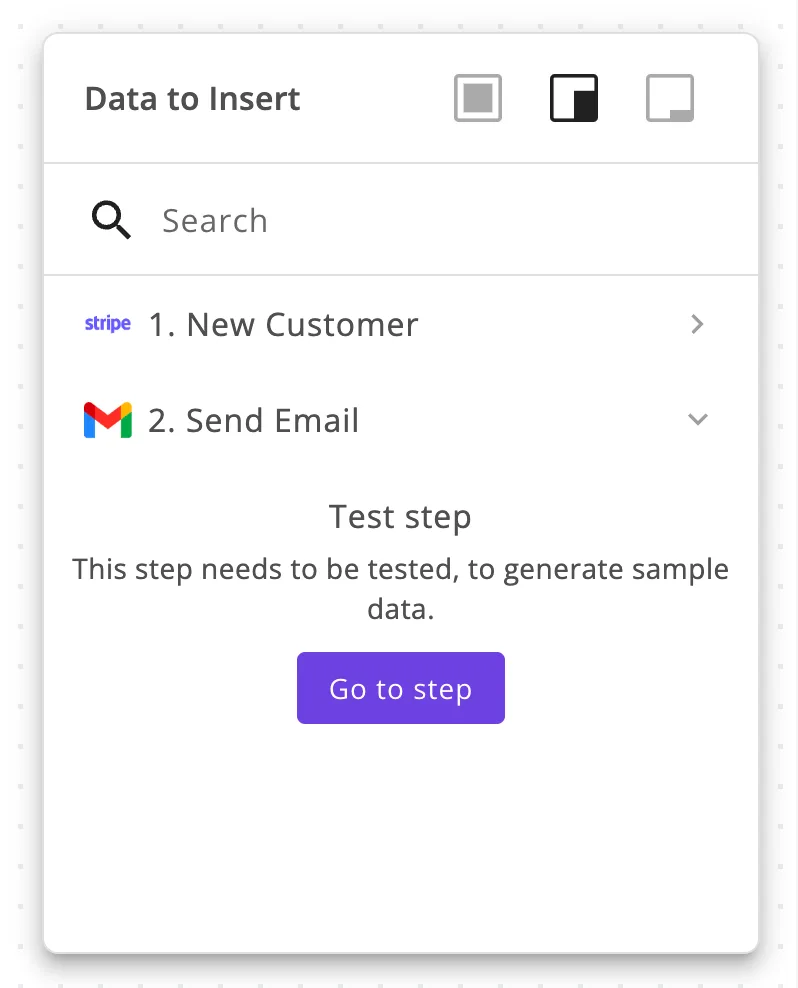
The following visual demonstrates a standard entry point for these workflows, where a simple intake form triggers a sequence of secure data lookups.
By centralizing this logic, you avoid the common pitfall of disparate agents creating redundant API calls that inflate your monthly transaction costs. This trigger initiates the logic that determines if a request requires a fresh Sabre session or an update to an existing record.
Automate Sabre PNR status checks with AI
Executing a status check where the AI queries the Sabre GDS (Global Distribution System) to confirm flight times or ticketing status is the final step in the sequence.
When using an agentic model like Claude Opus 5.5, the system can handle the long-horizon task of retrying a timed-out SOAP connection or navigating the pagination of a large group booking without human intervention.
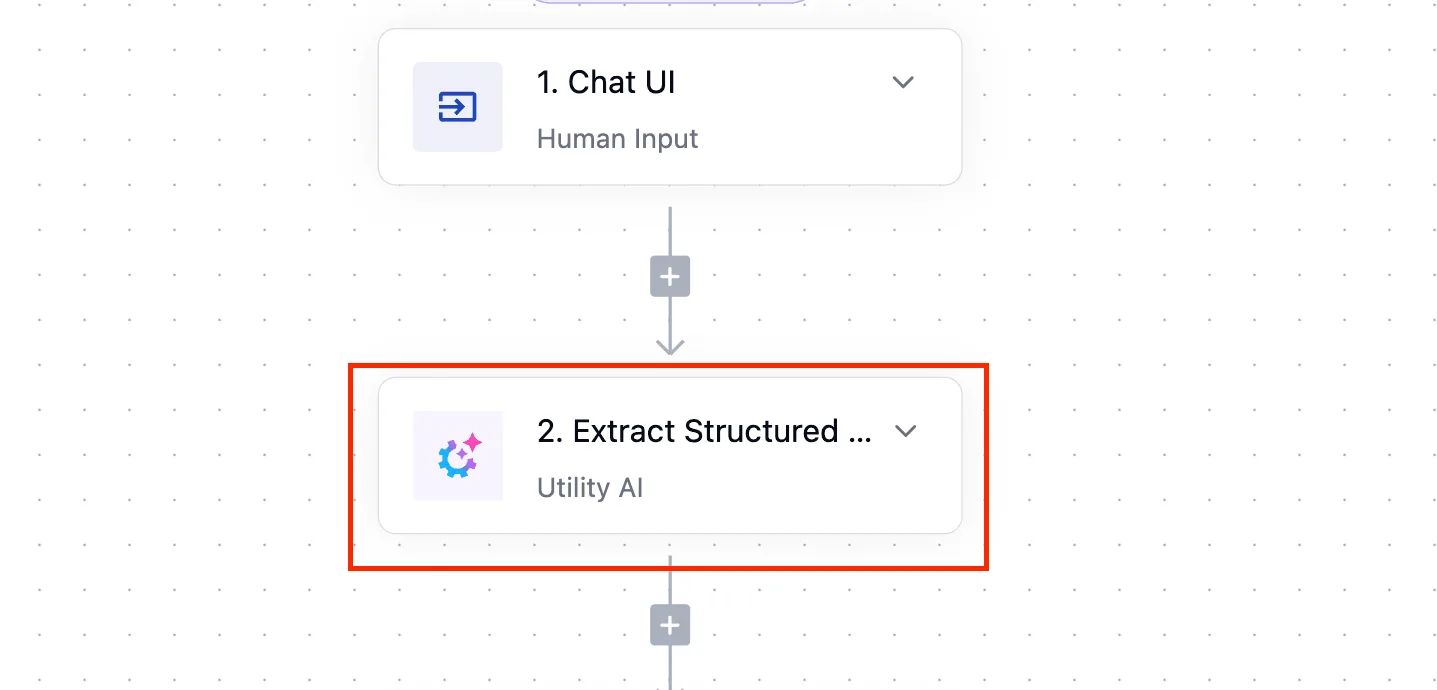
To ensure the workflow is performing as expected, follow these verification steps:
- Initialize a session token using your Sabre developer credentials to confirm the network path is open.
- Submit a test PNR locator through your private endpoint to verify the XML response is correctly flattened into a readable summary.
- Check the local logs to ensure that no raw credit card data or PII (Personally Identifiable Information) was cached in the model’s reasoning history.
Completing this check confirms that your bridge is functional and that your agency is ready to scale automation without compromising passenger confidentiality.
You can follow the rest of this with the builder open. Start free, no card.
How Activepieces orchestrates private travel workflows
Activepieces reaches every model provider a company uses among its 735+ integrations, and pushes the combined travel booking data through your own private infrastructure.
Unlike cloud-based automation platforms that require mirroring your business logic on their servers, this tool runs within your own network to ensure that passenger names and payment details never leave your control during the orchestration process.
Deploy workflows behind your own firewall
Every automated workflow remains behind your agency’s firewall when you deploy Activepieces through Docker, using the same MIT-licensed core that powers production environments for companies like MoneyGram and Alan.
By hosting the execution engine on a local server rack, you eliminate the risk of third-party data breaches because the "brain" of your operation has no external dependency for its logic processing.
The following setup establishes a private travel AI stack: a local server rack containing an LLM like Llama 3 and Activepieces, connected via a local network to travel agent workstations, with an encrypted outbound tunnel to Amadeus.

This configuration ensures that while your system can request flight availability from global distributors, the sensitive logic that parses those results stays on-premises.
Consequently, your agency maintains a closed loop where internal client profiles are never exposed to the public internet during the routing of a request.
Building the Amadeus-to-Local-LLM connector bridge
The connector bridge acts as the translator between the structured data of travel APIs and the natural language capabilities of your local model.
When an inquiry hits your system, Activepieces triggers a multi-step sequence: it fetches live pricing from the Amadeus travel platform, passes that raw data to an instance of Gemini 3.8 Flash running locally for summarization, and then formats a personalized itinerary.
By using Activepieces to manage these handoffs, you can leverage roughly 60% of its integrations that are community-contributed to connect your travel data to internal databases without per-task fees.
This local orchestration means you only pay for the specific API calls to the travel provider, rather than paying a secondary "intelligence tax" to a cloud AI vendor for every token processed.
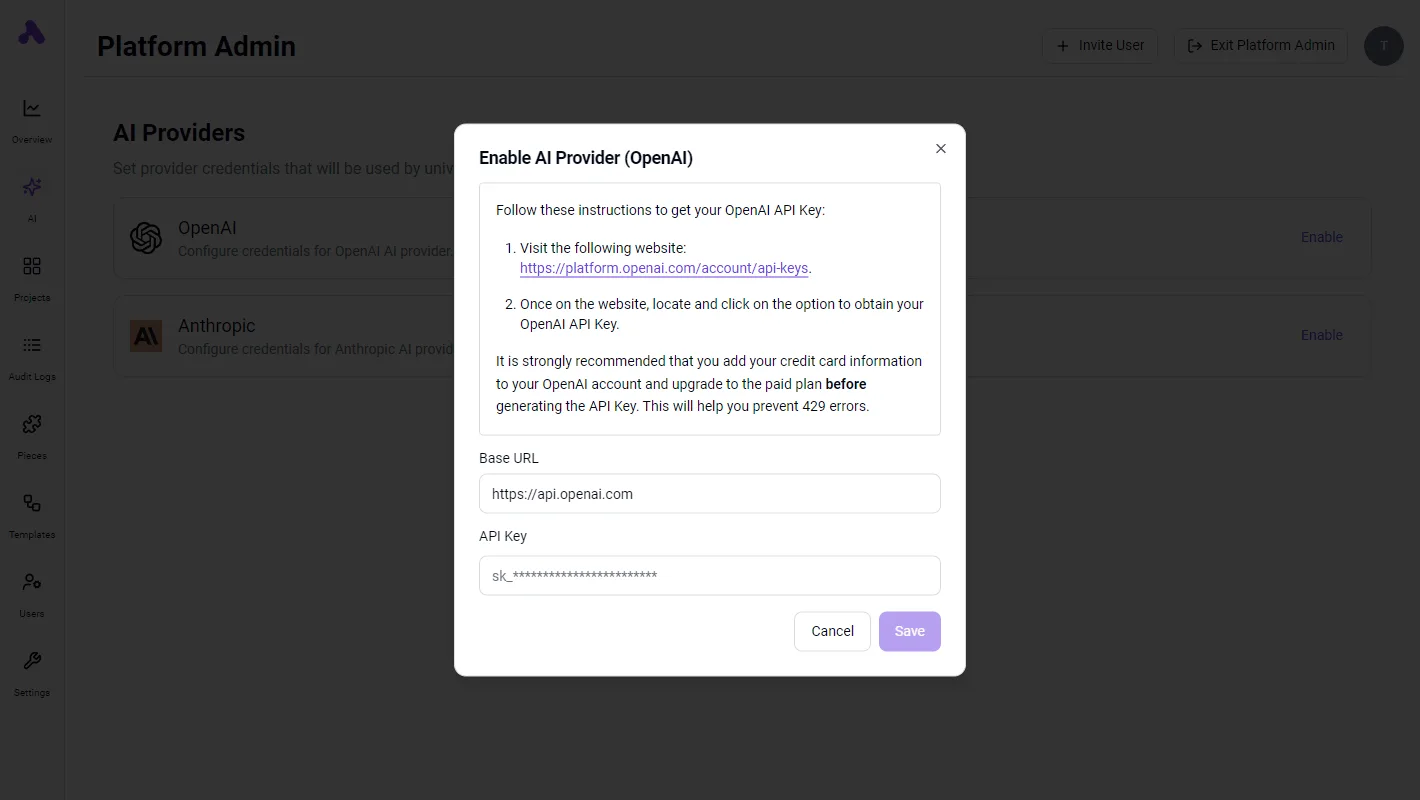
Secure Amadeus and Sabre API credentials
Managing credentials within a self-hosted Activepieces instance prevents the accidental exposure of your Amadeus or Sabre API keys. Because the environment variables are stored in your own encrypted database, your developers can build complex booking automations without hardcoding sensitive tokens into the workflow scripts.
Every connection secret used to reach the GDS can be routed to your own external secret manager rather than the application database, a capability listed alongside SCIM and audit logs in the enterprise governance feature set.
By configuring this integration, you ensure that no automation vendor, including us, ever holds the keys to your travel distribution accounts.
Private AI deployment plan
By securing the local compute resources necessary to run frontier models like Mistral Large 3 or Gemini 3.8 Flash, you can begin a private AI deployment without sending a single packet of passenger data to an external server.
By shifting to a self-hosted stack, an agency moves from being a tenant in a shared cloud to a sovereign operator of its own intelligence.
This transition requires a structured approach to hardware procurement and model integration to ensure the system handles the high-concurrency demands of a busy booking desk.
By shifting to a self-hosted stack, an agency moves from being a tenant in a shared cloud to a sovereign operator of its own intelligence.
- Procurement of RTX 4090 or 6000 Pro GPUs to provide the specialized memory required for low-latency inference.
- Installation of Docker, a containerization platform, to package the AI environment for consistent performance across different internal servers.
- Pilot testing with one GDS, such as Amadeus or Sabre, to validate that the local model can correctly parse proprietary PNR strings.
- Fine-tuning the model on specific fare rules and agency-specific service fees to ensure the AI provides accurate pricing advice that reflects your actual business logic.
A private AI deployment begins by securing the local compute resources necessary to run frontier models like Mistral Large 3 or Gemini 3.8 Flash without sending a single packet of passenger data to an external server.
By shifting to a self-hosted stack, an agency moves from being a tenant in a shared cloud to a sovereign operator of its own intelligence.
This transition requires a structured approach to hardware procurement and model integration to ensure the system handles the high-concurrency demands of a busy booking desk. The following steps provide the foundational roadmap for that first week of implementation.
- Procurement of RTX 4090 or 6000 Pro GPUs to provide the specialized memory required for low-latency inference.
- Installation of Docker, a containerization platform, to package the AI environment for consistent performance across different internal servers.
- Pilot testing with one GDS, such as Amadeus or Sabre, to validate that the local model can correctly parse proprietary PNR strings.
- Fine-tuning the model on specific fare rules and agency-specific service fees to ensure the AI provides accurate pricing advice that reflects your actual business logic.
Audit GDS data exposure from public LLM plugins
Before installing hardware, you must identify every instance where passenger name records or corporate credit card details currently leave your local network through public LLM plugins.
Mapping these data flows reveals the specific API calls to Sabre or Amadeus that are being intercepted by third-party processors, which represents a potential compliance breach under modern privacy regulations.
Once these exposure points are documented, you can prioritize which endpoints to redirect toward your local Mistral Small 4 instance to close security gaps.
Pilot a flight status monitoring bot
Starting with a read-only task like flight status monitoring allows you to test the integration between your GDS and the local AI without the risk of accidental booking deletions.
This pilot workflow involves the AI monitoring real-time updates and comparing them against the passenger's itinerary to generate proactive alerts.
Using a model like Claude Haiku 4.5 for this task provides the necessary speed for high-volume status checks while keeping the entire logic loop within your private infrastructure.
Benchmark local LLM latency vs cloud APIs
Measuring the round-trip time of a local query against a public API call demonstrates the performance gain of removing the "internet hop" from your automation.
When a local Gemini 3.8 Flash instance processes a fare rule query, the lack of external network congestion often results in faster response times for the agent on the front line.
Tracking these speeds ensures that your hardware investment is translating into a better user experience for your travel consultants.
Frequently asked questions about travel AI self-hosting
Is local AI fast enough for real-time flight searches?
Although latency depends entirely on the model’s parameter count and your available GPU memory, modern small-language models can now match or exceed the response times of public cloud endpoints.
When a travel consultant triggers a search, a self-hosted instance of Gemini 3.1 Flash-Lite avoids the round-trip delay to external servers, so the agent receives flight options without the noticeable "typing" lag common in browser-based tools.
For complex itinerary construction that requires deep logic, running Claude Haiku 4.5 on your own hardware ensures that data stays within your local network, so you are not subject to the rate-limiting or traffic congestion that frequently throttles public API users during peak booking hours.
Local AI latency depends entirely on the model’s parameter count and your available GPU memory, but modern small-language models can now match or exceed the response times of public cloud endpoints.
When a travel consultant triggers a search, a self-hosted instance of Gemini 3.1 Flash-Lite avoids the round-trip delay to external servers, so the agent receives flight options without the noticeable "typing" lag common in browser-based tools.
For complex itinerary construction that requires deep logic, running Claude Haiku 4.5 on your own hardware ensures that data stays within your local network, so you are not subject to the rate-limiting or traffic congestion that frequently throttles public API users during peak booking hours.
Will Amadeus or Sabre ban AI-generated API calls?
Global Distribution Systems (GDS) like Amadeus and Sabre do not ban AI-generated calls, provided the traffic adheres to their standard technical specifications and look-to-book ratios.
These platforms distinguish between the source of the logic and the format of the request; as long as your self-hosted stack translates natural language into valid SOAP or REST commands, the GDS treats it as standard programmatic traffic.
The primary risk is not a ban, but the accidental flooding of the GDS with malformed queries generated by hallucinating models.
Using a specialized coding model like Codestral to validate syntax before transmission ensures that every call meets the provider’s schema, so your credentials remain in good standing with the GDS compliance teams.
Global Distribution Systems (GDS) like Amadeus and Sabre do not ban AI-generated calls, provided the traffic adheres to their standard technical specifications and look-to-book ratios.
These platforms distinguish between the source of the logic and the format of the request; as long as your self-hosted stack translates natural language into valid SOAP or REST commands, the GDS treats it as standard programmatic traffic.
The primary risk is not a ban, but the accidental flooding of the GDS with malformed queries generated by hallucinating models.
Using a specialized coding model like Codestral to validate syntax before transmission ensures that every call meets the provider’s schema, so your credentials remain in good standing with the GDS compliance teams.
What is the monthly cost of running a local H100 vs. GPT-4?
Self-hosting an H100 (a high-performance graphics processing unit from NVIDIA) requires a significant upfront capital investment but eliminates the per-token variable costs that make scaling public models expensive.
When using a public model like GPT-6 Astra, your monthly invoice scales linearly with your booking volume, so a sudden increase in customer inquiries results in a direct hit to your margins.
In contrast, a private server running Gemini 3.8 Flash carries a fixed cost for power and maintenance regardless of how many millions of tokens your team processes, so your operational expenses become predictable even during high-season surges.

Self-hosting an H100 (a high-performance graphics processing unit from NVIDIA) requires a significant upfront capital investment but eliminates the per-token variable costs that make scaling public models expensive.
When using a public model like GPT-6 Astra, your monthly invoice scales linearly with your booking volume, so a sudden increase in customer inquiries results in a direct hit to your margins.
In contrast, a private server running Gemini 3.8 Flash carries a fixed cost for power and maintenance regardless of how many millions of tokens your team processes, so your operational expenses become predictable even during high-season surges.
Related reading
References
Build it
Set this up in minutes.
No code required. Connect your accounts, and Activepieces runs it from there.
Start free Talk to sales