
AI for IT Operations: Use Cases to Triage and Fix Incidents
AI in IT means using machine learning, NLP, and automation to detect issues, resolve incidents, and cut downtime across IT operations.

Feb 4, 202614 min read
AI in IT means using machine learning, natural language processing, and automation to monitor systems, triage alerts, and resolve incidents before they become outages. Instead of waiting for someone to notice a problem, AI-powered IT operations catch anomalies in logs and metrics, then either recommend a fix or apply one automatically.
This article walks through real-world AI use cases in IT operations, showing how you can use AI to predict failures, reduce alert overload, and automate repetitive work, so fewer issues become emergencies.
See issues sooner and respond faster with AI workflows built in Activepieces!
TL;DR
- AI in IT operations helps you spot issues earlier, cut through alert noise, and stop small problems from turning into outages.
- Teams use it to automate incident response, triage alerts, find root causes faster, and even fix issues on their own.
- The result is less downtime, faster recovery, and more time for real work instead of firefighting.
- Activepieces helps build and scale AI workflows by connecting tools and automating repeat work.
Everything below works on Activepieces' free plan. Start without code or a credit card.
What Is AI in IT?
AI in IT refers to applying machine learning, natural language processing, generative AI, and autonomous AI agents to manage, monitor, and resolve IT infrastructure and service workflows, often without a person triggering every step.
The shift didn't happen overnight. IT automation moved from rule-based scripts in the 1990s, to robotic process automation (RPA) mimicking clicks across systems, to AIOps platforms that used machine learning to spot anomalies in logs and metrics. The current stage adds reasoning: AI agents that evaluate context, decide on a next step, and carry it out across multiple systems instead of just flagging a problem for a human to fix.
In practice, that means an AI system watching your infrastructure can do more than send an alert. It can correlate the alert with a recent deployment, check if the pattern matches a past incident, and either resolve the issue directly or hand you a clear starting point.
Most teams don't build this from scratch. They connect existing monitoring, ticketing, and chat tools inside an AI automation platform like Activepieces, so the AI step and the action it triggers live in the same workflow instead of being glued together with custom scripts.
Business and Operational Benefits of AI in IT Operations
These are the most significant benefits of artificial intelligence for IT business operations:
Faster Incident Response
Most outages start with service getting a bit slower, and errors pop up and vanish. During a busy day, nobody flags those signs as urgent. That's usually why that phone rings at 2 AM.
When you integrate AI, the machine learning model continuously monitors your systems and compares live signals with historical data.
You don't need to define every rule up front. Your system points out behavior that doesn't line up with what "normal" looks like for you.
Once an incident appears, you usually lose time gathering context. AI's ability to get information, such as security data and cloud metrics, removes that delay.
Decreased Downtime
Seeing problems earlier changes how downtime feels for you. Rather than reacting after users complain, AI solutions track normal behavior, then highlight changes that slowly drift out of range.
Anomaly detection algorithms catch things you wouldn't spot during a busy shift, like memory leaks or rising response times. That early warning lets you fix issues during low traffic periods.
Even when failures happen, you don't start from zero. Alerts already connect, and the source shows up faster. Mean recovery time often drops by as much as seventy percent.
Based on industry surveys, large companies lose thousands of dollars every minute systems stay offline. In online retail or trading, that loss can pass one million dollars per hour.
Reduced Operational Costs
Bringing together the heaps of IT data generated by thousands of siloed apps shows you idle servers, unused licenses, and excess capacity you didn't know existed.
According to a study, strategic predictive maintenance models can also reduce maintenance-related expenses by 20 to 30%.
Manual work adds another drain you probably feel every week. Human error during data entry leads to rework, audits, and billing fixes. AI handles those steps consistently, which enhances operational efficiency and lowers operational costs.
Better Use of IT Staff Time
Now think about your day, full of alerts and requests piling up. When systems automate routine tasks, password resets, access requests, and basic fixes stop landing on your plate.
As interruptions fade, resource allocation improves. You and your team spend time on reliability and system design, and learn to manage AI models and advanced automation.
Work stops feeling constantly time-consuming. You finally have space to address the patterns that kept causing the same issues.
Key AI Technologies Behind AI in IT Operations
IT teams rarely rely on a single kind of AI. Most of the use cases below combine a few of these technologies:
- Machine learning (ML): Learns what "normal" looks like from historical logs, metrics, and past incidents, then flags behavior that drifts from that baseline. This is what powers anomaly detection and predictive maintenance.
- Natural language processing (NLP): Reads unstructured text, such as support tickets, chat messages, and documentation, and turns it into something a system can act on, like urgency or category.
- Generative AI and large language models (LLMs): Summarize incidents, draft responses, and answer follow-up questions in plain language, which is why chat-based IT support has become common.
- AI agents: Chain the above together with reasoning. Instead of just classifying a ticket, an agent can check system status, apply a known fix, and confirm the result, acting more like a junior engineer than a script.
Knowing which technology handles which part of the job makes it easier to judge whether a tool is genuinely doing AI-driven work or just running a fixed rule with an AI label on it.
Common AI Use Cases in IT Business Operations
Here are the most common ways IT teams are using AI:
Automated Incident Resolution
After early signals start showing up, you don't just want to know something is wrong. You want it fixed before it turns into a bigger problem.
Automated incident resolution learns what normal behavior looks like for your systems, then watches for changes that usually come before failure. Minor latency spikes or unusual traffic patterns surface early, often long before a full outage.
Once the system spots a problem, it follows the same steps you would, just faster. Diagnostics are run immediately to narrow down the issue.
When the fix is known, the system acts, which is what you need during critical incidents. If security threat detection picks up a phishing attempt or strange data transfer at 3 AM, access can get blocked, passwords reset, and the affected server isolated within seconds.
You still handle complex tasks, but routine recovery no longer waits on you.
Intelligent Alert Triage
As automated fixes handle obvious issues, alerts still come in, but they feel different.
AI systems look at each alert and decide whether it represents risk or background noise. Repeated alerts tied to the same issue are consolidated into a single signal.
Besides that, ownership, recent changes, and user impact appear together, which removes the usual back-and-forth. Then, during a high-traffic sale, central processing unit (CPU) usage rises by design.
Standard alerts would scream nonstop. Intelligent triage learns that the spike is normal for that period and stays quiet unless failed transactions start showing up.
Automated Root Cause Analysis
Even with fewer alerts, the hardest part often stays the same. You still need to know why something broke.
In modern IT operations, automated root cause analysis shortens that search by keeping a live map of how services connect. When a failure happens, the system already knows what depends on what.
Logs, metrics, and recent deployments get reviewed together. Using machine learning (ML), the system separates symptoms from causes. High CPU use can look serious, but a buggy code release from minutes earlier explains it.
AI-driven solutions further compare the current issue with past failures. Patterns surface fast. You see an explanation that tells you exactly what broke and when it started.
Self-Healing Infrastructure
Once systems start reacting faster, you stop waiting for alerts and start preventing problems. AI constantly scans metrics such as CPU, memory, logs, and network traffic to build a baseline of normal behavior inside your IT infrastructure.
As patterns shift, the system checks what usually follows those changes. AI analyzes hardware telemetry and predicts a disk failure 24 hours in advance, which triggers an automated request to replace the part before anything breaks.
Similar logic applies when a service hangs or traffic spikes. Your system restarts a process, shifts traffic, or adds capacity, then confirms that everything came back to normal.
Each action gets recorded, so the next response improves.
Generative AI for Contextual Support
Even with self-healing in place, people still ask questions.
Generative AI for contextual support steps in at that point. It uses large language models (LLMs) like GPT-6 Astra to provide IT teams and users with answers that explain why something failed and where to look next.
Through chat, it can communicate, which lets your IT staff ask follow-up questions like "That didn't work, what else could it be?"
While responding, it keeps analyzing data in the background and helps extract valuable insights from patterns buried in text.
After a major four-hour outage with 500 Slack messages, for instance, your system can generate a post-incident report that explains what happened, who fixed it, and the root cause.
AI-Powered IT Ticket Routing and Resolution
Some teams often start by automating 10 to 15 common, low-risk requests, such as virtual private network (VPN) access or password reset. Those tickets close automatically, freeing up time and improving user satisfaction.
More urgent cases move faster, too. Let's say your senior executive sends a message saying their laptop will not start before a board meeting. AI detects urgency, checks priority level, tags the request as critical, and routes it directly to the on-call engineer.
In turn, it improves service quality and lets your support teams focus on problems.
Knowledge Management and AI Agents for IT Teams
AI-based knowledge management captures, organizes, and retrieves every piece of data, policy, and technical fix your company has ever seen, then keeps it usable long after the incident ends.
It understands the data using natural language processing (NLP), which means it can read tickets, chat logs, and documentation as context. On top of that, AI agents turn knowledge into action.
Using LLMs, an agent breaks a complex goal into steps. If someone says, "The VPN is down," it checks service status, identifies the user's location, and verifies company policy before deciding the next move.
Different agents support different business functions. You might create an onboarding agent for new hires and a security agent that monitors unauthorized access. Some agents act as virtual assistants that guide users through setup or troubleshooting without opening tickets.
Cloud Resource Optimization and Cost Management
AI watches how cloud systems behave over time and compares usage to demand. The system uses historical data to forecast future trends, so you can prepare before traffic spikes arrive.
It can analyze historical patterns, seasonal trends like Black Friday, and even external signals to predict when more capacity will be needed. Instead of running oversized servers all month, resources scale up only when demand rises and scale back when traffic drops.
Many teams start with built-in AI tools from cloud providers, then expand as environments grow.
Advanced Analytics and Reporting
As systems stabilize, questions shift from what broke to what comes next.
Advanced analytics and reporting use AI to gain deeper insights from operational data. The system can analyze vast amounts of data and identify trends that might otherwise go unnoticed, such as slow growth in response times or rising support demand.
Aside from that, data analytics aggregates signals from logs, tickets, and usage records, which can guide data-driven decision-making. Dashboards do more than show status. They suggest changes, such as moving a workload to another region.
Easier to see it running than to read about it: set it up free, no card.
How IT Teams Use Activepieces to Create AI-Driven Automation
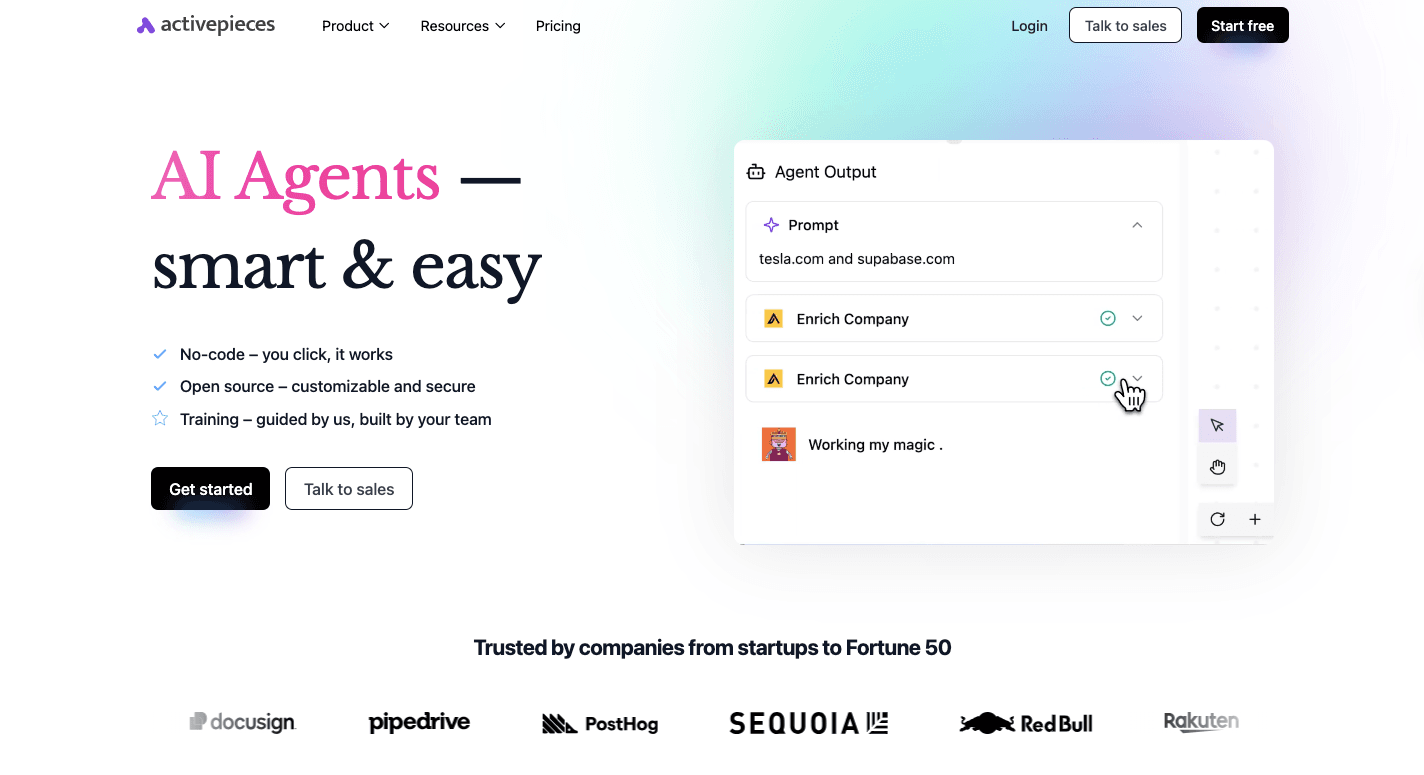
After everything you've seen so far, the gap usually shows up at execution. Ideas make sense on paper, but stitching platforms together turns messy quickly.
With Activepieces, an AI automation platform, you apply AI directly inside workflows instead of forcing everything into brittle rules or custom code that only one person understands.
Below are the specific ways it helps:
Connect Systems
Most automation breaks where systems meet. Activepieces avoids that by using pre-built pieces that already handle those edges. You connect tools visually, but each connection stays configurable at a technical level.
Activepieces now has 735+ data integrations, including AI and developer tools such as:
- Writesonic
- TextCortex AI
- FTP/SFTP
- Recall.ai
- OpenAI
- OpenRouter
- Metatext
- LogRocket
- Linkup
- Instabase
- GitHub
That means you can link ticketing tools, cloud platforms, messaging apps, and AI models without rewriting logic every time something changes. When a workflow grows, you extend it instead of rebuilding it.
Build AI-Powered Workflows
Many tools add AI as a black box. Activepieces does the opposite.
AI steps sit clearly inside each flow, so you see what data goes in, what decision happens, and what action follows.
An agent can read an incoming email, classify urgency, check internal context, and then decide whether to act or wait for approval. You control every step, so it's easier to trust automation with real work.
Keep Humans in Control
Not every action should run instantly. Activepieces supports approval steps, delays, and manual input inside flows.
You decide when automation acts alone and when it pauses for review. Over time, as confidence grows, those approvals shrink naturally rather than being forced upfront.
Meet Enterprise Security and Compliance Needs
Security reviews often block automation projects. Activepieces avoids that problem by supporting self-hosting, custom RBAC, SSO, SCIM provisioning, and audit logs from day one, alongside per-project AI cost caps so spend stays visible.
IT teams that need tighter control deploy it in private networks or air-gapped environments, which directly addresses data privacy concerns. In short, your automation moves forward without bypassing governance.
Give your team automation that fits strict governance rules. Start with Activepieces!
Deploy AI-Powered IT Workflows Faster With Activepieces
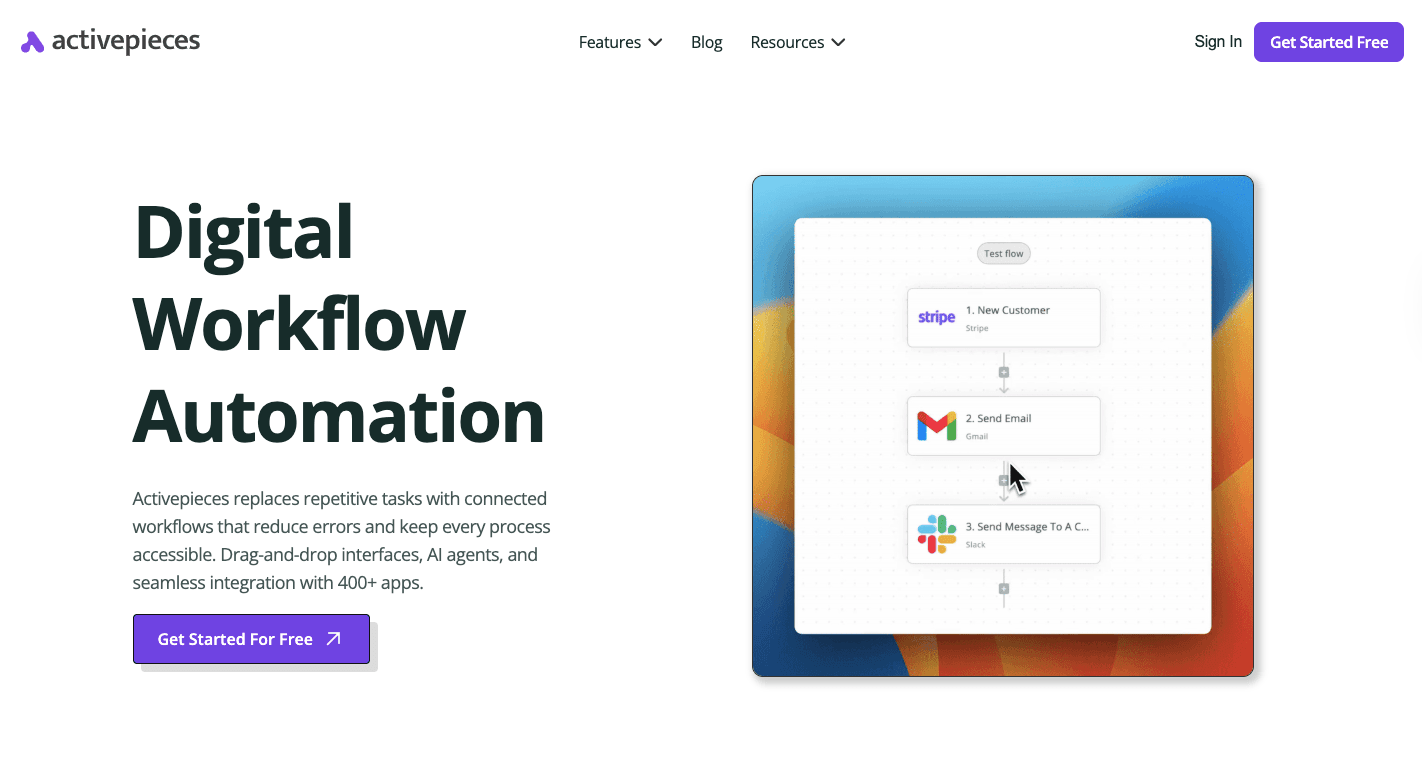
Once automation becomes part of daily work, speed starts to shape everything else.
Activepieces is an open-source automation platform for IT teams that want to connect tools, data, and logic, with an MIT-licensed core you can inspect and self-host. It gives you a single place to design workflows that reflect how work actually flows in your environment.
You begin by connecting the apps you already rely on, then build workflows step by step. AI lives inside those steps, and you can bring your own model key so spend stays on your own provider account, or reach the same flows from Claude, ChatGPT, Cursor, and other MCP-capable clients.
You can automate tasks like routing requests, validating data, or triggering follow-ups while still keeping approvals where judgment is needed.
As workflows run more often, limits don't get in the way. Unlimited runs enable automation to support your growing business processes without sudden spikes in cost, and you can start self-serve without waiting on a sales call.
Activepieces gives your IT team one place to build, run, and scale AI workflows. Try it today!
FAQs About AI Use Cases in IT Operations
What is AI in IT?
AI in IT is the use of machine learning, natural language processing, generative AI, and AI agents to monitor, manage, and resolve IT infrastructure and service workflows, often with little or no human intervention. In IT operations specifically, that means systems that spot anomalies, triage alerts, and in some cases fix issues automatically.
What are AIOps tools?
AIOps tools are platforms that use a machine learning algorithm to monitor systems, connect signals from logs and metrics, and support faster incident response inside operational AI.
Many AIOps solutions are on top of performance monitoring tools and IT service management (ITSM) tools to spot anomalies, reduce alert noise, and extract actionable insights from analyzing large datasets while protecting data integrity.
What problems can AI help solve in IT operations?
AI helps solve many problems in IT operations, such as alert overload, slow troubleshooting, repeated outages, and the time wasted on automating repetitive tasks.
You can use it to speed up root cause analysis and improve problem-solving capabilities when systems grow too complex for manual tracking.
What tools are needed to use AI in IT operations?
To use AI in IT operations, you typically need monitoring data sources, centralized logging, an AIOps platform, and integrations with ticketing and workflow systems so actions connect back into operations.
What AI technologies are most commonly used in IT operations?
The most common AI technologies include natural language processing for reading tickets and chat, machine learning models for anomaly detection, and generative systems for summarizing incidents and guiding support.
What is documentation AI?
Documentation AI refers to AI that reads internal runbooks, past tickets, and knowledge bases to answer questions, draft fixes, and keep operational knowledge usable.