
AI Agents for Ecommerce: What Online Stores Need
Learn all you need to know about AI agents for ecommerce, from how they work to the different types and their main benefits.

December 15, 202511 min read @ashrafsam
As your online store grows, small tasks start to pile up. That means watching everything at once becomes difficult.
AI agents help manage that load across ecommerce by reacting to events as they happen and acting inside the tools stores already use.
In this article, you'll learn how AI agents for ecommerce marketing automation work, the main types in use today, and what online stores need to trust them.
Ready to apply AI agents to ecommerce marketing automation? Use Activepieces today!
TL;DR
- AI agents for ecommerce are autonomous systems that watch store activity, make decisions, and act across tools without waiting for constant human input.
- These agents handle support, pricing, inventory, marketing, and analytics by running full workflows instead of single replies or scripts.
- Core components like data inputs, decision logic, integrations, and feedback loops let agents learn, adapt, and improve results over time.
- Online stores need strong integrations, event-driven execution, and human oversight to use AI agents safely and effectively.
- Activepieces connects AI agents across the entire ecommerce stack, making it easier to build, run, and scale real agent-driven workflows.
Everything below works on Activepieces' free plan. Start without code or a credit card.
What Are AI Agents for Ecommerce?
An AI agent for your ecommerce business watches activity across your store, decides what matters, and takes action without waiting for someone to guide every step.
Many people confuse agents with simple bots, but the difference shows up once work starts. Unlike traditional chatbots, these agents handle full workflows using AI systems that work with minimal human intervention to support business operations.
Each ecommerce agent focuses on one job and sticks to it: one handles support, another watches inventory, and another manages pricing or marketing based on goals set by your team.
Work follows a steady loop. The agent observes orders, messages, or stock changes, plans a response, and acts inside connected tools.
After that, it reviews the outcome so it can make decisions independently to perform complex tasks and understand context the next time around.
Let's say a customer asks a delivery question. A basic bot shares a help link, while an agent checks the order, pulls carrier data, and replies with an answer like, "Your package arrives on Friday. Want text updates?"
Core Components of Ecommerce Agentic AI
Every ecommerce agent relies on a small set of building blocks that work together, such as:
Data Inputs
Data inputs give the agent awareness of what is happening right now. These inputs come from orders, messages, site activity, and outside signals, which matter because market conditions and customer behavior change constantly.
Information arrives in different forms. Some data looks clean, like order records or stock numbers, while other data is disorganized, like reviews or emails. Agents pull this data from connected tools, clean it up, and use it to understand context before deciding what to do next.
Accurate inputs allow agents to respond with timing that feels natural, especially when stores depend on quick reactions during busy periods.
Decision Logic
Decision logic turns raw data into action. The agent takes a broad objective and splits it into steps, such as breaking down a high-level goal like optimizing inventory management into a sequence of smaller informed decisions.
Actions and Integrations
Actions define what the agent can actually do. Integrations connect those actions to ecommerce tools, which let agents integrate APIs from multiple sources to deliver real-time information and dynamic customer experiences across stores.
Through these connections, agents can push real-time data across systems while handling multi-step tasks like returns, refunds, and shipping updates.
Feedback Loops
Feedback loops help agents learn from results. After an action runs, the agent reviews what happened and checks whether the goal was met, which supports achieving higher customer satisfaction over time.
That review feeds into the next decision. When outcomes improve, the agent repeats the pattern, and when outcomes fall short, it adjusts its logic instead of repeating the same mistake.
Over time, feedback loops build trust. Agents become more reliable as they learn which actions work best in real ecommerce conditions.
Key Benefits of Using AI Agents for Ecommerce
AI agents change how stores handle daily work by removing delays and reducing manual effort. The benefits below show where that shift makes the biggest difference.
- Daily tasks move faster because agents handle repeat work with minimal human intervention.
- Support stays responsive since customer inquiries are answered and operations run smoothly at any hour.
- Pricing becomes smarter when you deploy a dynamic pricing agent to offer personalized promotions based on previous customer engagement with your store.
- Personalization improves as agents learn patterns over time, which provides unprecedented insights into customer preferences.
- Risk stays lower because agents watch transactions closely and handle fraud detection for fraudulent purchases before damage spreads.
- Decision quality improves when agents analyze market trends using live signals.
Types of AI Agents for Ecommerce
Not every problem in ecommerce needs the same solution, which is why different agent types exist. Choosing the right AI agent depends on where work slows down and where timing matters most, whether that happens in support, sales, marketing, or analysis.
Customer Support AI Agents
Customer support agents handle daily conversations while working alongside human agents, which keeps your teams from burning out as volume grows. They manage customer service interactions by tracking context across conversations and providing resolutions to customer queries.
These agents manage customer inquiries across multiple channels, including:
- Chat windows
- Social media
- Mobile apps
- Messaging apps
With language handling, AI agents can help customers find products and make purchases faster using natural language interactions.
The support agent further steps in to pass complex cases to people with the full context already attached.
AI-Powered Shopping Assistant Agents
Online shopping assistants offer assistance on ecommerce sites by answering product questions, suggesting alternatives, and guiding decisions with confidence.
These agents rely on a deep understanding of your inventory, which allows them to react to stock levels and availability in real time.
By tracking shopper behavior, each assistant understands customer intent by analyzing behavioral patterns, then adjusts recommendations across your digital storefront to match what the shopper actually wants.
At checkout, the agent helps by answering shipping questions or applying a discount code at the right moment, which keeps buyers from second-guessing.
Sales and Conversion AI Agents
Sales agents support sales and support teams by stepping in at the right time with clear guidance. Aside from that, these intelligent agents adjust offers and messaging based on behavior signals, which helps boost conversions through ongoing conversion optimization.
Over time, this steady improvement compounds and leads to measurable revenue growth without constant manual testing.
Marketing AI Agents for Ecommerce
Marketing agents improve operational efficiency by managing targeting, testing, and delivery across channels.
Each agent works toward a goal, such as achieving higher returns by maximizing ad-spend ROI, while adjusting campaigns based on live results. Changes happen quickly, which keeps spending aligned with performance.
Analytics and Optimization AI Agents
Analytics agents focus on understanding what actually drives results. To do that, they review past interactions and turn customer interactions into strategic business insights that your team can act on immediately.
By watching patterns and applying fixes in real time, these agents help stores react faster than teams working from reports alone.
What Online Stores Actually Need From AI Agents
AI agents only work well when the setup around them supports how ecommerce actually runs day to day. Online stores need systems that let agents act fast, connect tools, and stay under human control when decisions carry risk.
Multi-Tool Integrations
Online stores rely on many e-commerce platforms at once, and agents need access to existing systems to move information without delays or gaps.
Integrations will enable agents to read from one tool and act in another, which matters when orders, inventory, and customer messages live in different places.
When integrations are in place, the agent handles the full flow without stopping to ask for help. That connection keeps data consistent and prevents errors caused by manual handoffs.
Event-Driven Execution
Agents need event-driven execution so they respond the moment something changes, not minutes or hours later. Events include:
- Cart abandonment
- Low inventory alerts
- Shipping delays
- Sudden changes in demand
When an event triggers an agent, it reviews context and acts immediately. That speed keeps messages relevant and actions effective, especially during high traffic periods.
Event-driven execution also reduces wasted processing since agents only run when something meaningful happens. Stores benefit from faster reactions without adding extra monitoring tools or staff.
Human-in-the-Loop Controls
You need ways to maintain control over your autonomous AI agents while still letting them handle most of the work. Human-in-the-loop controls provide that balance.
Approval steps pause actions that carry financial or brand risk, such as large inventory purchases or sensitive customer issues. Escalation rules, on the other hand, pass complex cases to people with the full context already attached.
Humans review outcomes and adjust rules over time, which keeps agents aligned with business goals and brand standards.
Transparency and Control
Trust grows when actions make sense. You need visibility into why an agent acted and what data influenced that choice. Clear explanations help your teams understand behavior.
Logs, dashboards, and clear limits give stores confidence that agents follow rules. Controls allow teams to pause or adjust behavior without rebuilding workflows.
When something goes wrong, transparency shortens response time and prevents repeat issues, so that your operations stay steady as automation scales.
How Activepieces Connects AI Agents Across Your Entire Ecommerce Stack
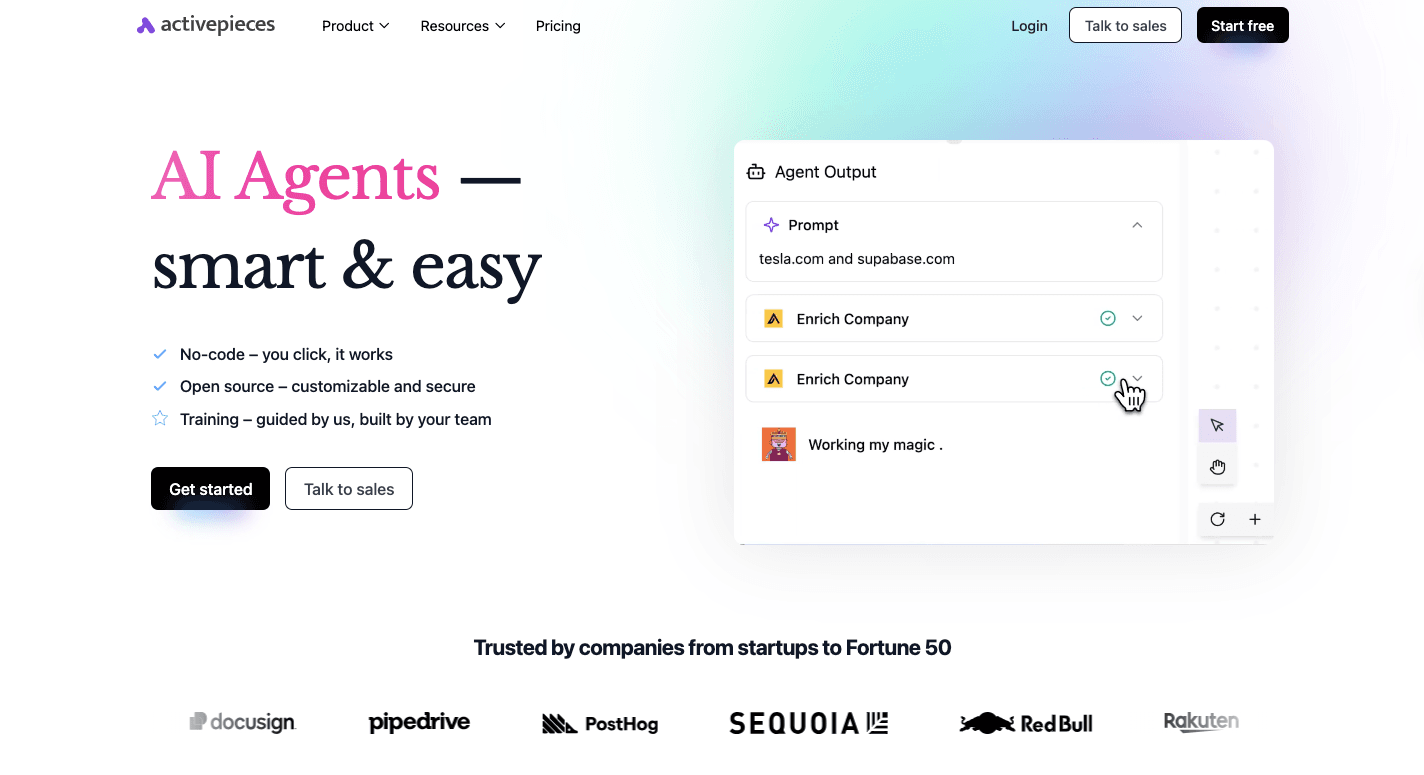
Activepieces, an AI-powered workflow automation software, is the connective layer that lets AI agents work across all the tools an ecommerce team already uses.
Agents see what happens, decide what matters, and act in the right place, all inside one orchestration layer. That setup removes delays and keeps automation reliable as volume grows.
One Workflow That Ties Your Stack Together
Activepieces listens for activity from across your store, such as new orders, failed payments, or incoming support tickets, and brings those signals into a single workflow.
Agents process that information and send actions back to the right tools, whether that means updating a record, sending a message, or triggering another process.
You don't need deep technical expertise to manage this logic. The visual builder makes it easy to adjust flows, which works well for support automation and other time-sensitive tasks.
Support Real Ecommerce AI Use Cases
The platform fits naturally into advanced ecommerce AI workflows because it doesn't lock agents into narrow paths. Agents can connect with generative AI through its pre-built pieces at any point to draft responses, summarize context, or decide next steps based on live data.
Everything stays readable as workflows grow. That clarity matters when agents operate across a busy digital marketplace where small delays can affect revenue.
Integrations That Match How Stores Actually Run
As of now, Activepieces offers 526 pre-built data integrations that reflect how ecommerce teams really work. Orders, analytics, marketing tools, CRMs, and payment systems all connect without custom scripts for each step.
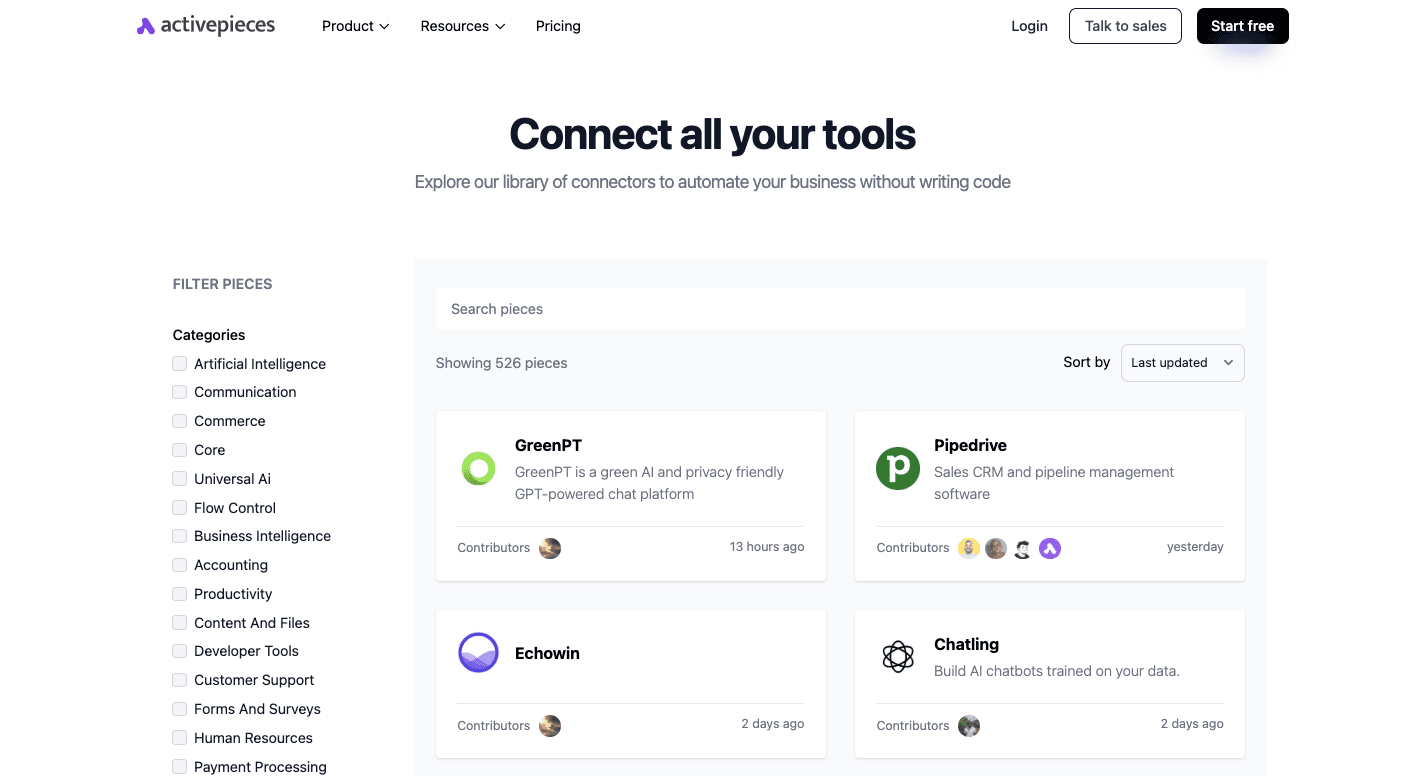
These connections live inside the same tech stack, which reduces breakage and keeps automation flexible. Community-driven pieces expand coverage, while enterprise features support scale, security, and self-hosting when needed.
Need advanced integrations or enterprise controls? Contact sales at Activepieces!
Give Your Ecommerce Stack the AI Agents It Needs With Activepieces
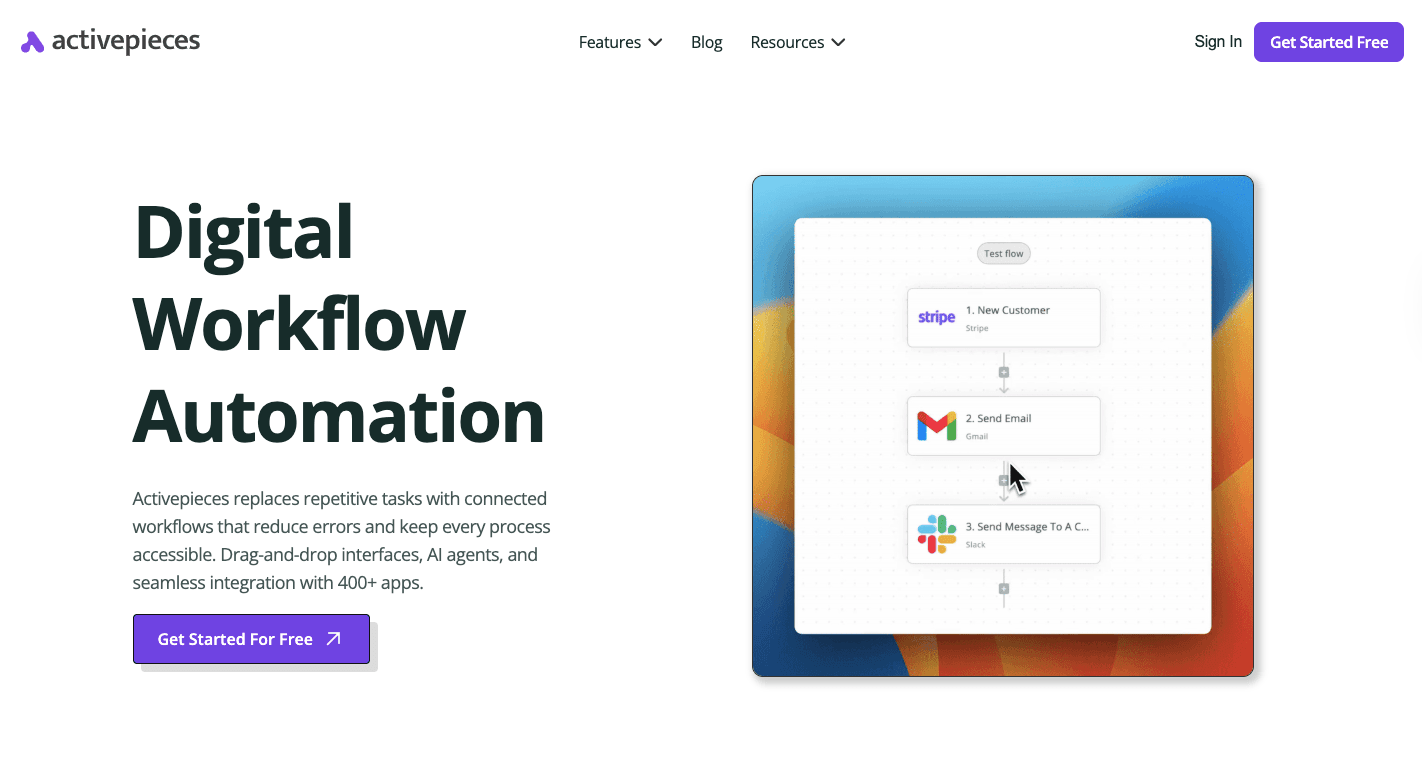
AI agents only matter when they actually run inside real ecommerce workflows, and that's where Activepieces fits naturally. It gives you an enterprise solution for building top AI agents that work across your business operations without forcing a full rebuild of your stack.
Workflows stay easy to manage as volume grows, too. By removing repeat manual steps, your teams boost productivity and keep focus on strategy.
And compared to competitor pricing, Activepieces gives you a free plan, then $5 per active flow per month. Meanwhile, the paid plan offers custom RBAC, SSO, audit logs, Git sync, private pieces, and personalized support.
Turn everyday ecommerce workflows into AI-driven systems. Get started with Activepieces!
FAQs About AI Agents for Ecommerce
What is the difference between AI agents and chatbots in ecommerce?
E-commerce AI agents handle full workflows while chatbots mostly answer questions.
Unlike traditional chatbots, an ecommerce agent can act across tools, follow goals, and manage business processes. They also go beyond FAQs since AI agents can understand user intent and deliver intuitive and personalized guidance.
How do AI agents integrate with ecommerce automation tools?
AI agents connect directly to automation platforms through APIs and event triggers. That connection lets them move data, trigger actions, and coordinate tools without manual steps, even when workflows would normally require human intervention.
Can small ecommerce stores use AI agents?
Yes, smaller stores benefit quickly since agents take over routine tasks like order updates, basic support, and follow-ups.
Are AI agents safe to use with customer data?
Safety depends on setup and oversight. Strong controls, approvals, and logging support risk management while keeping customer data protected and aligned with the store's brand voice.
What is agentic commerce protocol?
The agentic commerce protocol refers to a structured way for AI agents to observe events, decide actions, and execute tasks across ecommerce systems in a consistent manner.