
Top 6 AI Agents for Finance Teams in 2026
Top 6 AI Agents for Finance Teams in 2026: 1. Activepieces 2. IBM AI Solutions 3. Salesforce AI Agents 4. Workday AI 5. Glean AI 6. UiPath AI Agents.

Feb 27, 202613 min read
How many tabs do you have open right now just to track what is happening with your finances?
Reports here, charts there, news updates in another window. It is a lot.
Even after all that, you still wonder if you are missing something important. But AI agents can seriously help you with that.
In this article, we’ll look at six top-rated AI agents by use cases so you can see which one actually makes your life easier.
TL;DR
Here are the six top-rated AI agents for finance:
- Activepieces - Best for end-to-end AI agent orchestration on finance systems
- IBM AI Solutions - Best for complex governance requirements
- Salesforce AI Agents - Best for CRM-centric financial operations teams
- Workday AI - Best for finance and HR combined operations
- Glean AI - Best for financial knowledge search and internal insights
- UiPath AI Agents - Best for RPA-driven financial process automation
Everything below works on Activepieces' free plan. Start without code or a credit card.
How Finance AI Agents Work?
AI agents in finance operate in four stages:
Data Ingestion
Every system starts with input, and AI agents rely on structured pipelines that get information from many sources at once.
For instance, historical records from internal SQL and NoSQL databases, enterprise resource planning (ERP) systems, or data warehouses containing customer profiles and loan histories provide long-term context.
Unstructured material also enters the flow. News articles, email threads, and even handwritten notes using natural language processing (NLP) expand the dataset beyond spreadsheets.
To support retrieval-augmented generation (RAG), indexed records allow the model to retrieve exact documents during analysis rather than depend only on training data.
Reasoning Models
Once information is structured, agentic AI turns inputs into decisions.
Many platforms follow a continuous “Think-Act-Observe” loop. For example, if tasked with a credit check, the agent thinks “I need the applicant’s history,” acts by calling an API for a credit report, and observes the result to decide if more data is needed.
Hybrid reasoning models combine pattern recognition with strict logic. One layer uses large language models (LLMs) to handle unstructured inputs. Another layer uses hard-coded logic and rules such as “If debt > 50% of income, then reject.”
By combining these methods, the system performs financial analysis, assigns risk scores, and checks compliance parameters before generating recommendations.
Multi-Step Task Execution
A task such as month-end close may require pulling invoice data, reconciling entries, running variance analysis, and preparing financial reporting summaries.
The agent breaks the goal into sub-steps. It queries internal systems, retrieves market data when needed, and runs calculations.
Through secure connectors and the model context protocol (MCP), it can update records, trigger workflows, or execute trades automatically under approved conditions.
Pre-defined limits prevent the agent from taking high-risk actions. For example, you can let it auto-approve expenses under $500, but it should trigger an approval request for anything higher.
Human-in-the-Loop Control
When risk rises, the system pauses for human intervention. In wealth management, large portfolio changes or unusual transaction flows often require approval before execution.
Review dashboards present the reasoning trail in detail. Rather than just saying “Denied,” the agent shows the specific steps it took, such as “Step 1: Found late payment in 2023. Step 2: DTI ratio exceeds 45%.”
That level of transparency supports audit trails and compliance teams during regulatory reviews.
Continuous monitoring, on the other hand, tracks changes in customer behavior and flags anomalies that require deeper risk assessment.
6 Top-Rated AI Agents for Finance Teams
The following are the top six financial services AI agents in the market.
1. Activepieces: Best for End-to-End AI Agent Orchestration on Finance Systems

Activepieces is an AI-first automation platform that orchestrates agents across multiple systems. You can use it to connect LLMs, finance apps, and internal systems into one flow.
A flow starts with a trigger such as “New invoice received in Stripe” or “Row added in Excel.” The next step can call an AI model to extract tax amounts or validate vendor details. After that, the agent can perform actions like creating a bill in Zoho Books or sending approval requests.
For complex tasks, you can combine logic branches, conditional approvals, and human checkpoints.
It further lets you implement AI agents without deep coding knowledge. Through the MCP, agents access tools securely while protecting sensitive data.
Self-hosted deployment options help organizations meet audit requirements and maintain control over where information resides, too.
Key Features
- Flow-based agent builder - Designs multi-step workflows that coordinate actions across multiple systems in a single visual editor.
- Extensive pieces library - Provides 638+ pre-built integrations with finance, customer relationship management (CRM), marketing, AI, and data tools, plus custom piece development in TypeScript.
- Self-hosted deployment option - Allows you to run the platform on your own infrastructure to protect sensitive data and align with audit requirements.
- Human-in-the-loop controls - Adds approval steps or delayed execution for high-value payments or policy exceptions.
- Advanced branching logic - Builds conditional paths such as routing invoices over a defined amount to finance managers while auto-approving smaller transactions.
- Transparent run logs - Displays step-by-step execution history so you can trace errors and validate outcomes quickly.
2. IBM AI Solutions: Best for Complex Governance Requirements
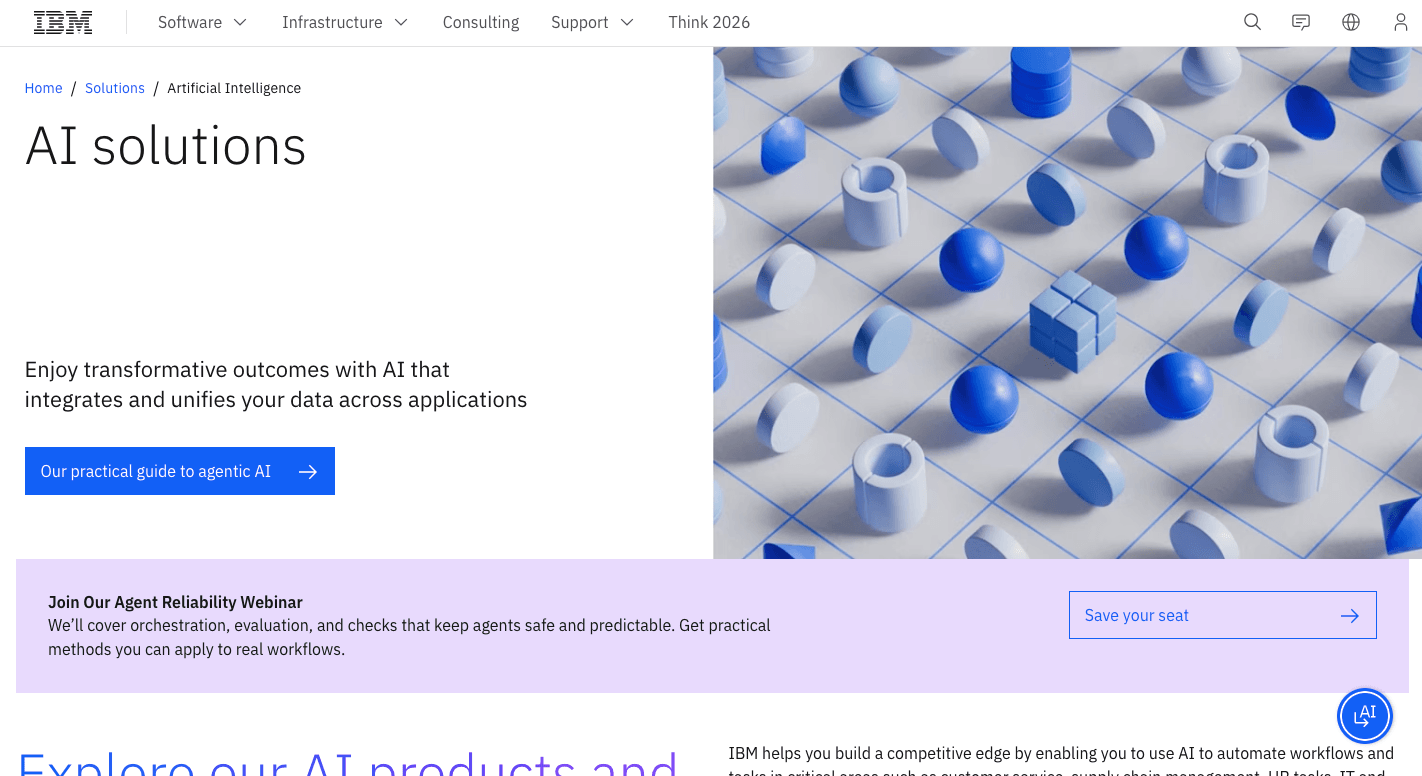
IBM AI Solutions is an enterprise-grade AI and data platform designed to build, deploy, and monitor AI agents.
In finance, it’s typically used to automate complex workflows such as month-end closes, invoice reconciliation, regulatory reporting, and the generation of compliance reports.
An agent can receive a goal such as “Find discrepancies in Q3 journals” and break it into subtasks. It can call on specialized tools to connect to your ERP, pull live market data, or run Python code for calculations.
The built-in controls include rules-based systems that enforce policy thresholds alongside predictive models. This structure strengthens audit readiness and supports strict supervisory review.
Key Features
- Automated documentation tracking - Captures training data, deployment history, and configuration details to simplify audit readiness and formal compliance reports.
- Drift and bias monitoring - Continuously reviews outputs to detect shifts in loan approvals or risk scores before issues escalate.
- Explainable decision output - Shows step-by-step reasoning behind approvals or denials to support regulatory reporting and internal review.
- Policy gating controls - You can set gating criteria that prevent models from moving into production unless they pass governance checks and required human approvals.
- Centralized oversight dashboard - Deploy the agent as a REST API or chat interface and monitor its performance, decisions, and alerts from one control panel.
3. Salesforce Agentforce: Best for CRM-Centric Financial Operations Teams
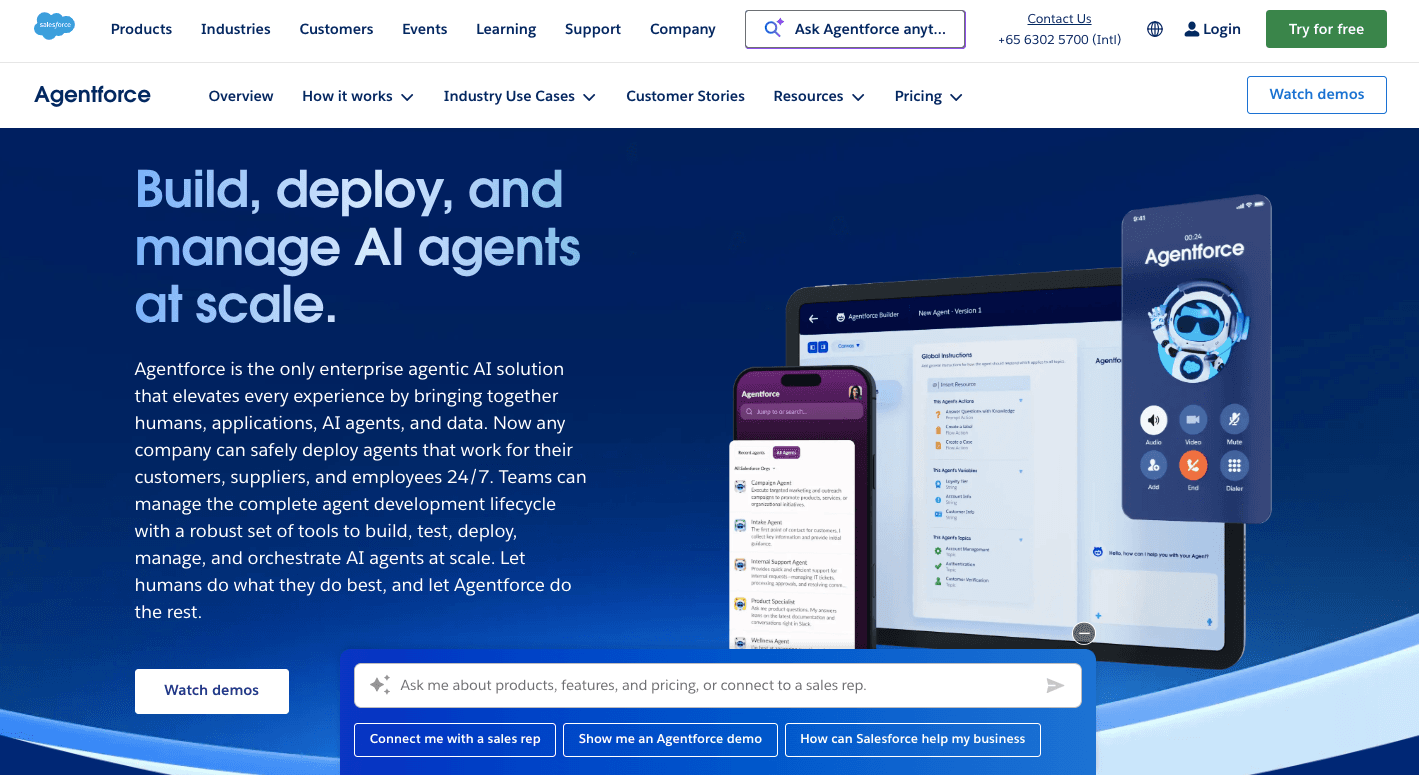
Agentforce operates within the Salesforce Financial Services Cloud and focuses on customer-facing finance workflows.
Finance professionals often deploy these agents to manage loan applications, billing disputes, and account updates without switching between disconnected systems.
You can give the agent a task such as “Summarize this client’s risk profile,” and it evaluates real-time customer records before responding. The Atlas Reasoning Engine can review balances, recent transactions, and prior interactions to form an answer grounded in stored records.
When needed, the agent triggers Salesforce Flows or Apex scripts to update fields, verify information, or escalate tasks.
The “Einstein Trust Layer” masks personal identifiers before data reaches LLMs. Sensitive fields never leave the protected environment.
When conversations become complex, the system routes cases to a human representative with full context for exception handling. Many organizations adopt this model to transform financial services by combining automation with relationship management.
Key Features
- Atlas Reasoning Engine - Evaluates customer records, balances, and recent activity before generating responses grounded in actual account data.
- Data cloud grounding - Connects structured CRM fields and unstructured files, such as PDFs or call transcripts, to prevent unsupported outputs.
- Einstein Trust Layer - Masks personal identifiers before prompts reach external models and blocks retention of sensitive information.
- Flow and Apex integration - Triggers backend actions such as updating records, verifying documents, or launching workflows directly from agent decisions.
- Industry templates - Provides pre-built modules for know-your-customer (KYC) collection, dispute resolution, and insurance claim tracking to reduce setup time.
4. Workday AI: Best for Finance and HR Combined Operations
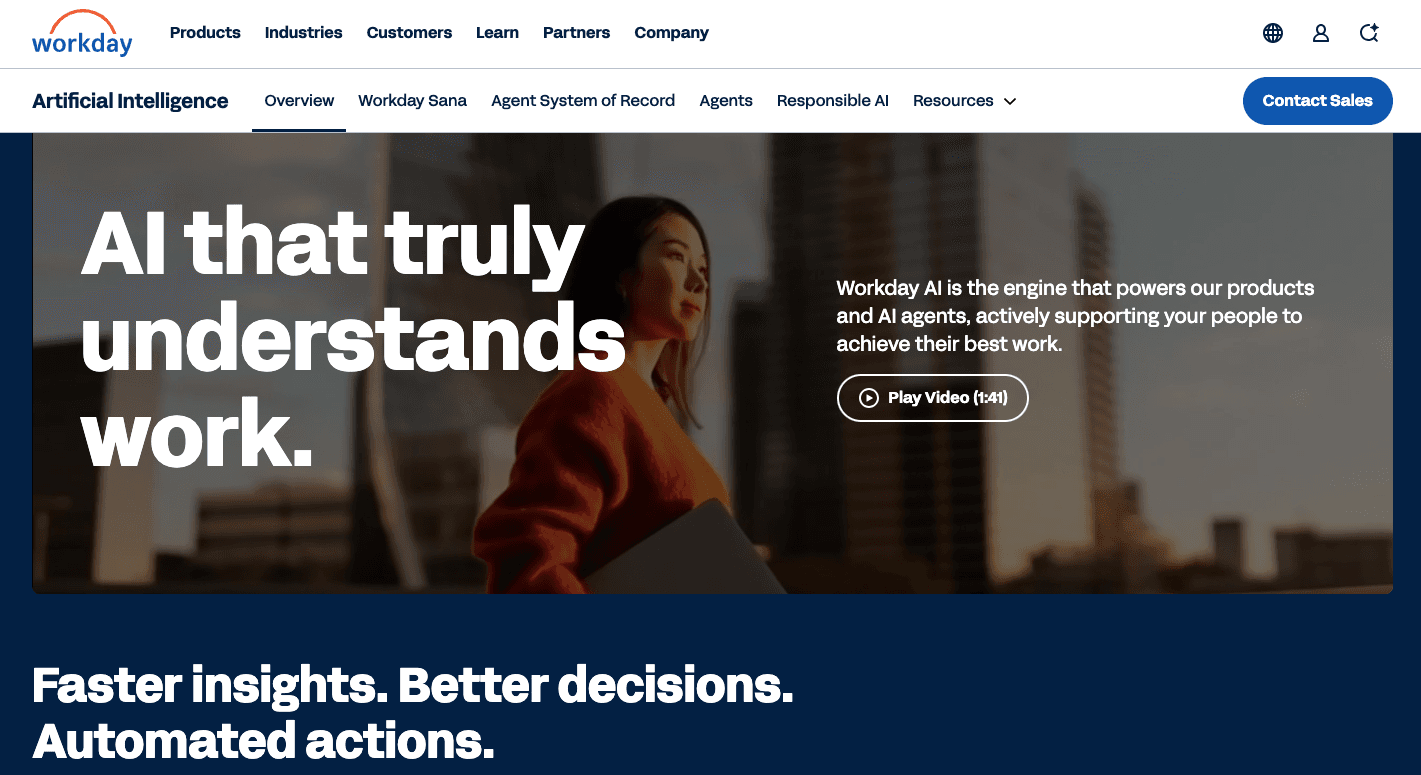
Workday AI brings finance and HR data into a single operating layer, so you no longer have to jump between payroll, budgeting, and headcount tools.
Built into the Workday platform, the Illuminate engine powers agentic AI that understands how people costs connect to financial outcomes. Organizations in the financial sector often use it when payroll, workforce planning, and financial close depend on the same data.
The system doesn’t rely on surface keywords. It reads structured records and applies logic tied to business rules.
Payroll and expense agents, for example, can reduce manual effort by handling repetitive tasks, including validating hours, checking policy limits, and posting approved expenses.
Key Features
- Unified data core - Gathers payroll, benefits, tax, and budget information from one environment to avoid conflicting records.
- Illuminate reasoning engine - Connects HR events and finance updates to detect issues such as payroll discrepancies tied to promotions.
- Automated close and payroll agents - Reconciles statements and validates pay runs before release.
- Conversational assistant - Allows managers and employees to request insights or submit expenses directly through chat tools.
- Built-in governance controls - Provide explainable outputs and data protections to support oversight in regulated environments.
5. Glean AI: Best for Financial Knowledge Search and Internal Insights
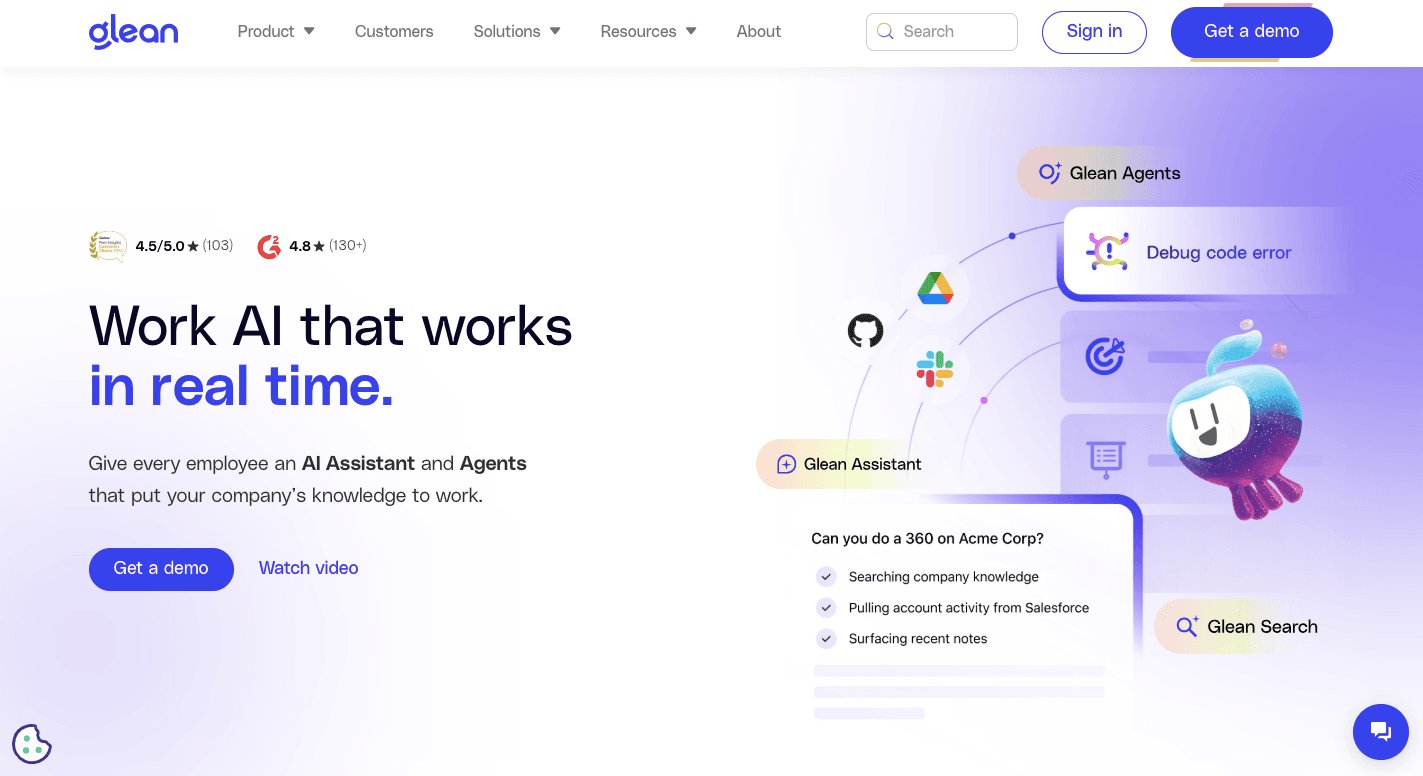
Glean AI focuses on search and knowledge retrieval for finance teams that struggle with scattered information.
Financial institutions often store invoices in one system, contracts in another, and approval notes in email threads. Glean connects to tools such as NetSuite, Workday, Salesforce, Google Drive, and Slack, then builds an index of documents and conversations.
When a user asks, “Why did the vendor spend increase in Q2?” the assistant retrieves authorized records first, then generates a grounded answer. It can interpret data from spreadsheets, PDFs, and chat messages.
If your team uploads contract terms to a specific folder, the agent can summarize those clauses and highlight renewal dates or penalty risks.
Key Features
- Unified multi-system search - Indexes finance tools, document storage, and chat platforms so users can retrieve invoices, budgets, and approvals in one query.
- Permission mirroring engine - Respects existing access controls so sensitive payroll or mergers and acquisitions (M&A) files remain visible only to authorized users.
- Grounded answer generation - Retrieves approved records before drafting responses and links citations back to original documents.
- Automated variance analysis - Compares vendor spend and accounts payable entries with prior periods to highlight unusual shifts.
- Contract and document summaries - Reviews contract terms your team uploads to a specific folder and extracts key obligations or risk clauses.
6. UiPath AI Agents: Best for RPA-Driven Financial Process Automation

UiPath focuses on process automation for finance teams that still rely on desktop software, legacy ERP platforms, and manual data entry. The platform combines robotic execution with agentic logic so tasks move from input to completion.
An agent follows a simple pattern. It reads incoming invoices, receipts, or bank statements, then extracts key fields using document understanding models trained for finance.
After that, it evaluates the data. When an invoice total doesn’t match the purchase order, the agent checks related records before escalating the case.
Once the logic completes, robots log into SAP, Oracle, or other systems and enter data as a human would. Every step generates audit trails that compliance teams can review later.
Organizations adopt UiPath not only to cut repetitive work but also to support business growth by freeing staff for analysis.
Key Features
- Document understanding engine - Extracts structured fields from invoices, receipts, and financial statements with high precision.
- Autopilot command layer - Converts natural language instructions into automated workflows that perform exception handling when mismatches occur.
- UI and API automation - Interacts with modern cloud platforms and older desktop systems, even when no direct application programming interface (API) exists.
- Action center controls - Routes high-value or unusual transactions to managers for approval before final posting.
- Pre-built finance accelerators - Provide ready-made templates for accounts payable, intercompany reconciliation, and financial close processes.
What Are the Benefits of AI Agents in Finance?
AI agents can:
- Reduce manual effort by automating invoice matching, reconciliations, and other repetitive reviews that used to take hours.
- Reduce the risk of human error in financial reporting by checking entries against defined rules before reports go out.
- Use continuous monitoring to track unusual transaction patterns and alert teams before fraud grows.
- Improve risk control by calculating exposure and updating internal risk limits automatically.
- Support portfolio management by adjusting allocations based on performance rules and current signals.
- Help financial services institutions use agents to offer personalized service that reacts to account activity.
- Deliver faster responses, personalized financial advice, and anytime support that improve customer experience.
- Process large datasets to improve forecast accuracy and allow finance leaders to work proactively with go-to-market teams to protect revenue.
Command Autonomous Finance Operations With Activepieces
Most finance teams are stuck managing disconnected systems that barely talk to each other.
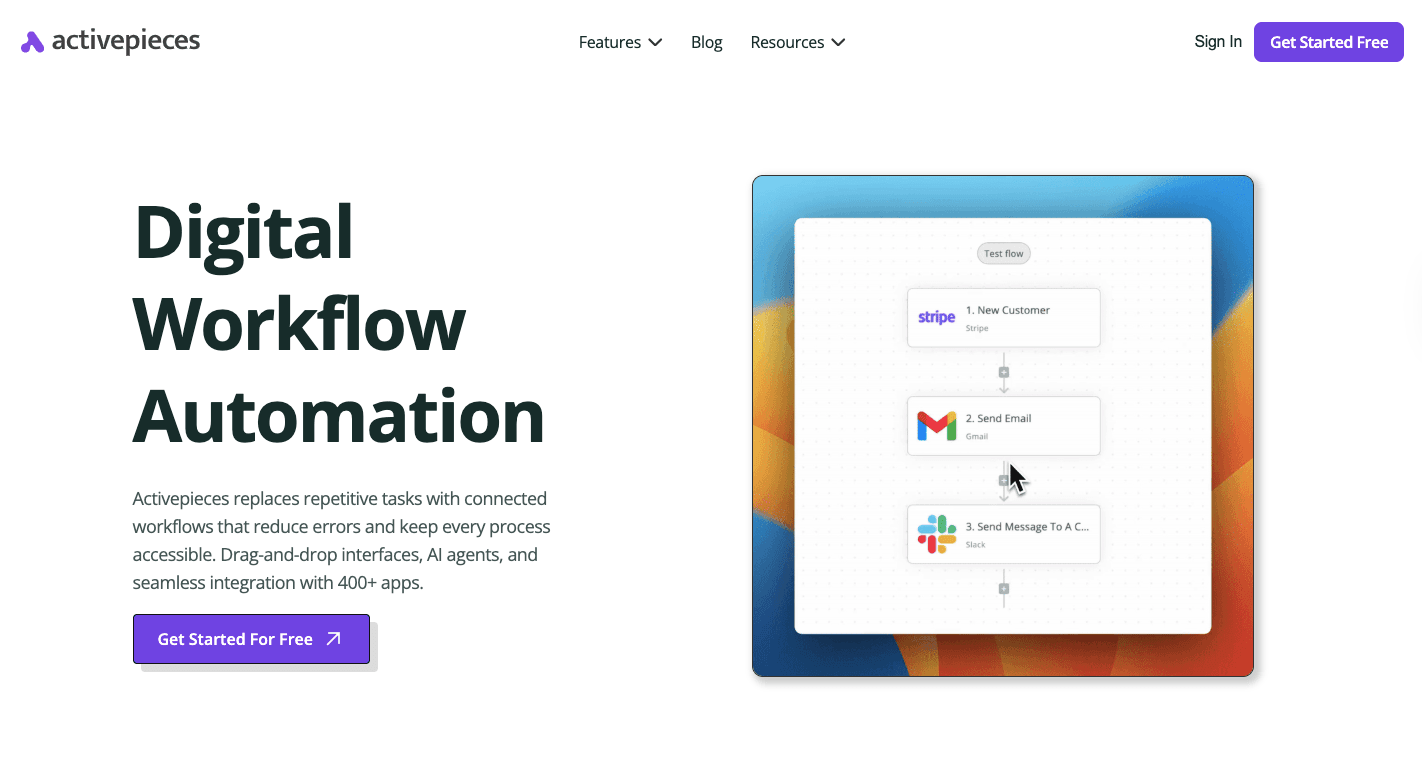
Activepieces changes that by giving you one orchestration layer for intelligent automation. You connect internal systems and external data once, define the logic, and let the agent coordinate updates without constant supervision.
It even handles complex processes like multi-step approvals while still respecting compliance requirements.
The self-hosted deployment lets you run everything on your own infrastructure, which is important when regulators ask how information moves between systems.
As transaction volume grows, the same framework scales with you. That’s how you move from reactive work to controlled, autonomous finance operations without losing visibility or governance.
FAQs About AI Agents for Finance
Are AI agents secure for financial data?
Yes, when designed properly. Secure AI agents encrypt data in transit and at rest, log every action, and restrict access through role-based controls. They protect invoice data while validating data before it enters decision pipelines.
Many platforms support self-hosted deployment, which keeps records on your own infrastructure. Audit logs and approval checkpoints add oversight so autonomous systems never move funds or update ledgers without traceability.
How to build an AI-powered finance function?
Start by identifying manual problems. Then, connect your tools, clean historical data, and define decision rules. Unlike traditional automation, agentic systems evaluate context before acting.
Add approval layers where risk is high, then expand gradually. Over time, the finance function shifts from reactive reporting to proactive planning that can forecast market trends and plan for the future.
How agentic AI transforms the accounting workflow?
Agentic artificial intelligence reduces manual handoffs by linking data ingestion, analysis, and execution. It checks entries, flags anomalies, updates ledgers, and monitors cash flow without waiting for human prompts.
What are the examples of AI agents for finance?
A few examples include invoice validation agents, fraud-detection monitors, portfolio rebalancing tools, and revenue-forecasting assistants.