
Marketing Automation: Email Best Practices You Can Apply
Explore seven effective email marketing automation best practices you can apply and see how Activepieces can help make the process easy.

Jan 27, 202611 min read
You've seen this happen. Someone signs up, then silence follows for days. By the time an email shows up, interest has faded.
Now compare that with a short email that lands five minutes after signup: "Welcome. You're all set. Want to see how people like you use this?" Doesn't it feel different?
Automated email workflows help you send messages when people actually care.
In this article, you'll learn seven marketing automation email best practices that help you send relevant messages, keep subscribers engaged, and turn interest into real results.
TL;DR
Here are the seven email marketing automation best practices you can implement today:
- Choose triggers that reflect customer behavior
- Send automated emails when the context is strong
- Design each automated email around one action
- Use segmentation that updates automatically
- Personalize using data
- Create automated workflows using Activepieces
- Measure results through email marketing metrics
Everything below works on Activepieces' free plan. Start without code or a credit card.
What Does Email Automation Mean?
Email automation means emails go out automatically based on actions. You don't sit there scheduling every email campaign by hand.
An email automation tool watches what subscribers do and reacts for you.
A new subscriber, for instance, joins your list and receives a welcome email right away. Two days later, a short brand story shows up. Four days after that, a small discount arrives. That entire flow runs on its own through automated email workflows.
It allows you to segment your lists and deliver personalized content and relevant messages without blasting your entire list. You can keep a one-to-one feel with 100,000 subscribers just as easily as with 10.
And since messages react to behavior, they stay timely and helpful. In return, you lower email fatigue, reduce CAN-SPAM reports, and improve email open rates.
Automation also helps with nurturing leads. You can spot at-risk subscribers who haven't opened an email in months and trigger a simple win-back message before interest disappears.
7 Email Marketing Automation Best Practices in 2026
Do these practices to run an effective email automation:
Practice 1: Choose Triggers That Reflect Customer Behavior
Choosing triggers based on customer behavior works because actions reveal intent in a way schedules never can.
Let's say you can assume that someone who pauses a tutorial video at the same point needs assistance. On the other hand, when someone who has repeated visits to your pricing page usually signals a decision forming.
Automated email responds to those moments, so your timing is natural since the message continues a thought the customer already had.
When a subscriber clicks a specific link, that action narrows focus, too. For example, clicking a vegetarian recipe shows interest in that topic, so a follow-up that shares more plant-based ideas fits the situation.
Besides that, branching logic keeps things accurate. After a purchase, the system should stop any still-interesting messages for that item.
Sending a how-to guide three to five days after delivery helps the customer get value early.
Practice 2: Send Automated Emails When Context Is Strong
Triggers decide when an automated email is sent, but context explains why that email message belongs in the inbox at that moment.
For instance, when someone completes their first workout in your fitness app, it brings a sense of momentum. An automated email that arrives right after, offering encouragement and a recovery stretch, supports that moment and gently guides the next step, which helps convert prospects.
However, if you send promotional emails while a ticket stays open, it will feel wrong, so pausing those sends shows awareness. Once the issue is resolved, a short follow-up asking how things went restores trust, and only then should email content return to offers.
AI improves this by adjusting send time based on behavior. For example, sending at 7:15 PM reaches someone during a relaxed window, while a morning send may miss attention completely.
Practice 3: Design Each Automated Email Around One Action
According to a study, the average attention span has dropped to about eight seconds. That short window explains why messages that ask for too much usually fail.
When a single message pushes several actions at once, people pause, scan, and then close it.
Remember: Choice overload leads to no choice at all.
You can usually see that in welcome emails. One message asks the reader to read a blog post, follow on social media, browse products, and refer a friend. Faced with that many options, most users end up doing nothing.
What you can do is select the highest value action for that moment. For new subscribers, that action can be completing a profile. For an abandoned cart, the only action should be finishing checkout.
Every element should also support the same action:
- Subject line: "Your 20% discount is waiting."
- Body copy: Explains why the product fits the customer's needs.
- Action button: "Claim My 20% Off."
Capping email frequency helps here, too. Fewer sends with an action perform better than many messages asking for everything at once.
Practice 4: Use Segmentation That Updates Automatically
Segmentation works only when it stays current. Static lists fall behind fast since people change interests, habits, and needs all the time.
When segments rely on rules, they update the moment behavior changes. Rules define who belongs where, such as:
- Any subscriber who spent over $500 in the last six months
- And opened at least three emails during that time
The moment a customer hits that spending level, they enter a VIP group and receive a welcome reward. If six months pass without another purchase, the system removes that contact from VIP and places the account into a win-back segment automatically.
You can further segment your lists based on demographics, purchase history, behavior, demonstrated interests, or pain points, so you can deliver more relevant content.
Each audience receives messages that fit expectations, which avoids overcrowding their inbox.
Practice 5: Personalize Using Data
Personalization works when it reacts to real signals.
We have behavior-based signals that focus on what someone does in the moment, such as:
- Deep researcher
Criteria: _A user views the same product page three or more times within 48 hours without buying.
_Automated action: Send a short comparison guide or a small discount tied to that exact product. - Content-focused subscriber
Criteria: _A subscriber clicks three or more articles linked to the same topic within a month.
_Automated action: Adjust future emails to share valuable content on that topic.
Then, there are lifecycle-based signals that focus on where someone stands overall:
- At-risk customer
Criteria: _No purchase or login activity for 45 days.
_Automated action: Trigger a win-back sequence with a "We miss you" note or a short survey asking if needs have changed. - Loyalist or VIP
Criteria: _Lifetime spend over $1,000 or five purchases within 12 months.
_Automated action: Move the customer into a VIP tier with early access to new drops and private updates.
Both can exist at the same time. A customer may qualify as VIP based on long-term spend while actively researching a product they never bought before.
Automation can respond with a VIP-only offer for that specific item, which creates personalized communication that feels natural.
Practice 6: Create Automated Workflows Using Activepieces
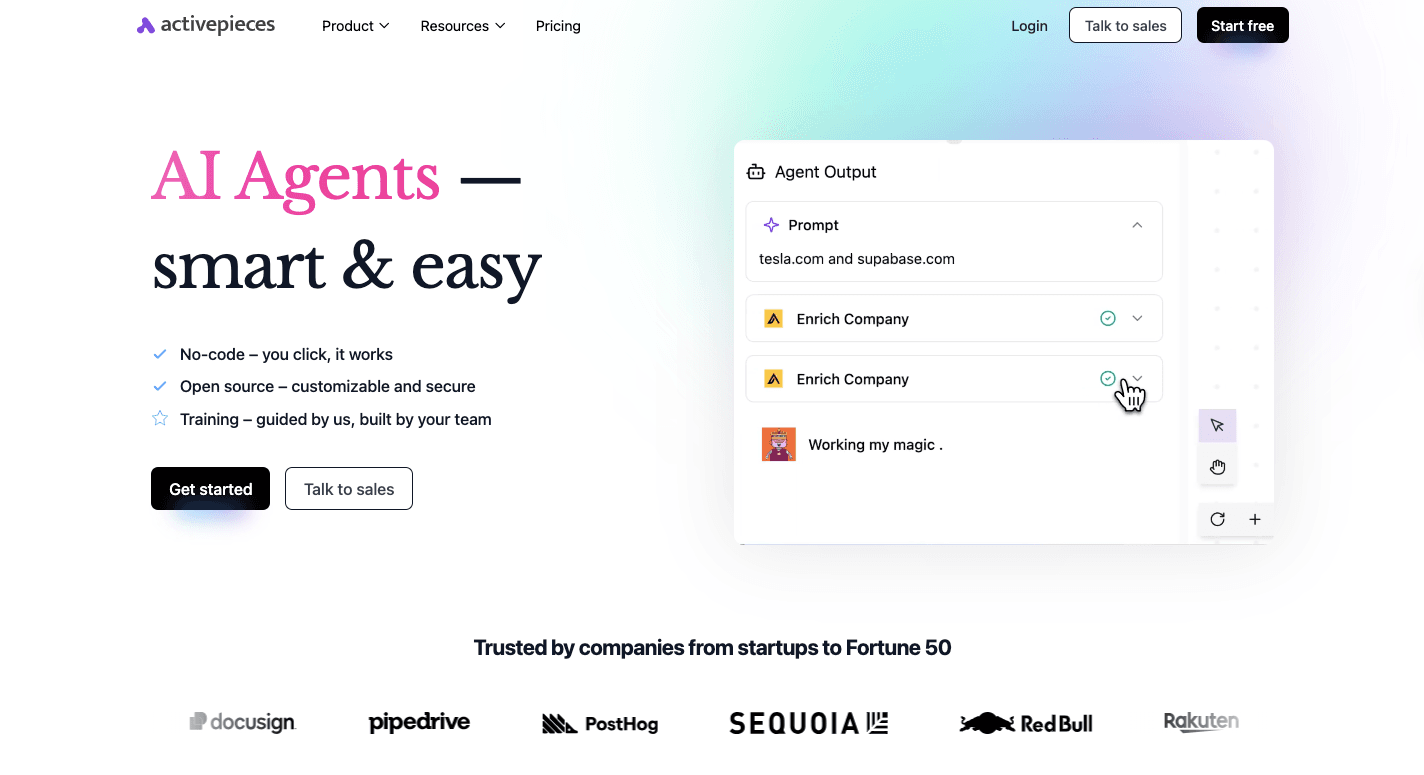
Your email messages depend on inventory, CRM data, support status, and AI output. Many tools struggle once workflows need to pull from more than one system.
Activepieces, an AI workflow automation software, lets your tools work together inside a single workflow that stays readable and controlled.
It further allows you to:
Connect Your Existing Tools
Activepieces currently includes over 621 integrations, called pieces, that connect email platforms, CRMs, spreadsheets, AI services, and internal tools.
Some of the email platforms you can integrate with:
- Gmail
- Microsoft Outlook
- Mailchimp
- ActiveCampaign
- Brevo
- MailerLite
- Lemlist
Even if a tool doesn't have a native data integration yet, Activepieces still connects through webhooks or API calls.
See How Every Step Connects
Complex automation breaks when no one understands it. Activepieces lets you visually map each workflow so every trigger, check, and action stays visible.
You can trace how a signup turns into a message, how delays work, and where decisions split. That clarity helps keep automation tied to your business goals.
Use AI With Real Context
AI steps sit directly inside the workflow. Purchase data or recent actions can pass into an AI step that writes a short usage tip or follow-up message.
The output then flows straight into the email. Messages feel specific without manual writing, which keeps a human touch even when volume grows.
Keep automation personal even as volume grows. Design AI-driven email flows with Activepieces!
Practice 7: Measure Results Through Email Marketing Metrics
Measuring results means focusing on outcomes that reflect real movement. Opens alone rarely explain what happens next. Action-based numbers show whether messages lead anywhere useful and where effort should go.
These are the common key metrics you can check:
- Click-through rates: Show whether email content motivates people to take the next step.
- Revenue per automated message: Shows the dollar value of each flow.
- Time to conversion: Measures how long it takes for a lead to act.
- Unsubscribe patterns: Reveal where messages feel too frequent or miss intent.
Testing supports every decision. You can test two different subject lines or two different context triggers and let the data decide the winner.
Results only help when you regularly review them. That habit keeps email marketing efforts grounded in facts.
Benefits of Following Email Marketing Automation Best Practices
This is what you'll get when you implement those practices in your automated email workflows:
Higher Engagement
Engagement improves when your emails respond to behavior. So, instead of sending to everyone at 10 AM, one customer can receive an email at 7:15 PM while another sees it at 6:30 AM.
Messages sent during calm moments earn quicker clicks, which helps increase recipient engagement without raising volume.
Aside from that, most emails are now opened on mobile devices, which means screens stay small. Automation helps by sending fewer messages that match recent actions.
Better Email Personalization
In the past, personalization was based on labels such as job title or company size. Yet now, you consider behavior.
When a customer spends five minutes on a pricing page, automation triggers a message with a detailed buyer guide. If another customer only reads blog posts, they receive a short series of educational articles instead.
Each message connects to something they do, which makes personalized communication feel honest to email recipients.
More Consistent Conversions
Automation makes sure that every lead is greeted and nurtured the second interest appears. By following the five-minute rule, where a response happens within five minutes, they are much more likely to convert.
Because the automation follows the same rules every time, results become easier to plan.
Less Manual Work
You can set rules to automatically remove ghost subscribers who haven't opened an email in six months or move unengaged users into a re-engagement sequence.
That shift helps your email marketer save time and energy. Attention moves away from constant sending toward review and planning. Systems run quietly in the background, which leaves room for better decisions and steady improvement.
Execute Advanced Automated Email Workflows With Activepieces
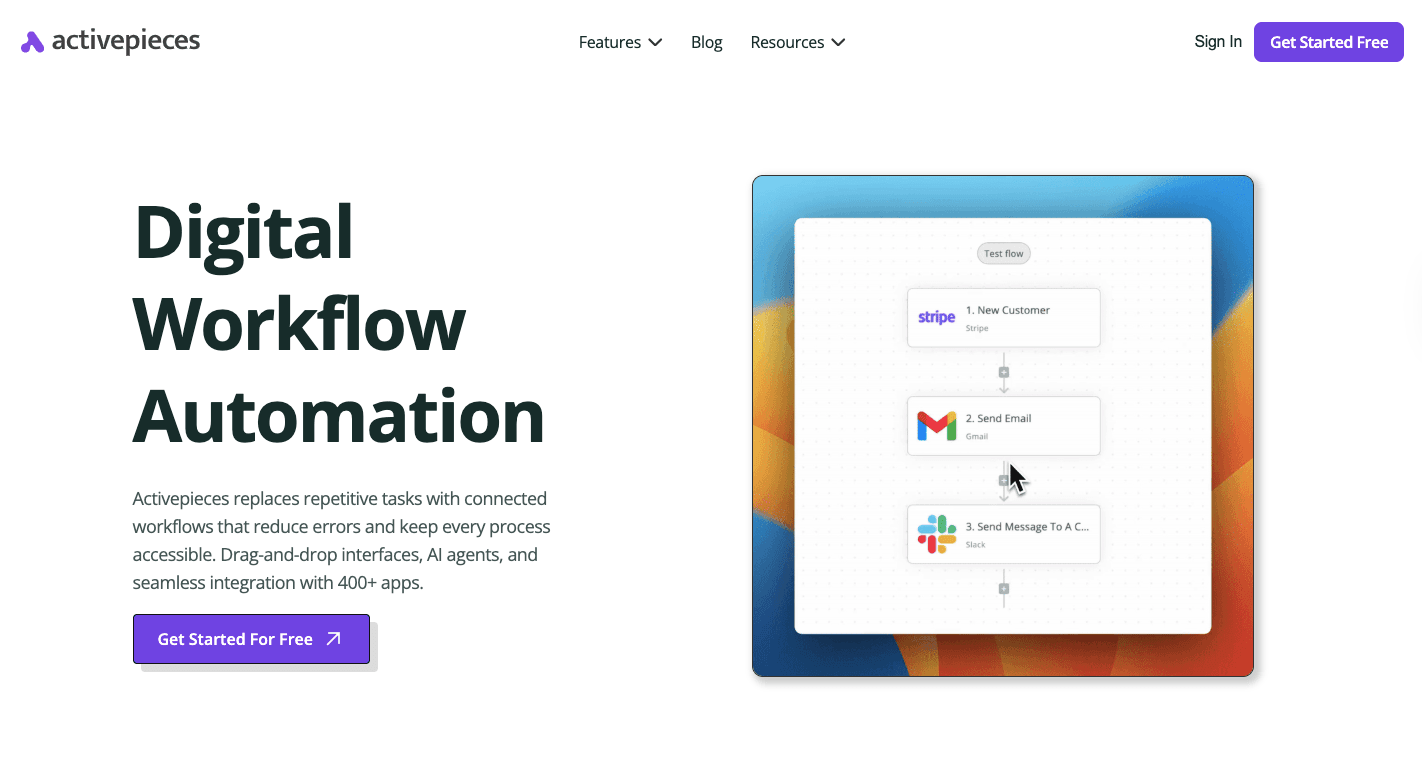
As automation grows, you start feeling the pain of tools that don't talk to each other. Email needs context from your CRM, and your messages need help from AI.
Activepieces pulls all of that into one place, so you can actually run an email marketing strategy without patching systems together.
You can see how every workflow works from start to finish. When someone signs up, you know where the data comes from, what checks happen, and why a message goes out.
If data control is essential to you, self-hosting keeps everything in your environment. Approval steps let you pause actions when judgment is needed.
Take full control of how your automated emails run, pause, and adapt. Get started with Activepieces!
FAQs About Marketing Automation Email Best Practices
How does automation improve email deliverability?
Automation sends messages based on behavior instead of volume. That reduces spam complaints and protects your subscriber list.
Inbox providers reward emails that feel helpful, not random, which improves long-term placement.
How do automated emails differ from campaigns?
An automated email reacts to actions. Meanwhile, an email campaign follows a schedule.
Automation does more than simply send information, while campaigns focus on sending emails at set times.
What tools support email marketing automation?
You can use an email automation tool to manage logic, timing, and delivery inside one email program, which removes manual work and keeps flows consistent.
How does AI improve marketing automation email?
AI adjusts content and timing based on behavior. Messages stay relevant, so your engagement stays steady.